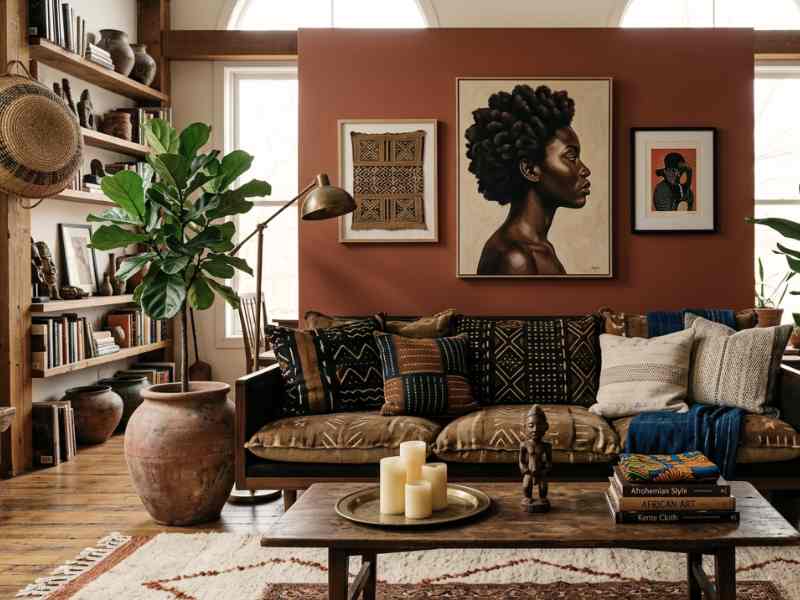
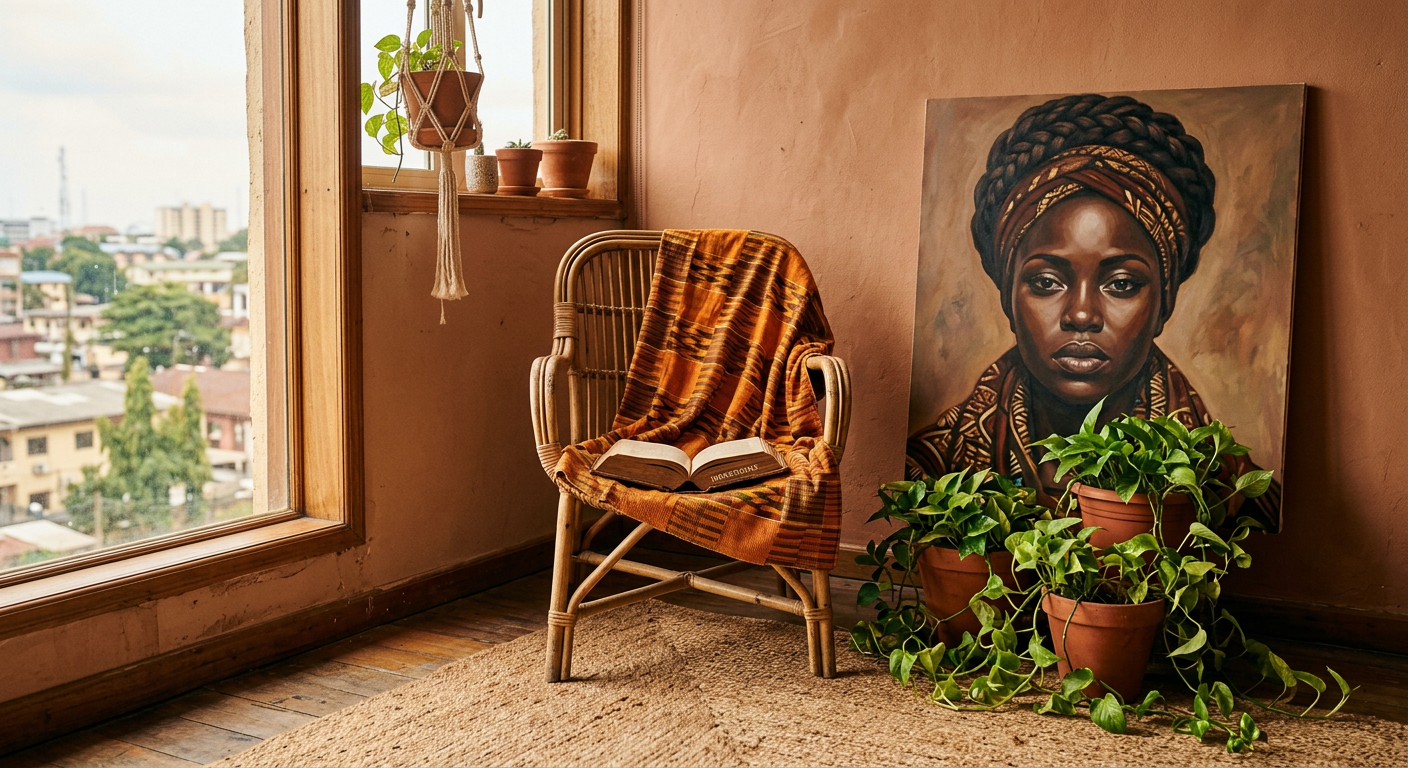
Afrohemian decor is the interior design trend that Pinterest cannot stop talking about in 2026, and once you see it, you will completely understand why.
It is African-inspired home decor mixed with a free-spirited, collected-over-time kind of living.
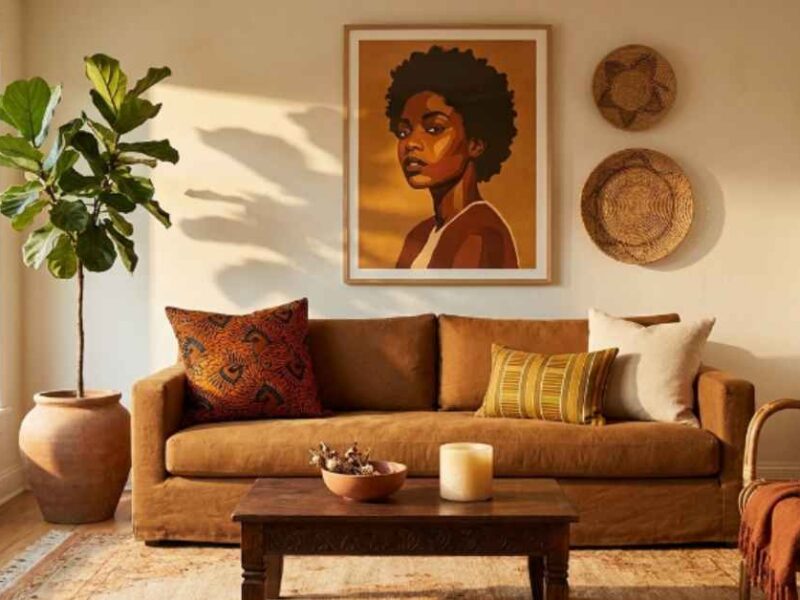
Warm earthy tones, handmade objects, bold textiles, and plants everywhere. Rooms that feel like they have stories.
There is a moment when you walk into a space like this and you just feel it. You do not know exactly what to call it, but the room feels alive. It feels like it was put together by someone who has been places, touched things, remembered things. That is what Afrohemian decor does, and right now it is one of the fastest-growing home decor trends on Pinterest, with boards and saves climbing steadily through 2025 and exploding in early 2026.
If you have been scrolling lately and saving rooms without knowing why you love them so much, this is probably it. The woven baskets sitting next to stacks of art books. The bold printed textiles draped over a worn leather chair.
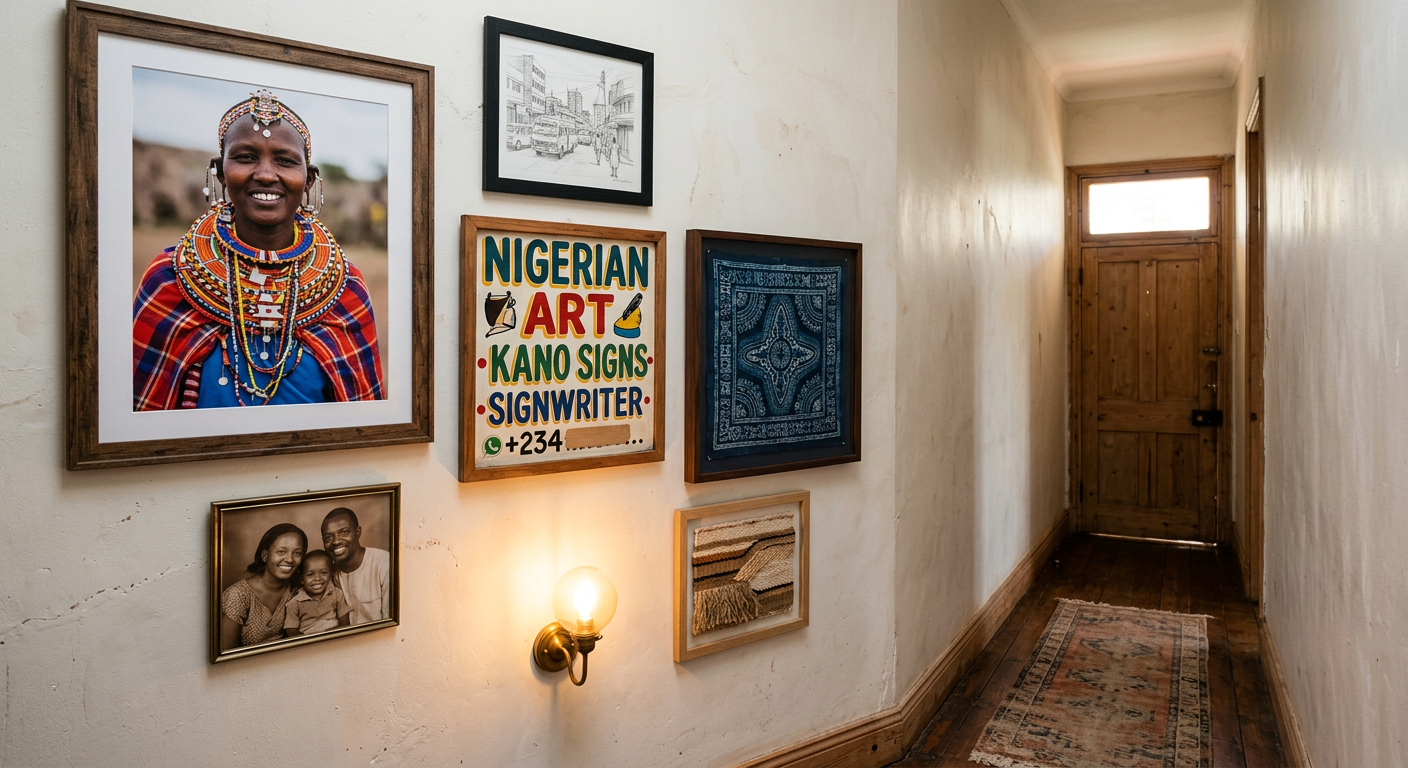
The terracotta pots crowding a windowsill. The gallery walls mixing family photos with African masks and vintage concert posters. That is Afrohemian, and it is having its moment.
So Where Did Afrohemian Come From?
The word “Afrohemian” is a blend of African and Bohemian, and while it sounds new, the truth is that this style has been living quietly in Black homes for generations. It is what happens when diaspora culture meets a love for collecting.
When ancestral memory meets secondhand markets. When someone who grew up surrounded by kente cloth and clay pots also happens to love flea markets and candlelit dinners.
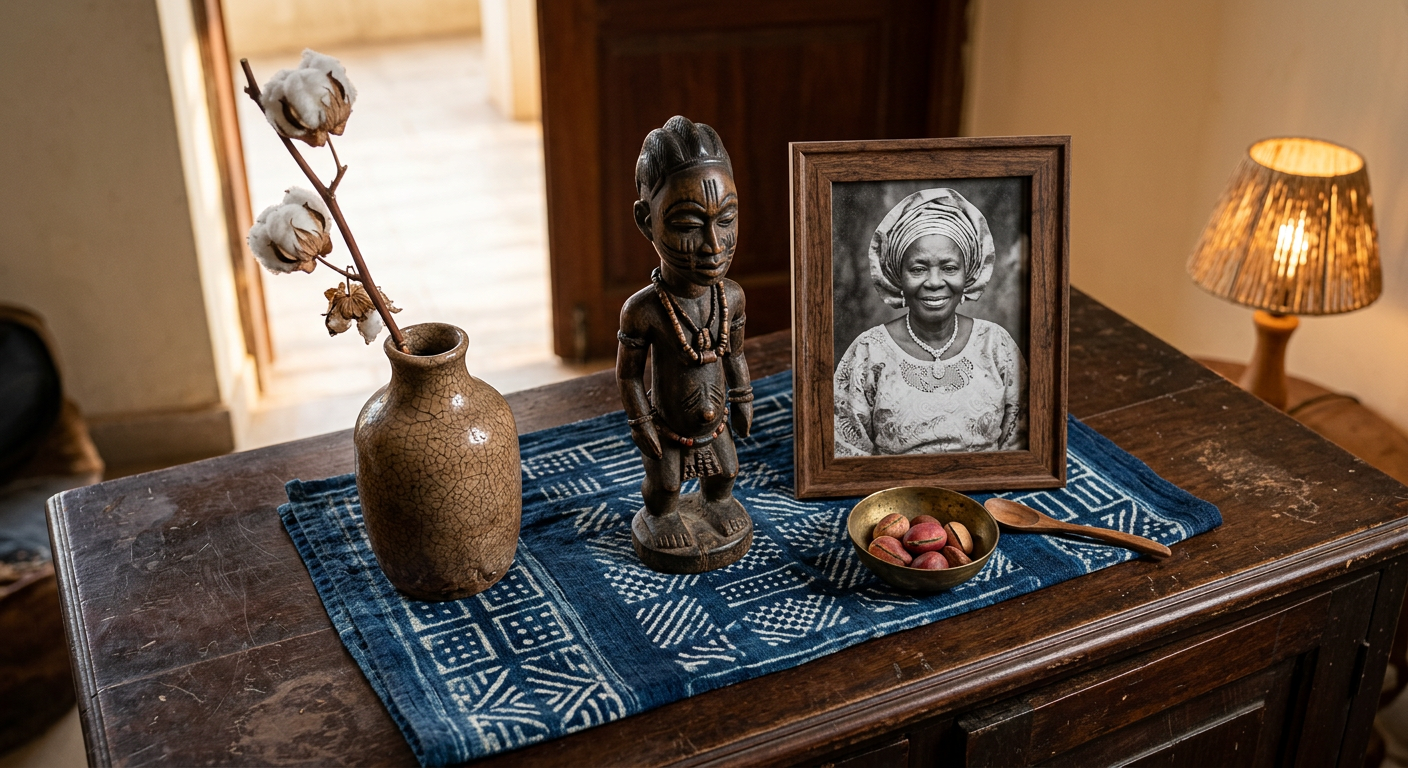
For a long time, this kind of interior style did not have a name. It was just how certain people decorated. Grandmothers who kept carved wooden figures on the mantlepiece alongside framed Bible verses and dried flowers.
Aunties with homes full of brass and wax print throw pillows and plants in every corner. Creative young people in cities like Lagos, Accra, Nairobi, London, and Atlanta putting together apartments that felt deeply personal and could not be replicated by any furniture catalog.
The naming of it is what changes things. Once a style has a name, people can find each other, share ideas, and build something together. And that is exactly what has happened on Pinterest, where Afrohemian boards have been growing quietly for the past two years and exploded in early 2026.
What Actually Makes a Space Afrohemian?
This is where it gets interesting because Afrohemian is not a formula. It is a feeling backed by certain choices. You cannot go to a single store and buy an Afrohemian room. It has to be gathered, which is part of what makes it so beautiful and so personal.
That said, there are things you will notice again and again when you look at spaces that fall under this style.
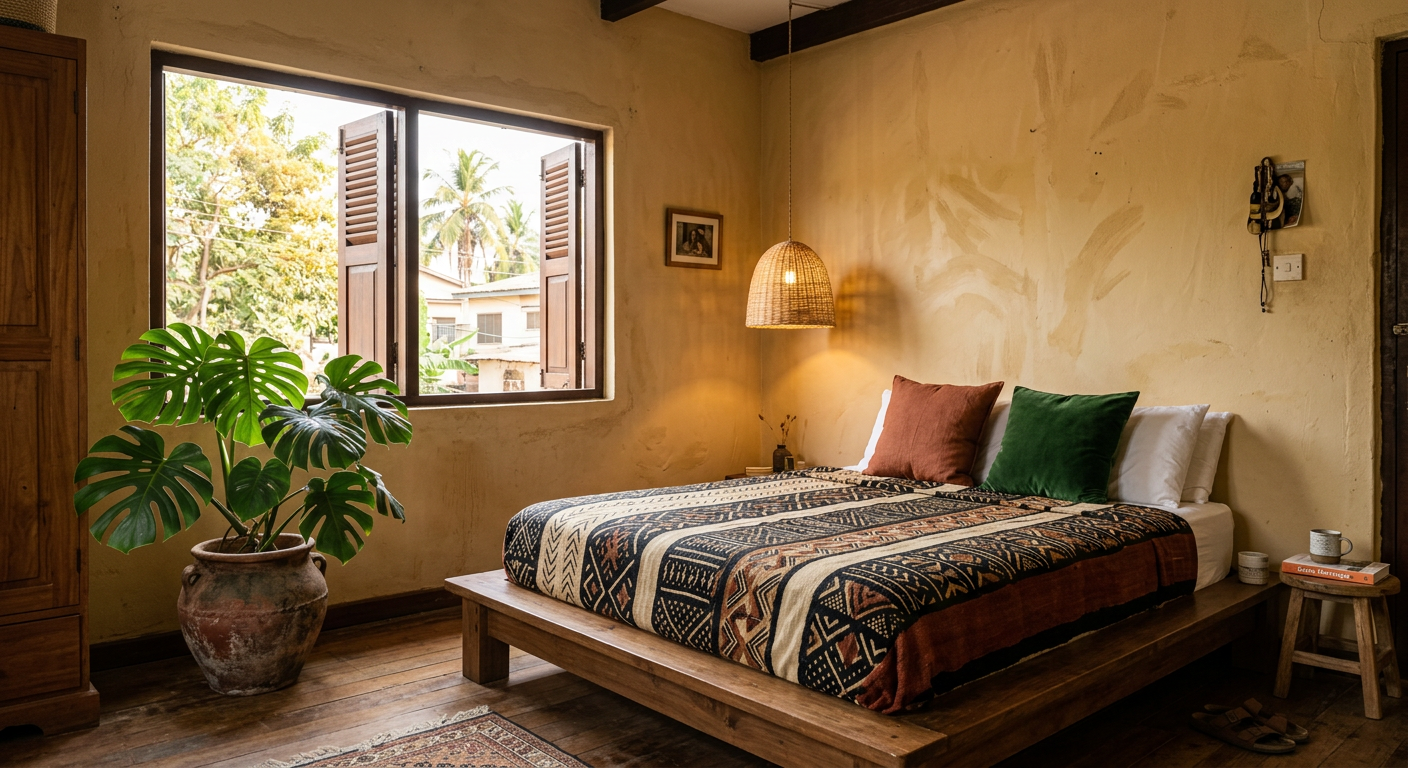
Color that means something. Afrohemian rooms are not afraid of color, but they are not chaotic either. The palette tends to lean into the earth, deep terracottas, warm ochres, forest greens, chocolate browns, and burnt oranges. These are colors that feel rooted. Colors that remind you of soil and sunset and spice markets. When brighter colors come in, they come in through textiles and art, not through painted walls.
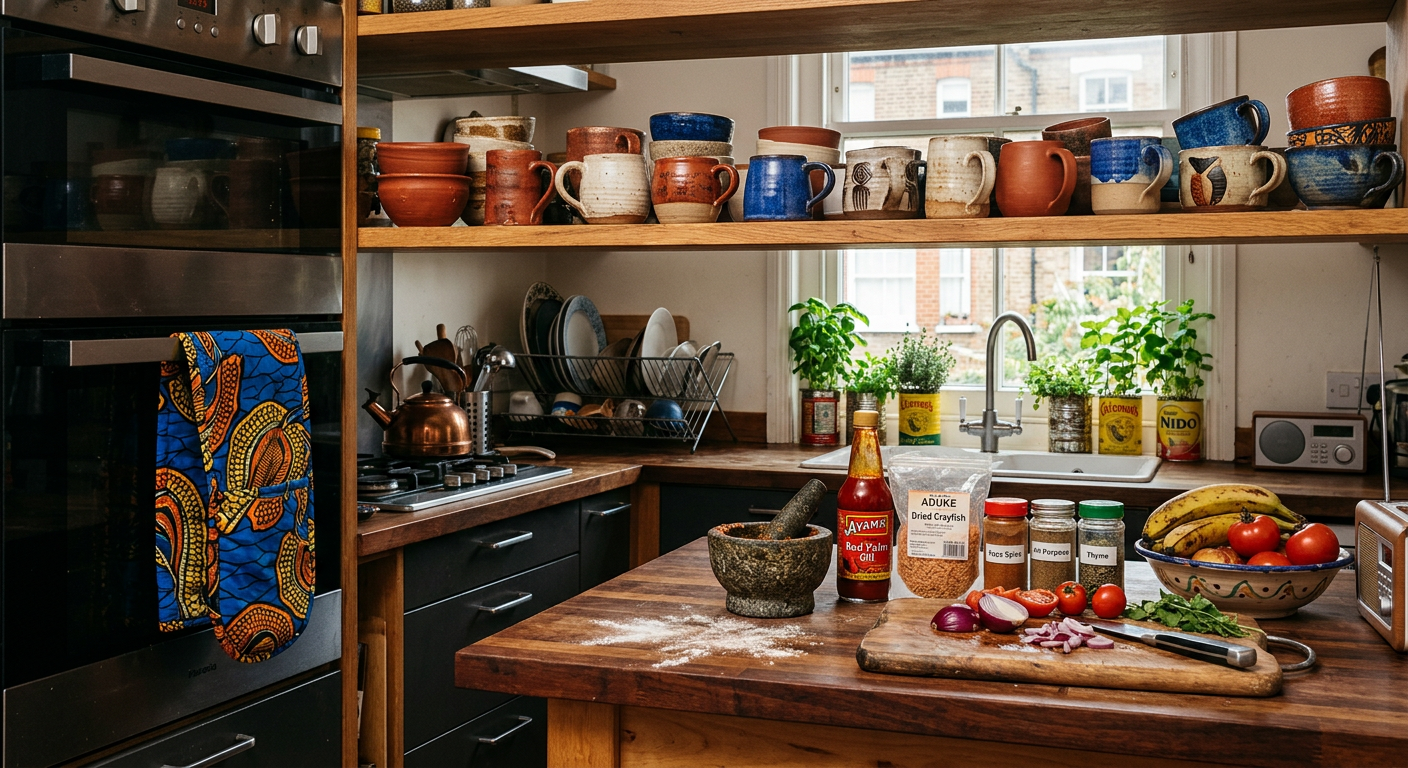
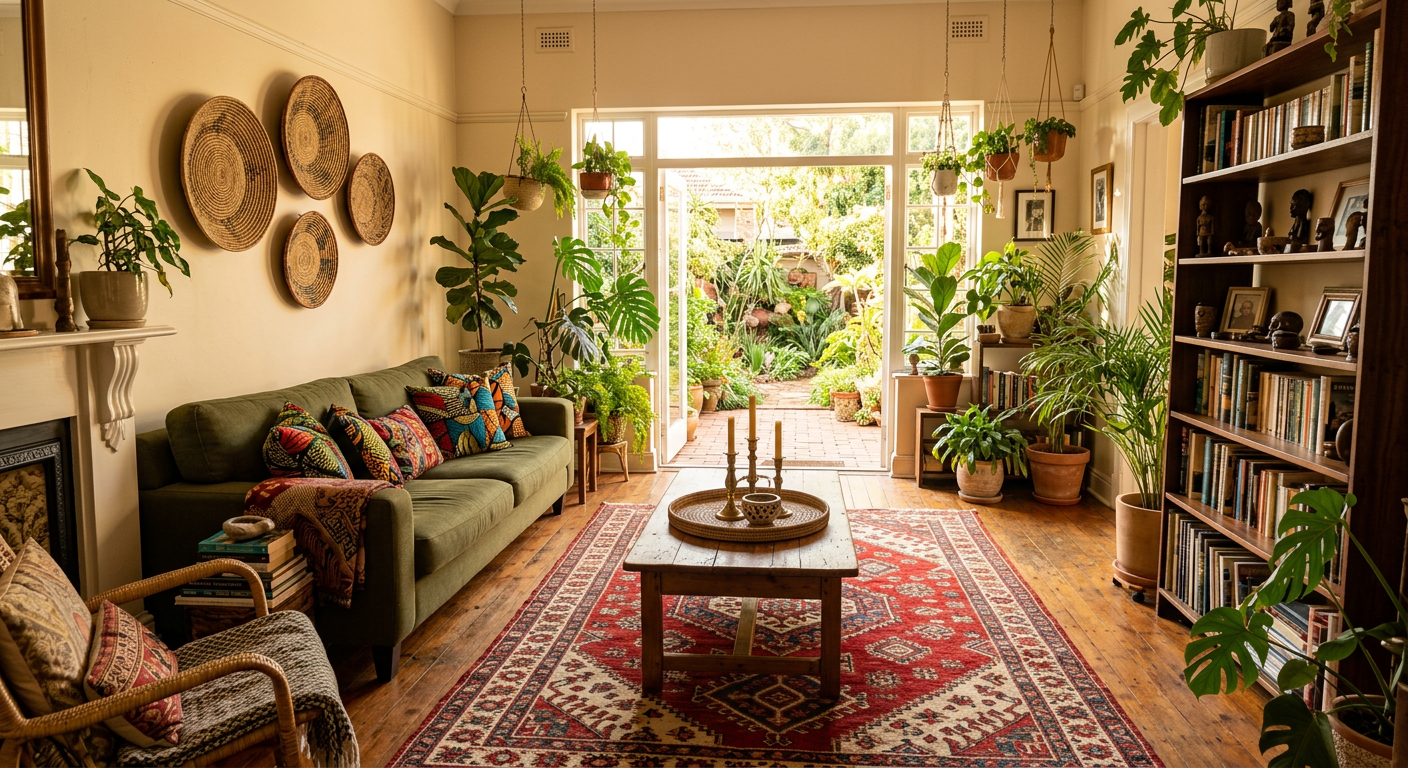
Texture on texture. One of the things that makes Afrohemian spaces feel so rich is the layering of different textures. Woven grass mats on wooden floors. Linen cushions on rattan chairs. Velvet against raw cotton. Smooth ceramic beside rough jute. The room asks you to reach out and touch things, which is a quality that very few interior styles manage to pull off.
Things that have a past. There is a strong preference in Afrohemian decor for items that carry history. Vintage finds, inherited pieces, handmade objects, things bought directly from artisans. The style is deeply suspicious of anything that looks too new or too perfect. A small chip in a clay bowl is not a flaw. It is proof that the bowl has been used, that it has lived.
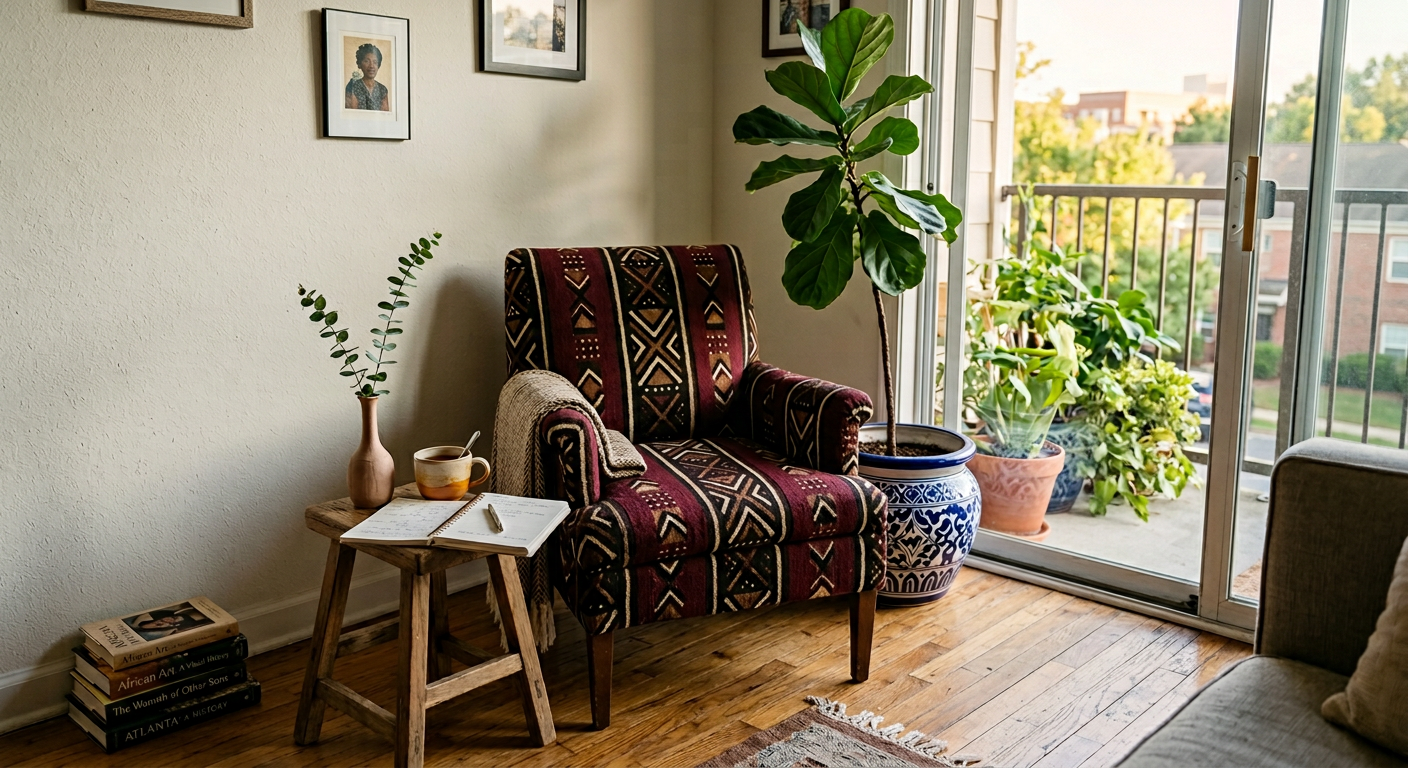
Plants, and lots of them. If there is one thing that connects Afrohemian spaces across the board, it is greenery. Not the curated, one-plant-on-a-shelf kind. The kind where plants are taking over. Hanging from ceilings, climbing up walls, sitting on floors, gathering on windowsills. Plants bring the outside in, and in a style that is so rooted in natural materials, they feel completely at home.
Art that represents. The walls in an Afrohemian space are never bare, but more importantly they are never generic. You will find African art alongside contemporary Black artists. Photography from the continent mixed with prints bought at a local market. Masks and sculptures from Nigeria or Mali next to abstract paintings by someone the owner met at an art fair.
The art is personal and it is political in a quiet way, because representation in your own home is a political act whether you think about it that way or not.
Pattern with purpose. Kente, kuba cloth, mudcloth, ankara, and batik prints appear throughout Afrohemian spaces, not as costume or decoration in the shallow sense, but as something genuinely loved and understood. A mudcloth cushion cover is not just pretty. It is a connection to a tradition of making that goes back centuries in West Africa. When these patterns appear in an Afrohemian room, they are not random.
Why Is It Blowing Up Right Now?
A few things are happening at the same time that explain the rise of Afrohemian in 2026.
First, there is a growing exhaustion with the cold, clean interior styles that dominated the last decade. All white walls. Scandi minimalism.
Grey everything. These aesthetics are beautiful in their own way, but they are also cold. They are the interior design equivalent of a handshake. A lot of people, especially after years of spending more time at home, want their spaces to feel warmer, more personal, more like a hug.
Second, there is a genuine and long overdue shift in whose aesthetic gets celebrated. Black creators, Black homeowners, and Black interior designers are getting more visibility online, and the design world is finally paying attention to traditions and aesthetics that were always there but were not being covered in the big glossy magazines. That is changing.
Third, and this might be the most important thing, people are tired of interiors that have no story. We have spent so many years in the era of fast furniture and disposable decor that there is now a real hunger for the opposite.
Afrohemian is built on slowness and intention. Everything in the room was chosen carefully, found deliberately, or received meaningfully. In a world of same-day delivery and algorithm-generated recommendations, that feels radical.
How Do You Start Afrohemian Without It Feeling Fake?
This is the question that comes up the most and it is a fair one, because Afrohemian is rooted in genuine cultural identity. It is not a style you should approach the way you would a mood board.
If you have African heritage, or if this aesthetic connects to your actual history and experience, then you already have a starting point.
Look at what you have inherited, what you have collected, what you have been given. Start there. The most authentic Afrohemian spaces are built around real objects with real stories.
If you love this aesthetic and want to bring it into your home but it is not your cultural background, then the most important thing is to be intentional and respectful about where you source things. Buy directly from African artisans and designers whenever you can.
Learn about the pieces you are bringing in. Do not buy a mask or a piece of ceremonial cloth just because it looks good on a shelf. Take the time to understand what you are holding.
For everyone, the path into Afrohemian is the same: start with one piece you genuinely love. A single kuba cloth pillow. A terracotta pot from a local market. A piece of art by a Black artist whose work moves you. Build from there slowly. Let the room grow over time. That patience is part of the whole point.
The Difference Between Afrohemian and Bohemian
People sometimes ask how Afrohemian is different from regular bohemian or boho decor, which has been popular for years. The difference is both aesthetic and cultural.
Bohemian decor draws from a wide mix of global influences, often without any particular anchor. It tends toward the carefree and eclectic. It borrows from everywhere and owes allegiance to nowhere.
Afrohemian is more specific. It has a cultural center of gravity, which is the African continent and its diaspora. The eclectic spirit is there, yes, but the mixing is always in conversation with something rooted, something African. The warmth is not just visual.
It is connected to a specific worldview about home, about hospitality, about the importance of beauty in everyday life.
There is also the matter of history. Boho is a trend that comes and goes. Afrohemian is a style that has existed in practice for generations and is only now getting its name and its platform.
The Rooms You Will Not Forget
What stays with you after looking at Afrohemian spaces is not any single piece or any specific color. It is the overall sense that someone lives here fully. That the room is not performing anything for anyone.
That every object was brought in because it was wanted, and that together they have created something that could only belong to this person, this family, this life.
That is the hardest thing to achieve in interior design and the thing that most people spend years trying to figure out. Afrohemian does not give you a formula for it. It gives you a philosophy. Collect things you love. Honor where you come from. Make your home feel like you.
In 2026, that philosophy is resonating with a lot of people. And if Pinterest is anything to go by, it is only just getting started.
One thought on “Afrohemian Decor: The 2026 Trend Every Home Needs Right Now.”