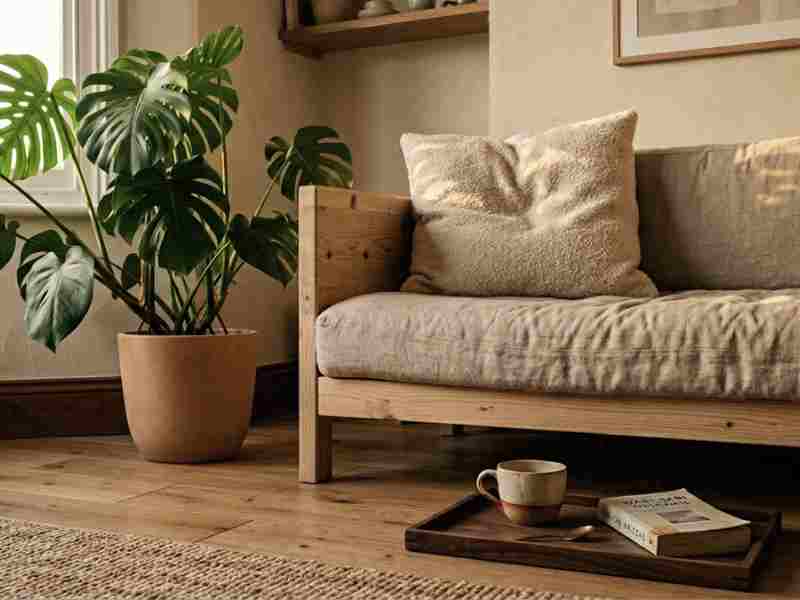
Japandi style on a budget IKEA is not only possible, it is honestly one of the best combos in affordable home decor right now.
If you have been eyeing those calm, earthy, clutter-free rooms on Pinterest and thinking that kind of look costs a fortune, I am here to tell you it absolutely does not.
With IKEA furniture, a little patience, and the right eye for what to buy versus what to skip, you can get a full Japandi aesthetic home on a real-world budget. We are talking affordable Japandi decor, minimalist IKEA hacks, and budget Japandi living room ideas that actually work in real life.
I need to be upfront about something. Like most people, I came to Japandi through a rabbit hole of interior design accounts at 11pm when I should have been sleeping.
The same kind of rooms kept appearing. Pale walls. Low furniture. Natural wood. A single plant in a handmade-looking pot. No clutter. No color drama. Just this deep, settled quietness that made me feel calm just looking at it.
The problem was that most of the rooms I was saving to my phone looked expensive. And I had a budget that was anything but. So I started digging. Could IKEA actually pull this off?
Could I walk into a store that sells Billy bookcases to half the planet and walk out with the ingredients for something that felt this considered and serene?
The short answer is yes. The longer answer is what this whole post is about.
What Japandi Actually Is (and Why It Works)
If you want the full philosophical deep-dive into what Japandi is and where it comes from, I covered that in detail in my earlier post on Japandi Bedroom Ideas Under $200. It is worth reading if this is your first time coming across the style.
But for the purposes of this post, here is what matters most when you are shopping IKEA specifically.
Japandi is not a look you can buy in one trip. It is a ratio. The ratio of how much you bring in versus how much you leave out. And that ratio is weighted much more heavily toward leaving out than most people expect when they first start.
The furniture is almost secondary. IKEA can provide the furniture. What it cannot provide is the editing, and the editing is where the style actually lives.
The other thing worth knowing is that Japandi reads very differently room by room. The living room version of this style is more social, slightly warmer, a little more forgiving of layers and texture. The bedroom version is quieter and more stripped back.
This post is focused on the whole home, but the living room is where IKEA earns its place most visibly, so that is where we will spend the most time.
What makes IKEA such a good foundation for this specific style is something people do not always clock straight away. IKEA was built on Scandinavian design principles, which means the bones of the furniture already speak one of Japandi’s two languages.
The clean profiles, the light wood tones, the absence of fussy detailing. You are not fighting the furniture to make it fit. You are mostly just pointing it in the right direction.
“Japandi is not about spending more. It is about choosing less, and choosing better.”
The Japandi Color Palette on a Zero-Dollar Budget
This is where most people can start immediately, for free. The Japandi palette is built on neutrals with warmth. Think warm whites, soft greiges, dusty sage green, terracotta, muted clay tones, and deep charcoal. It is not the stark, bright white of modern minimalism. It has warmth in it.
Renters who cannot paint can still apply this palette through what they buy and display. For those who can paint, warm whites like off-white or linen tones work far better than pure white.
A single wall in charcoal or deep warm grey does a lot of heavy lifting in a Japandi room and costs the price of a tin of paint.
The most important thing here is what you remove, not what you add. If your walls have bright or busy art, take it down. If you have colorful cushion covers, replace them with oatmeal or olive ones.
These small swaps often cost under ten dollars and they shift the entire feeling of a room before you spend a single cent on new furniture.
The IKEA Pieces That Actually Read as Japandi
Here is where I want to get specific because not all IKEA is created equal for this look. Some IKEA pieces scream student flat. Others, when styled right, look like they belong in a design magazine.
Here are the ones that genuinely work.
LIVING ROOM
SOFA
KIVIK / ÄPPLARYD
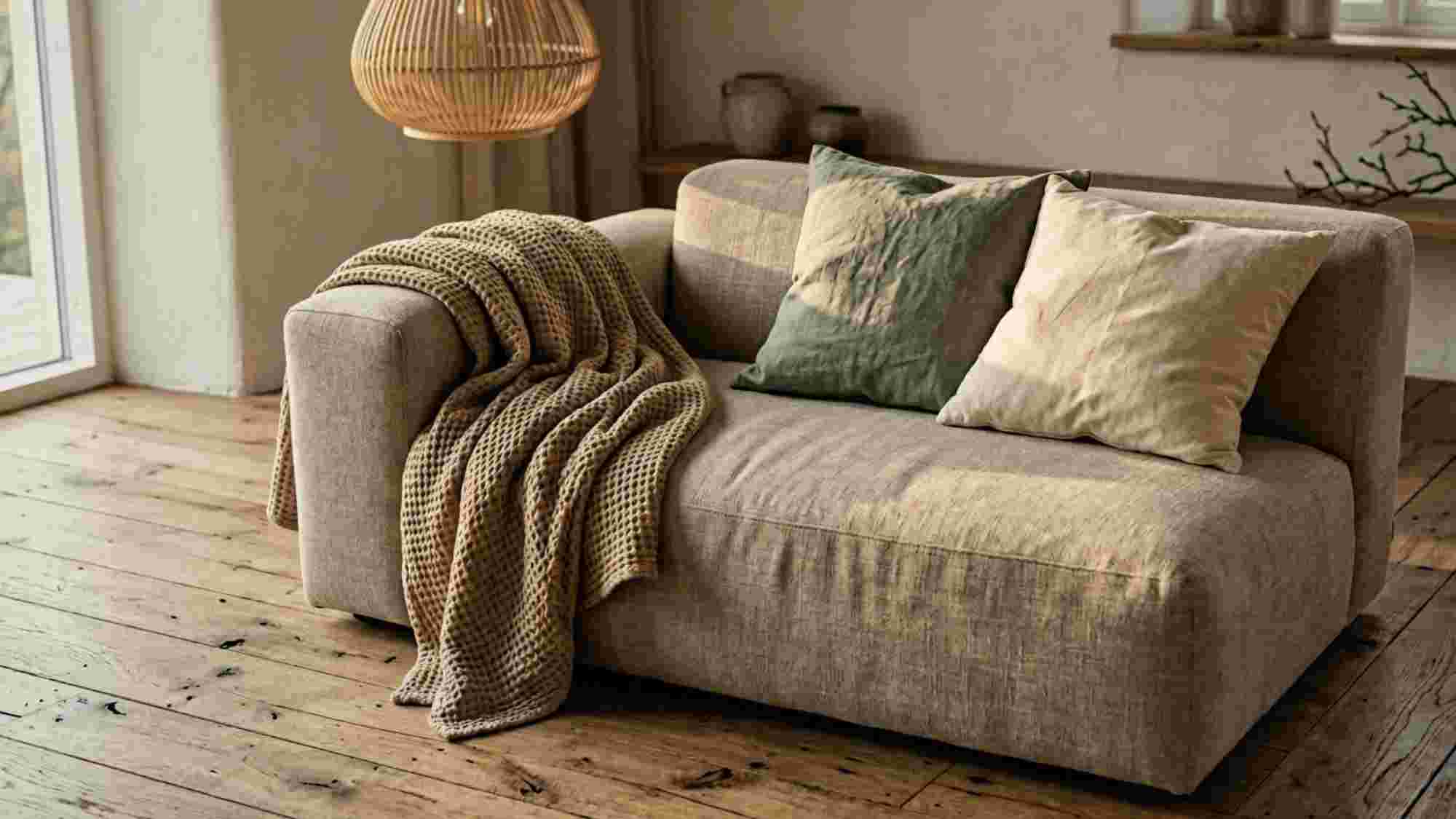
Low-profile sofas in linen or beige tones. Add a chunky knit throw and two linen cushions and this looks expensive. Stay away from the very boxy, blocky models in grey microfibre — those read as office, not Japandi.
COFFEE TABLE
KRAGSTA / LISTERBY
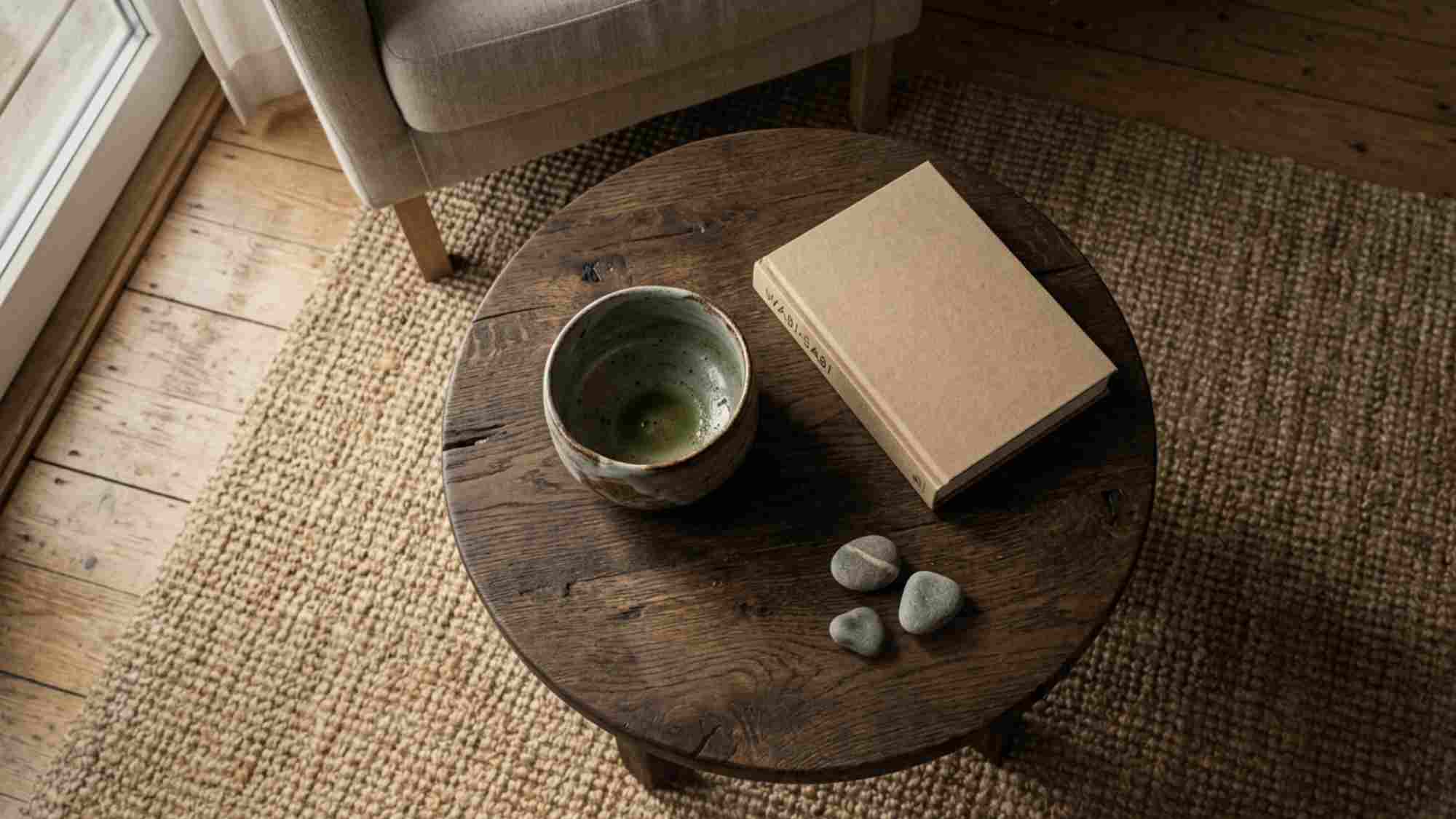
The round KRAGSTA in black is a dream for this look. The LISTERBY in oak veneer is equally good. Low, simple, and nothing unnecessary on the surface. One book, one small plant, done.
SHELVING
LACK / BILLY (hacked)
The LACK shelf in white or black-brown is incredibly versatile. Style it with three items max per shelf and it looks intentional. The Billy bookcase with cane-front doors added from a third-party seller becomes something else entirely.
LIGHTING
SINNERLIG / KNIXHULT
The bamboo pendant lights are some of IKEA’s most Japandi-friendly pieces. Natural material, simple shape, warm light. Hang one low over a dining table or corner seating area and it changes the room completely.
BEDROOM
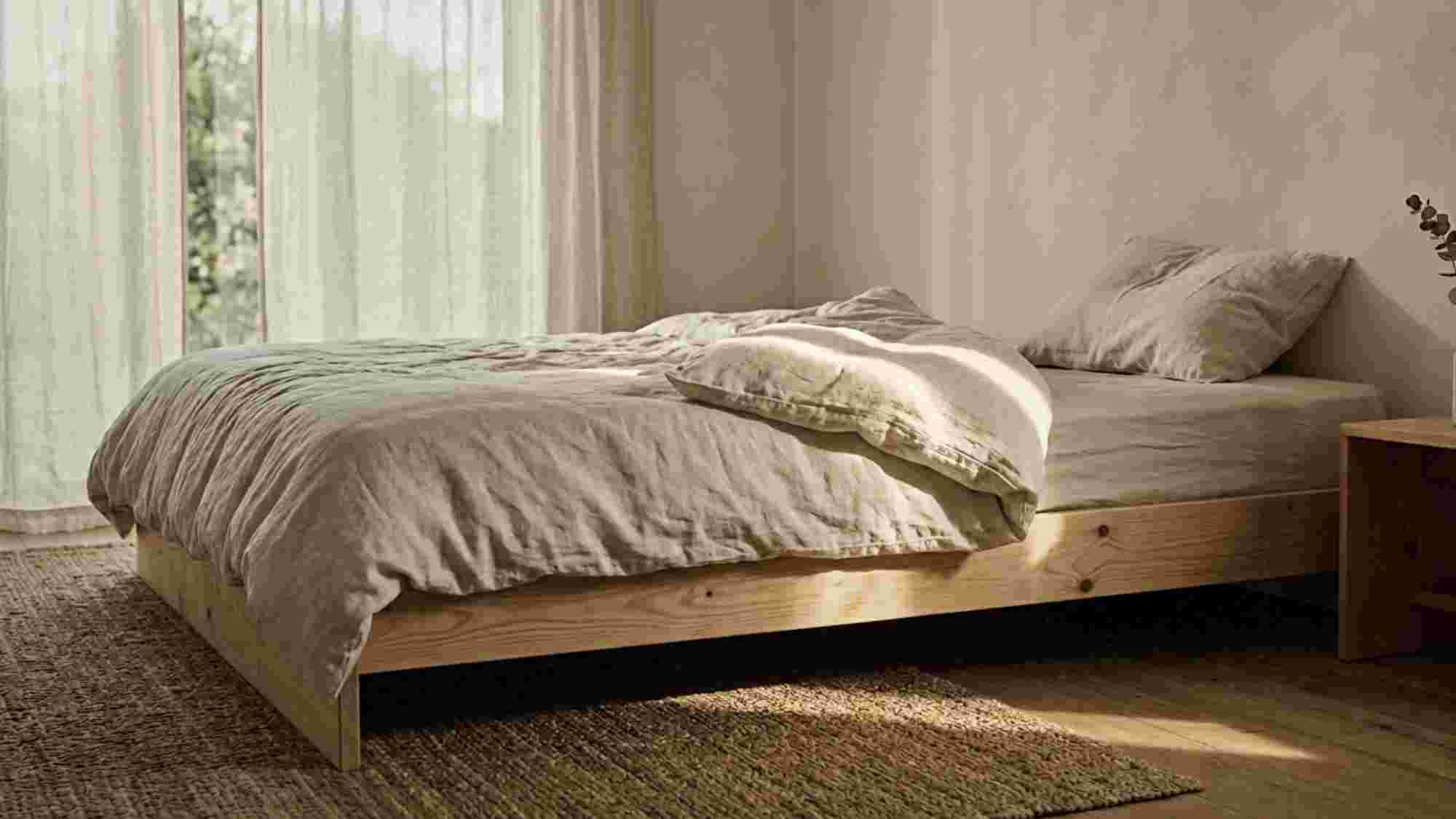
BED FRAME
TARVA / HEMNES
The TARVA in pine is intentionally unfinished so you can treat it yourself with a natural wood oil or a light matte stain. The HEMNES in white stain has simple lines that suit this look well.
STORAGE
PAX WITH FLAT-PANEL DOORS
The PAX system with FORSAND or GRIMO doors in white or grey-brown is extremely clean. No handles. Push-to-open or small leather tab pulls added after. It disappears into the wall and that is exactly what you want.
BEDSIDE
KNARREVIK / RAST
The RAST dresser in pine is small, affordable, and looks incredible refinished in a warm grey or simply oiled. The KNARREVIK in black is minimal and modern and at a price that makes it a no-brainer.
TEXTILES
PUDERVIVA / BERGPALM
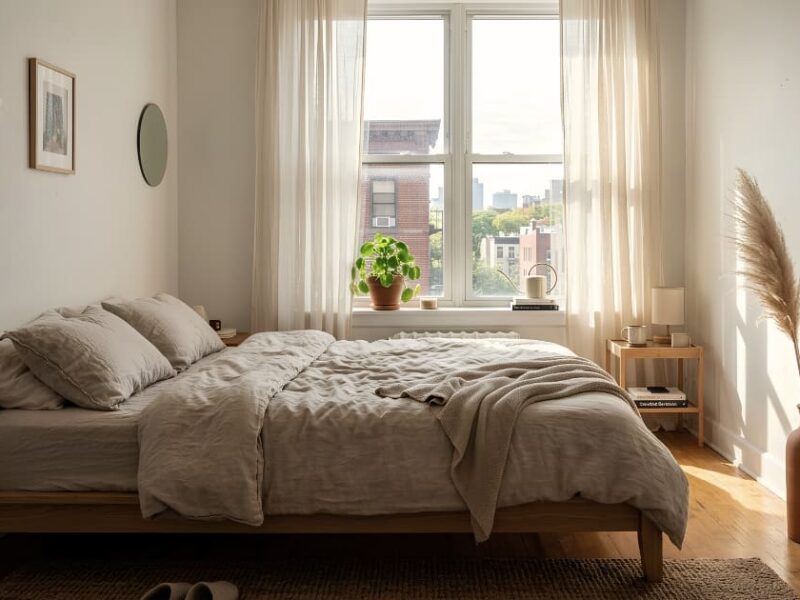
IKEA’s linen duvet covers are genuinely lovely. The PUDERVIVA in off-white or beige is thick, washed-linen quality. Layer with a waffle blanket and two pillowcases in a tone slightly different from the duvet for that effortless depth.
The Japandi Rule That Changes Everything
There is one rule in Japandi that nobody talks about enough and it has nothing to do with what you buy. It is about how many things you display. The number is lower than you think.
In a Japandi room, every surface that is visible should have at most two or three objects on it, and often just one. That is it. Not five. Not eight. One candle, one plant, one book. Or a single ceramic bowl. Or just a plant and nothing else.
This is the part of Japandi that people struggle with most because we are trained to fill space. Empty surfaces feel unfinished to most of us. But in Japandi, that empty surface is doing something.
It is giving the objects that are there room to breathe. It is giving your eye a place to rest. It creates the calm that makes these rooms feel so different from regular rooms.
So before you buy anything, go through your space and remove things. Take everything off every surface. Then put back only the things you genuinely love, one or two at a time, until the space still feels a little emptier than you are comfortable with. That uncomfortable feeling is usually exactly right.
A practical note: The things you remove do not have to go to the bin. Box them up and put them in a cupboard. Live with the reduced version for two weeks. If you miss something specific, bring it back. Most people find they miss almost nothing. The clarity in the room becomes addictive very quickly.
Budget Japandi Living Room Ideas That Actually Work
Let me walk you through a full budget Japandi living room using mostly IKEA, with a few other affordable additions. I am going to give you the real version, not the Pinterest version where the budget is somehow described as “low” but the rug alone costs three hundred dollars.
THE SOFA SITUATION
Buy an IKEA sofa in a natural linen tone or the lightest warm grey they have. If you already have a sofa in a colour you do not love, get a slipcover in oatmeal or natural linen from a third-party brand. These have improved enormously in the last few years and a good slipcover can transform a sofa for around forty dollars.
Add two cushion covers from IKEA’s SANELA range in a warm neutral or muted sage and one textured throw in chunky knit or waffle cotton draped over one arm.
THE FLOOR
If you have carpet, you may want to cover as much of it as possible. A large natural jute rug from IKEA (the SINDAL or TRAMPA) is affordable and adds exactly the right earthy texture. If your floor is wood-toned laminate, congratulations, it is already halfway there. Do not cover it completely. Let it breathe.
THE WALLS
One or two pieces of simple art, hung with intention. Not a gallery wall. Japandi does not do gallery walls. Think a single abstract piece in muted tones, a framed piece of calligraphy, a simple botanical print, or even a framed piece of Japanese wrapping paper.
IKEA’s RIBBA frames in black or natural are perfect. The art inside costs almost nothing when you print something from a free digital download site in a warm neutral or ink palette.
THE LIGHT
This is important. Overhead lighting alone kills a Japandi room. Layer it. Get a floor lamp with a linen shade for the corner. Add a bamboo pendant if you can. Use warm-toned bulbs, nothing over 2700K and ideally closer to 2400K. In the evening, run only the lamps and watch what happens to the room.
This single change, just the lighting in the evening, is something most people cannot believe they lived without.
THE PLANTS
One large plant in a simple terracotta or concrete pot. Not a collection of small plants arranged on every surface. One big one that earns its place. A fiddle leaf fig, a monstera, a snake plant, or a large pothos trained up a wall.
If you have the space and budget for two, put them at different heights, one floor-level and one on a simple wooden stool or low shelf. Three plants total in a room is usually the maximum for Japandi before it starts to tip into something else.
The IKEA Hacks Worth Doing for Japandi
Some IKEA pieces need a small intervention to land right in this aesthetic. Here are the ones worth doing, all low effort, low cost.
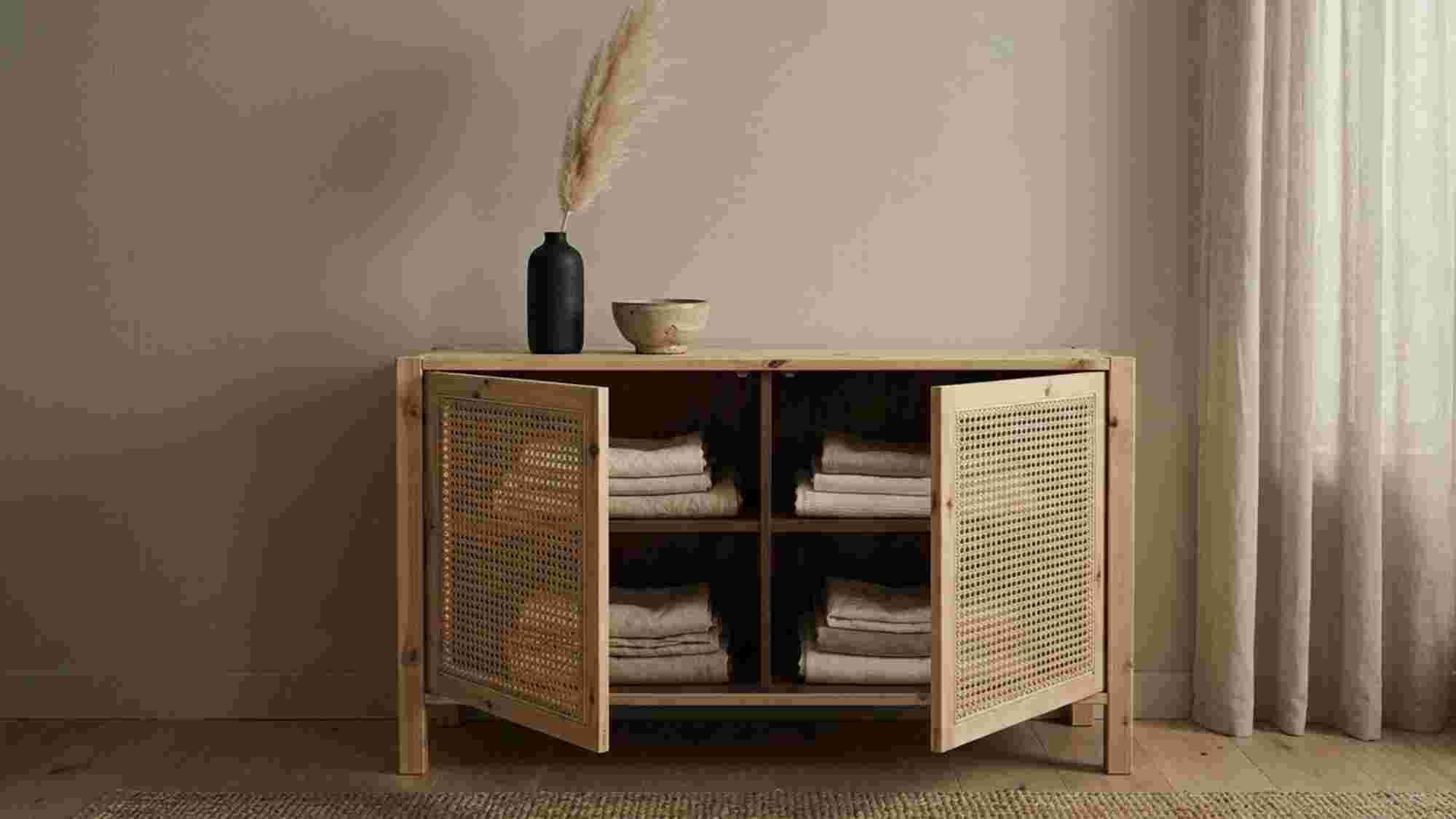
01. Add cane or rattan inserts to cabinet doors. The BILLY bookcase with its original doors looks like a bookcase. The same piece with cane panel inserts cut to size and fitted behind the doors looks like a boutique furniture store find. This hack is widely documented online and costs around twenty to thirty dollars in materials.
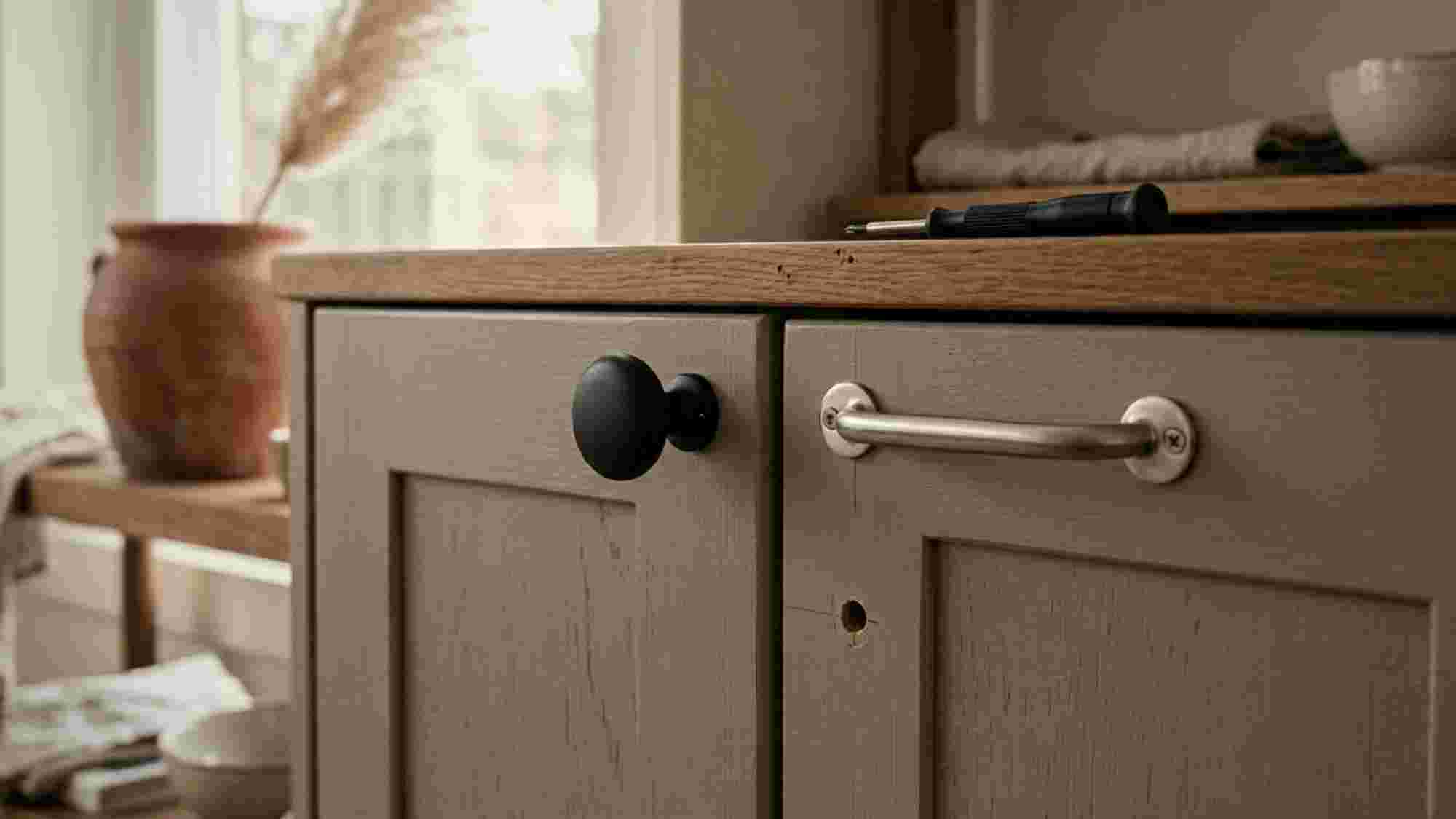
02. Replace factory handles with ceramic or leather pulls. The standard IKEA hardware is functional but generic. Ceramic knobs in off-white or matte black, or small looped leather pulls, cost very little from hardware stores and add a handmade quality that is central to Japandi.
03. Oil or stain your pine IKEA pieces. The TARVA bed frame, the RAST nightstand, the IVAR shelving unit. All of these come in raw pine. Sand them lightly and treat with a natural wood oil, a teak oil, or a dark wood stain depending on the tone you want. The transformation is significant and the materials cost almost nothing.
04. Raise or lower furniture with legs. IKEA sells replacement legs for sofas and cabinets. Swapping to short, tapered solid wood legs brings the profile of a cabinet or sofa down closer to the ground, which is very much part of the Japandi silhouette.
You can also do the opposite on some pieces to get them off the ground and create that floating quality.
05. Use IVAR shelving as an open wardrobe or room divider. The modular IVAR pine system, when left raw or oiled, has a beautiful, honest quality that fits Japandi well. Build it out, add some woven baskets for storage, and it becomes both functional storage and a visual element in the room.
What Not to Buy
This section might save you more money than any of the shopping advice above. Japandi on a budget is as much about restraint as it is about the right purchases. Here are the IKEA buys that work against this look, even though they might seem like they fit.
Anything with chrome or silver hardware. Chrome reads as modern and a little clinical. Japandi uses matte black at the boldest and warm brass or dark bronze at the most natural. Check your existing fixtures and hardware before you buy anything new. You may find that swapping one or two items is all you need.
Busy textiles or patterns. Some IKEA textiles have folk patterns or geometric prints that are popular right now but do not sit in Japandi. Stick to solid colours, subtle weave textures, or the most restrained natural prints. When in doubt, buy plain.
Glossy surfaces. High-gloss cabinet doors, lacquered coffee tables, and shiny finishes belong in a different design tradition. Japandi is matte. Wood grain. Ceramic. Linen. Stone.
These materials absorb light rather than bounce it and that is part of where the calm comes from.
Too many small accent pieces. IKEA sells a lot of small decorative items at the checkout and around the shop. Most of them will not serve you in a Japandi space.
One beautiful ceramic piece is better than five small mass-produced ones. Save your money and spend it on one thing that genuinely feels handmade or considered.
The Emotional Side of This Style (Which Nobody Talks About)
I want to end on something a bit different because I think it matters.
Japandi is not just an aesthetic. Both the Japanese and Scandinavian traditions it comes from are deeply connected to the idea that your environment affects how you feel.
The Japanese concept of ma is about meaningful empty space, the idea that what is not there is as important as what is. The Scandinavian idea of lagom is about having just the right amount, not too much, not too little.
These are not decoration concepts. They are ways of living. And when you start applying them at home, especially at a budget where you have to be intentional because you cannot just buy your way through it, something shifts.
You start to notice what actually makes you feel good in your space and what is just there out of habit. You stop filling space for the sake of it, bring things in more slowly and with more thought.
I have talked to a lot of people who went down the Japandi path expecting a visual result and came out the other end saying it changed how they felt at home.
More settled. Less restless. More comfortable in the space they already had rather than constantly wanting a bigger, better, different one.
That is a real outcome. And it does not cost a lot. It costs mostly time and the willingness to live with less for a while until you find out what less actually means for you.
The honest budget breakdown: A full Japandi living room transformation using IKEA as the backbone can realistically be done for between one hundred and fifty and four hundred dollars, depending on what you already own and what needs replacing.
The bedroom even less, often under two hundred dollars including textiles. The biggest cost is usually the sofa if you do not have one, and even then the IKEA linen options are competitive. Everything else, the styling, the simplifying, the lighting swap, the textile changes, this is where most of the transformation actually happens and most of it is cheap.
Where to Start If You Feel Overwhelmed
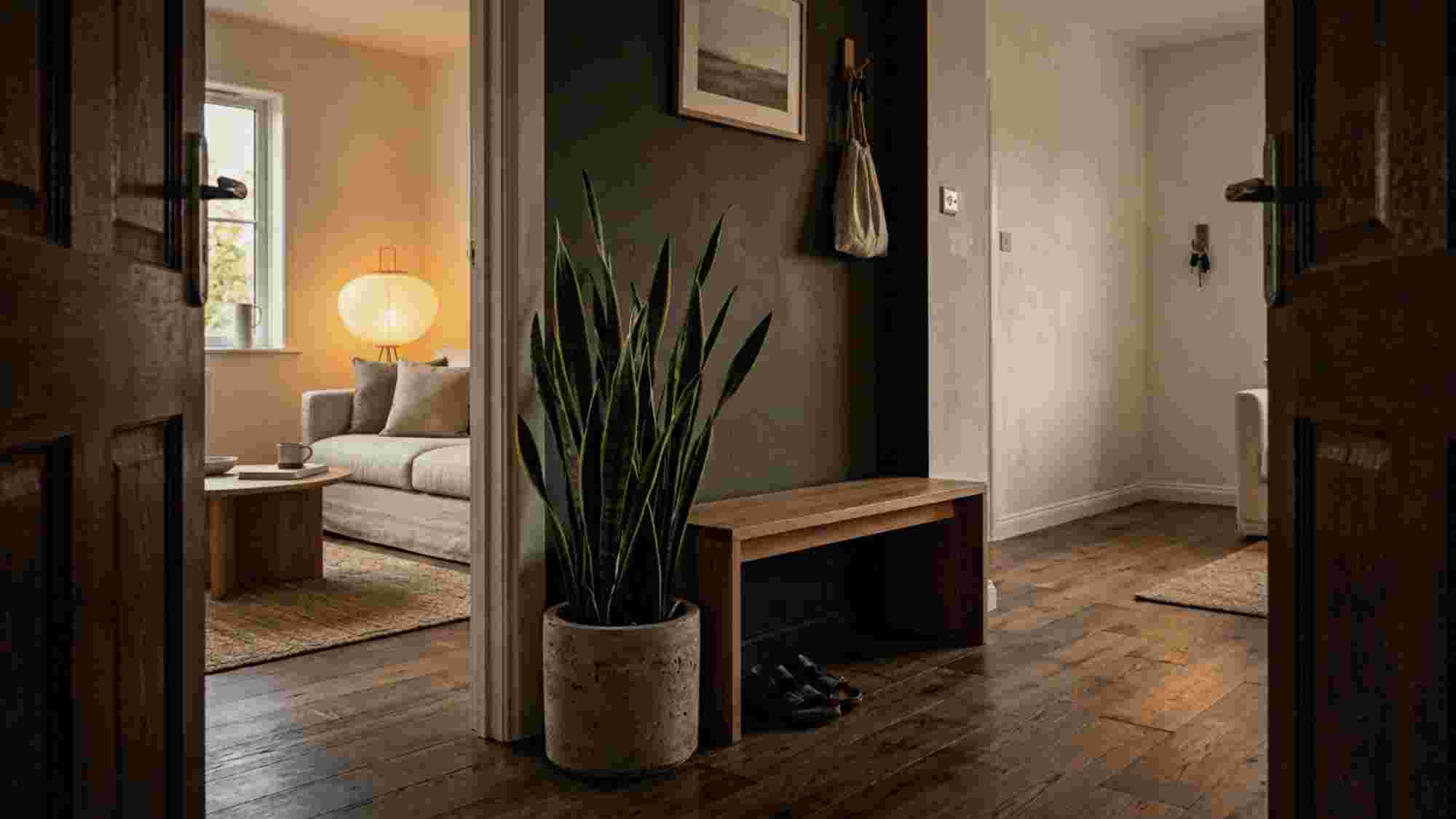
Pick one room. Not the whole house. One room that you spend real time in, either the living room or the bedroom. Go into it and remove everything from every surface. Put it all in boxes, out of sight. Live with the empty surfaces for three days.
Then start from scratch. Bring in only what you love. Style each surface with intention. Add texture through one textile and one plant. Adjust the lighting so you are never using the overhead alone in the evenings.
After one week, you will know exactly what this style is asking of you and you will know whether it is for you. Most people find that it very much is.
IKEA is ready when you are. The building blocks are genuinely there, at prices that do not require a second mortgage. You just need to know which ones to pick, which ones to skip, and how to let the space do its work once you stop filling it.
That is the whole secret, really. Japandi on a budget with IKEA is less about what you spend and more about what you finally let go of.
2 thoughts on “Japandi style on a budget IKEA”