
Japandi bedroom ideas are everywhere right now, and for good reason. This style sits right at the meeting point of Japanese minimalism and Scandinavian warmth, and the result is a bedroom that feels calm, clean, and lived-in all at once.
The best part? You do not need to tear out a wall, hire a contractor, or spend a fortune to get there. Budget Japandi decor, affordable bedroom makeover tricks, and minimalist bedroom styling on a small budget are all within reach.
Most of the changes that create the biggest visual difference cost less than a dinner out. This guide will walk you through exactly how to pull it off for under $200, starting today.
What Japandi Actually Feels Like (And Why It Works in a Bedroom)
Before we get into the shopping list, it helps to understand what you are going for. Japandi is not a strict set of rules. It is more of a feeling. Think of a bedroom where nothing is fighting for your attention. The colors are muted. The furniture sits low to the ground. There is wood somewhere, maybe linen, and the room smells like it could be in a forest.
Japanese design values emptiness. It says that negative space, the parts of a room that are bare, are just as important as the parts that are filled. Scandinavian design, on the other hand, values coziness. It says a room should feel warm and human, not sterile. When you put these two ideas together, you get a space that is calm but not cold. Minimal but not empty.
A bedroom is the perfect place for this because you want it to slow you down. When you walk into a Japandi room, your nervous system gets the message to relax. That is not an accident. It is the design doing its job.
If you are starting from scratch or working with a smaller space, read this first: How to Get the Japandi Look in a Small Apartment on Any Budget walks through the full foundation of the style room by room.

Step One: Clear the Visual Noise First (Costs Nothing)
The single most impactful thing you can do before spending a single cent is to remove things. This sounds too simple, but it is genuinely where most bedroom makeovers fail. People add without subtracting, and the room ends up looking cluttered no matter how nice the new items are.
Go through your bedroom with fresh eyes. Take everything off your nightstand. Remove the decorative items that have been there so long you stopped seeing them. Take the extra throw pillows off the bed. Pull out anything from under the bed that is just stored there with no real home.
You do not have to throw these things away. Box them up and put them somewhere else for a week. Live without them. You will probably find that most of it does not need to come back.
Japandi spaces typically have very few things on display. A small ceramic bowl. A single plant. A candle. One book. That is it. The restraint is the point.
Step Two: Work With Your Walls Without Painting Them
Paint is one of the fastest ways to transform a room, but it is also one of the messiest and most commitment-heavy. If you rent, or if you just do not want to deal with it right now, there are other ways to shift the color mood of your bedroom without opening a single can.
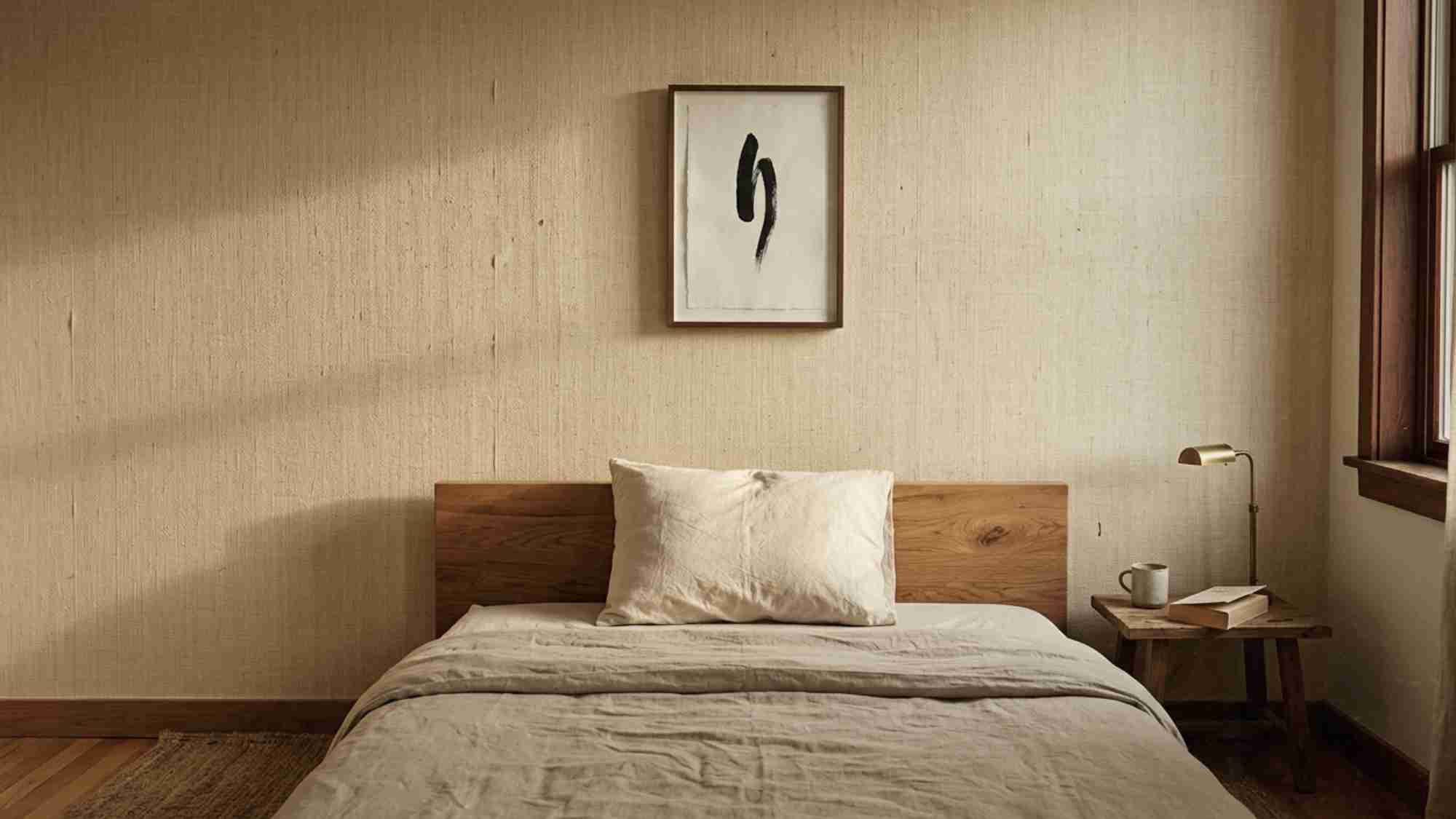
Removable wallpaper panels: Several brands now make peel-and-stick wallpaper that is renter-friendly and genuinely looks good. For Japandi, look for designs with subtle texture, grass cloth patterns, soft bamboo prints, or a warm off-white with linen texture. You do not need to cover an entire wall. Even one panel behind your bed creates a focal point. A 2-by-8-foot panel usually runs between $20 and $40.
Warm-toned bedding as a visual anchor: Your bedding takes up a huge portion of your visual field when you look at a bedroom. Swapping it to something in warm beige, terracotta, dusty sage, or oat white immediately changes the color story of the room. A good linen-look duvet cover from stores like H&M Home, Target, or even second-hand sites can be found for $40 to $70.
Sheer curtains in natural tones: Heavy, dark curtains absorb light and make a room feel smaller. Swapping to sheer or semi-sheer curtains in cream or warm white lets more natural light in and makes the whole room feel more breathable. You can find these at IKEA for under $20 a panel.
Step Three: Bring in Natural Materials Without Buying Furniture
New furniture is expensive and unnecessary. What you are going for in a Japandi bedroom is the presence of natural materials: wood, stone, rattan, linen, cotton, clay. You can introduce all of these through small accessories without replacing a single piece of furniture.
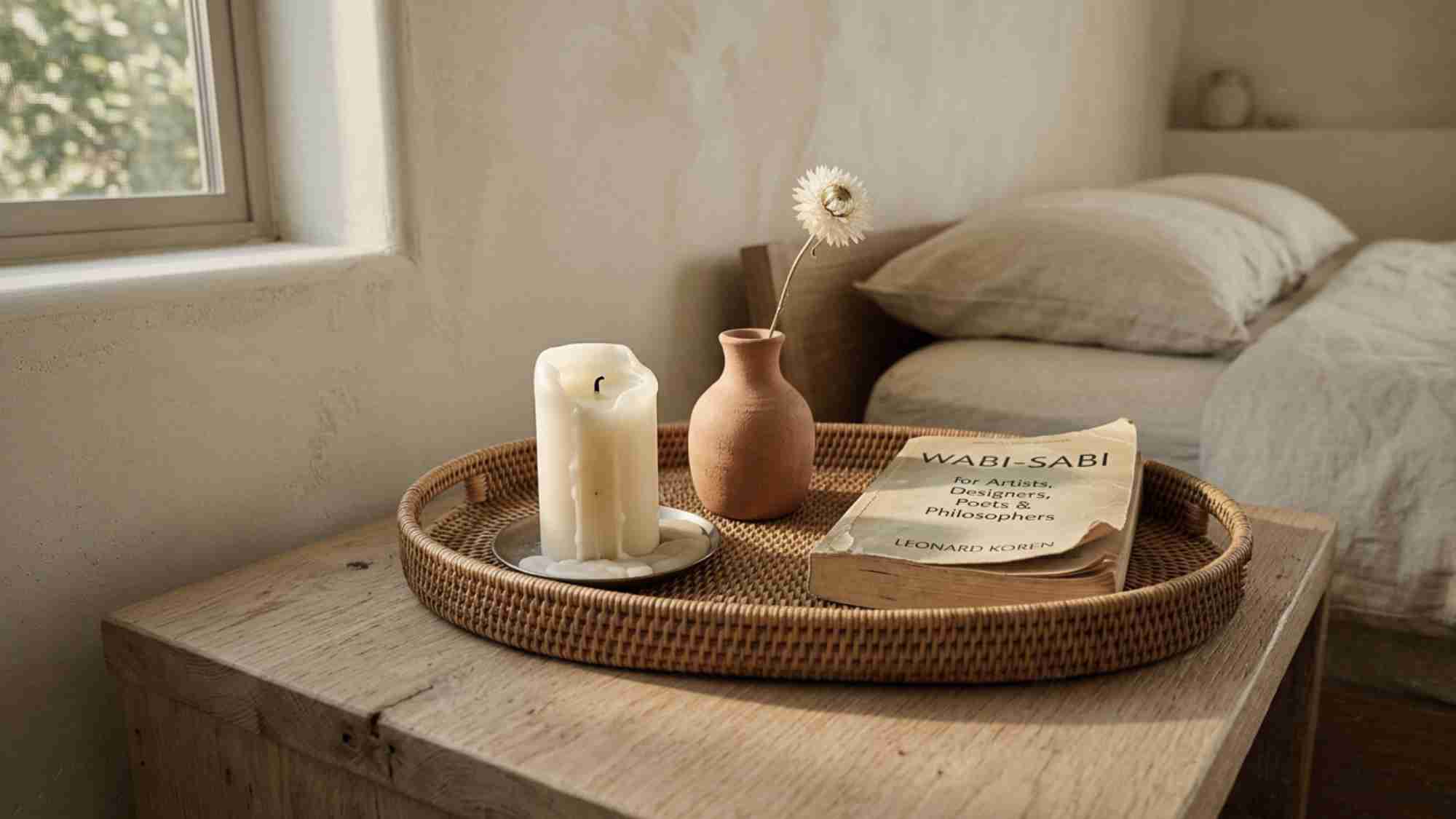
A bamboo or rattan tray for your nightstand: This is a $10 to $15 buy on Amazon or at most home stores. Put it on your nightstand and place only two or three things on it. A small candle, your book, a glass of water. The tray organizes the surface and adds a natural texture at the same time.
A small wooden stool or low bench: These come up constantly at thrift stores and second-hand markets. A plain wooden stool at the foot of the bed serves as both storage surface and a design element. It pulls the eye down low, which is very Japandi. Budget around $15 to $30 for a secondhand find, or up to $50 new.
Jute or natural fiber rug: If you have hard floors, a jute or sisal rug under the bed or at the bedside ties the room together fast. A 2-by-3-foot bedside rug in natural fiber costs about $20 to $35. It adds warmth, texture, and that grounded earthy quality that Japandi spaces do well.
Unglazed ceramic pieces: A small, matte ceramic vase or bowl in a neutral tone costs almost nothing but looks like it belongs in a Japanese ceramics shop. Look for these at thrift stores, discount home stores, or even dollar stores. The key is matte and simple. No shiny surfaces, no patterns.
Step Four: Fix Your Lighting Without an Electrician
Lighting does more for a bedroom’s mood than almost anything else, and most people have the wrong kind. Bright overhead lighting is the enemy of the cozy, warm Japandi vibe. The goal is layered, warm light that sits lower in the room.
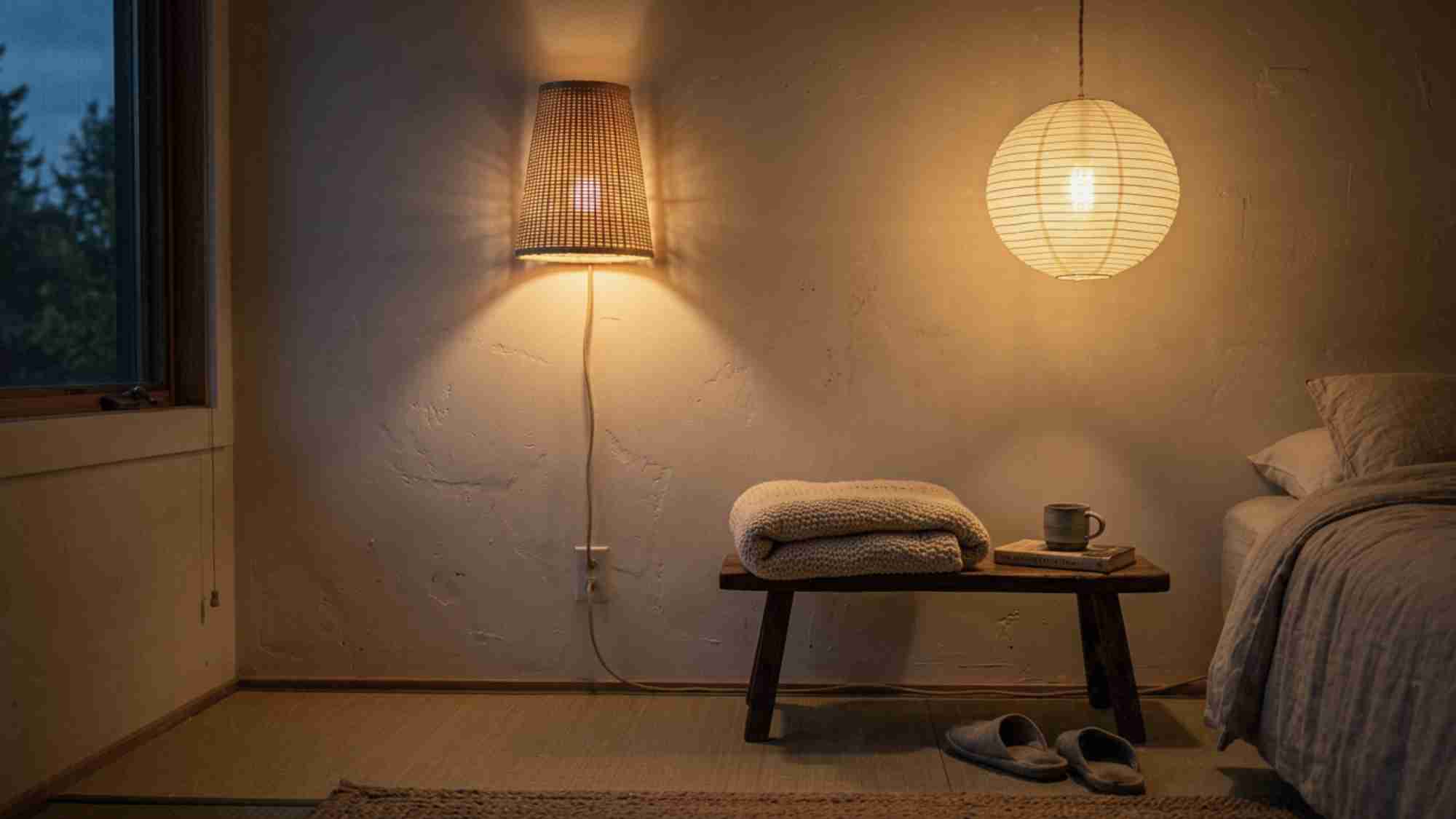
Plug-in wall sconces: These are one of the best Japandi tricks. They look like hardwired sconces, but they plug into the wall. You hang them on either side of your bed using a small nail or even adhesive mounting strips, tuck the cord behind the nightstand or thread it through a cord cover, and suddenly your room looks designed. Bamboo or paper shade sconces cost $20 to $35 each.
Edison bulb string lights: Not the party kind with multi-colored bulbs. Get warm amber Edison string lights and drape them simply along a wall or around a mirror. They cost around $15 and they give your room that soft golden glow that Japandi bedrooms are known for.
Swap your bulbs: If you do nothing else, change your bulbs to warm white (2700K or lower). Cool white bulbs make everything look clinical and flat. Warm white bulbs make the same room feel like it belongs in a design magazine. This change costs under $10 and takes five minutes.
A paper lantern or rattan pendant: If you have an overhead light fixture, consider swapping the shade to a paper lantern or rattan pendant shade. Many of these attach over existing bulb sockets without any wiring. They cost $15 to $25 and completely change the look of the room.
Step Five: Use Plants the Japandi Way
Plants are a must in Japandi spaces, but the way you use them matters. Japandi is not about filling a room with greenery until it looks like a greenhouse. It is about one or two well-chosen plants placed intentionally.
Japanese design often features a single plant in a simple pot. Scandinavian design tends to use plants that are hardy and unpretentious. For a Japandi bedroom, think:
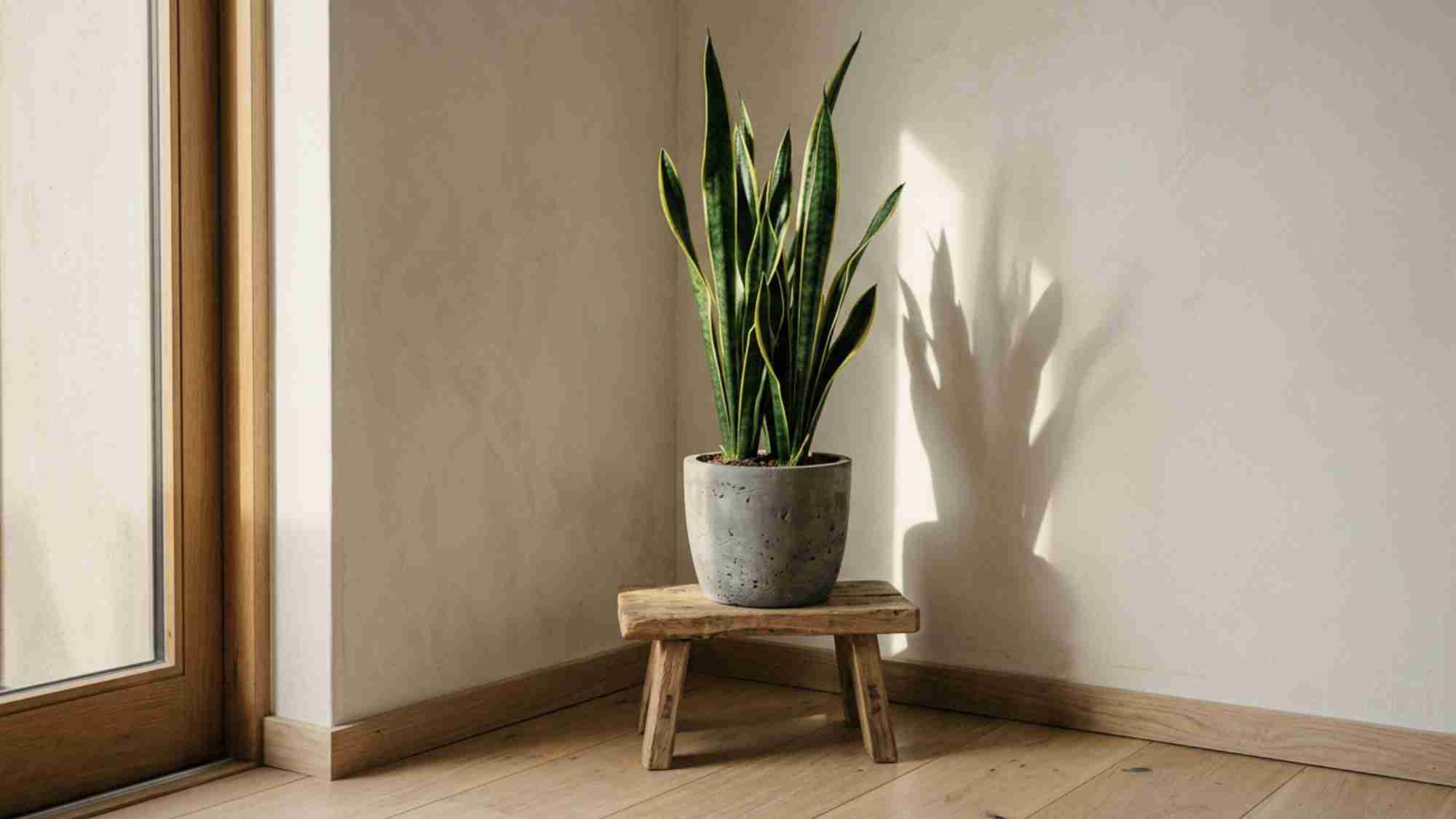
- A small snake plant on a low wooden stool
- A trailing pothos on a shelf at medium height
- A single dried pampas grass stem in a tall narrow vase
The pots matter as much as the plants. Go for matte clay, concrete, or plain white ceramic. No plastic nursery pots on display. No busy patterns.
You can get a small snake plant or pothos for $8 to $15 at most garden centers. A nice matte pot runs another $10 to $15. Budget $25 total for a plant moment that anchors the room.
Step Six: Style Your Bed Like a Japanese Inn
The bed is the largest object in the room. How it looks sets the tone for everything else.
Japandi beds are styled simply. Here is the formula:
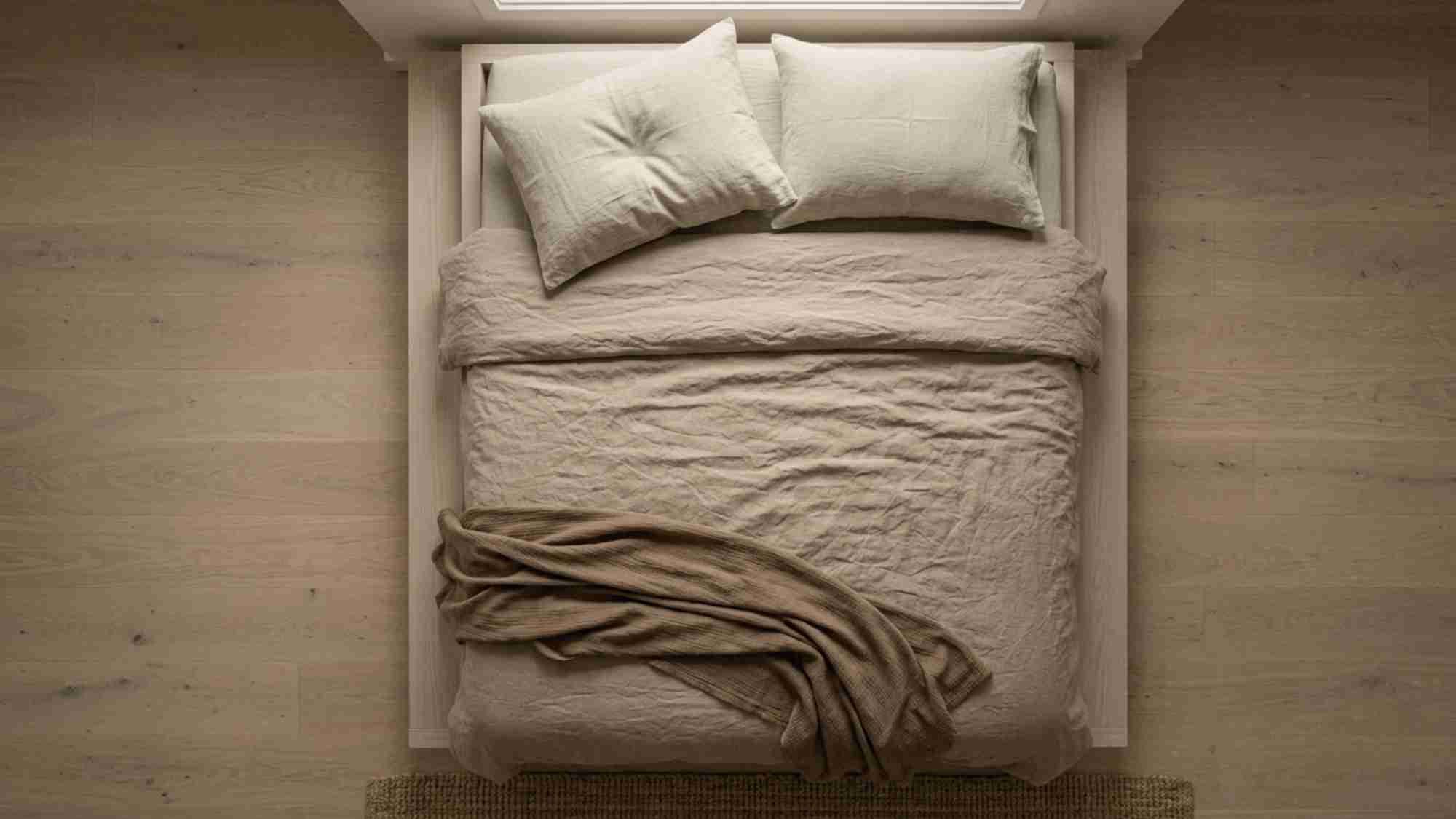
Start with one flat fitted sheet and one duvet or comforter in a solid natural tone. No patterns, or if you do want pattern, choose something very subtle like a simple stripe or a small geometric in the same color family.
Add one or two Euro pillows at the back for height. Then your two sleeping pillows in matching cases. That is it. No mountain of throw pillows. No decorative shams in three different colors.
The duvet should be a texture you want to touch. Washed linen is ideal because it looks slightly rumpled and natural even when it is made. Cotton percale works too. Avoid microfiber if you can, as it tends to look flat and synthetic.
For a final touch, fold a simple linen throw blanket at the foot of the bed. One fold, left slightly imperfect. This adds warmth without clutter.
Step Seven: Scent and Sound Are Part of the Room Too
This might sound like a stretch for a bedroom decor article, but hear this out. The way a room smells and feels affects how you experience it as much as how it looks. Japandi spaces are sensory.
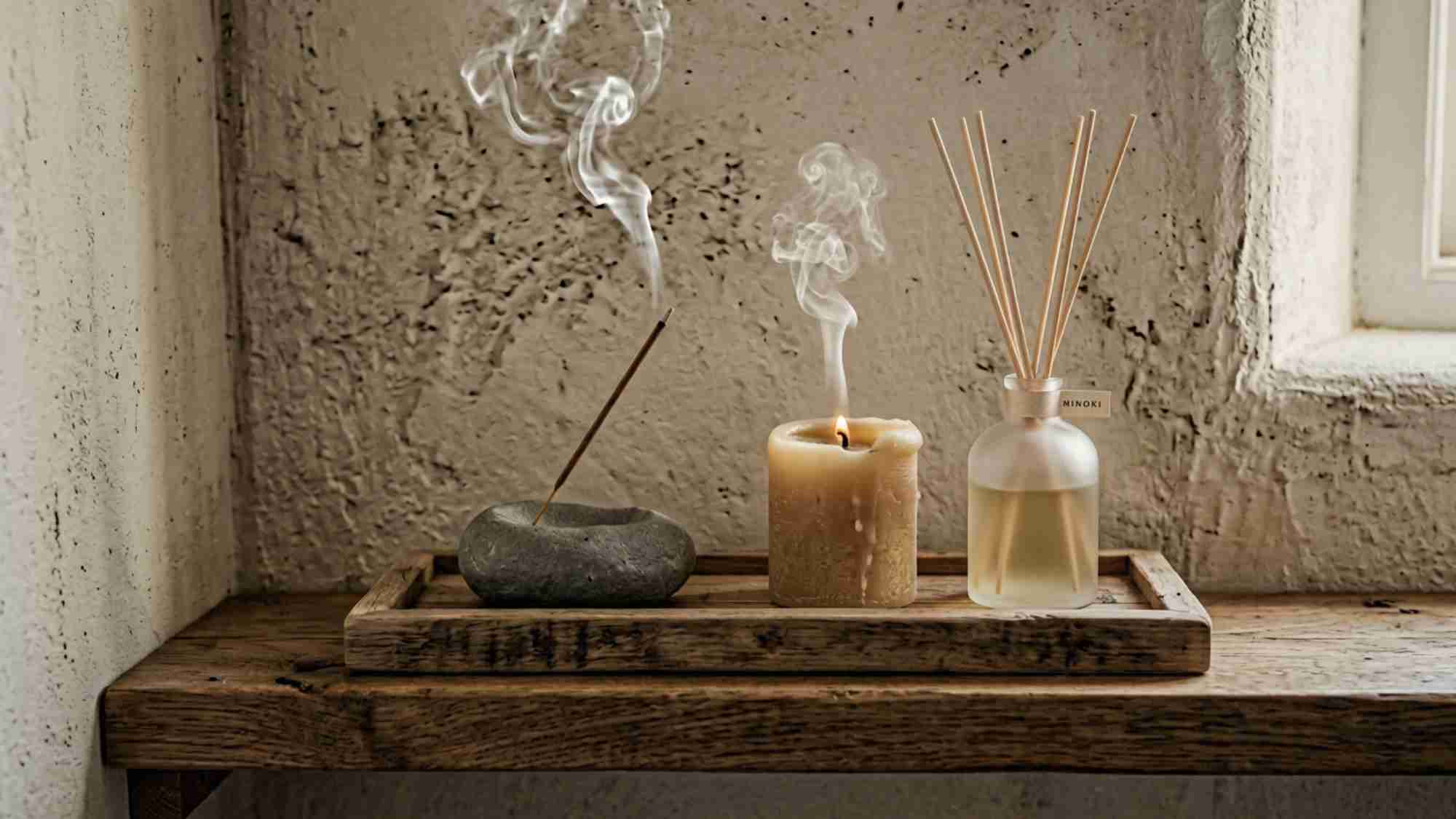
A reed diffuser or incense holder: In Japanese design, scent is intentional. Cedar, sandalwood, hinoki wood, green tea, and smoke are all scents that belong in a Japandi room. A simple reed diffuser costs $12 to $20. An incense holder in matte stone or ceramic costs $10 to $15.
A small wood or stone tray for your scent objects: Rather than placing a candle and a diffuser randomly around the room, group them on a small tray. This is a design trick called clustering, and it makes any collection of items look curated instead of scattered.
The Full Shopping List (Under $200)
Here is how the budget actually breaks down:
- Removable wallpaper panel for one wall: $25 to $40
- Linen-look duvet cover: $40 to $70
- Sheer curtains: $20 to $35
- Plug-in wall sconce (one or two): $20 to $70
- Warm Edison string lights: $15
- Bamboo or rattan nightstand tray: $10 to $15
- Small jute bedside rug: $20 to $35
- Matte ceramic vase or bowl: $5 to $15
- A plant and a matte pot: $20 to $25
- Reed diffuser or incense: $12 to $20
Total: roughly $187 to $340 if you buy everything. But you likely already own some of this, and you should buy selectively. Start with the items that address your biggest current problems. Bad lighting? Start there. Cluttered nightstand? Tray and clear-out first. Bad bedding? That one change will do more than almost anything else.
The Part Nobody Talks About
There is something people do not mention when they write about Japandi design. It is not really about the things you buy. It is about having the discipline to stop buying.
Most of us have too much stuff in our bedrooms. Japandi forces you to be honest about that. It asks you to keep only the things that are either useful or genuinely beautiful to you, and to give everything else a home somewhere else or let it go entirely.
When you get this right, the room starts to feel like it has room to breathe. You walk in and your shoulders drop. Sleep comes easier. The first thing you see each morning is calm instead of clutter.
That is the real promise of Japandi. Not a particular vase or a specific shade of taupe. It is the feeling of a room that supports you instead of demanding things from you.
And you really do not need a renovation or a big budget to get there. You mostly just need to be willing to take things away.
Start with one change this weekend. Clear your nightstand first. See how that single shift feels. Everything else can follow from there.
3 thoughts on “Japandi Bedroom on a Budget: 10 Ideas Under $200”