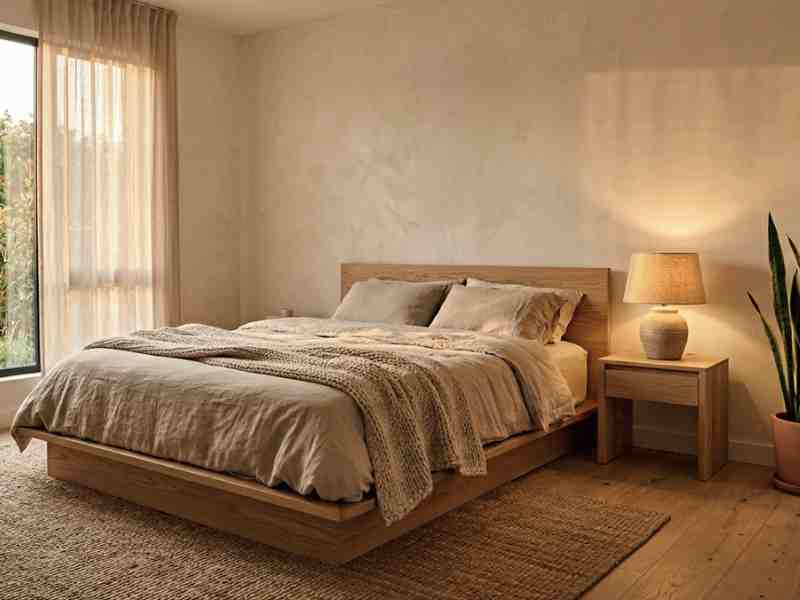
Japandi bedroom ideas have taken over every corner of the internet, and honestly, it is easy to see why.
This design style sits right at the crossroads of Japanese minimalism and Scandinavian warmth, and the result is a bedroom that feels calm, intentional, and quietly expensive.
Japandi bedroom decor, Japandi style, and minimalist bedroom design all come together in a way that does not ask you to spend a fortune. You just need to know what to reach for and what to leave behind.
I have been obsessed with this aesthetic for a few years now.
My own bedroom is a work in progress, and what I keep learning is that Japandi is less about buying the right things and more about subtracting the wrong ones.
So if you are ready to build a bedroom that feels like a retreat without emptying your savings account, here are 15 ideas that actually work.
1. Start With a Low Platform Bed

The bed is the centerpiece of any bedroom, and in Japandi design, it sits close to the ground. Low platform beds are deeply rooted in Japanese bedroom culture, where sleeping near the floor is associated with calm and groundedness.
In Scandinavian design, simple wooden bed frames with clean lines carry the same quiet energy.
You do not need an expensive designer piece to pull this off. Many furniture stores now carry affordable solid wood platform beds that look far more expensive than they are.
Go for natural wood tones like walnut, ash, or oak. Skip anything too shiny or ornate. The closer your bed sits to the floor, the more the entire room opens up and breathes.
If you are shopping on a tight budget, IKEA actually has some solid platform bed options that fit this aesthetic perfectly. We broke down the best picks in our guide to Japandi style on a budget with IKEA.
2. Choose a Neutral Color Palette, But Make It Warm
A lot of people hear “neutral” and immediately picture cold grey walls that feel like a dentist’s waiting room. Japandi neutrals are different. They are warm. Think soft cream, warm beige, sandy taupe, muted sage, and dusty terracotta.
These colors feel grounded without feeling flat.
The trick is to build your palette around one warm undertone and stay consistent. If you choose a warm white for the walls, make sure your linens and furniture carry the same warmth back.
Mixing cool greys with warm creams creates visual tension that quietly makes a room feel off, even if you cannot name why.
Paint is one of the most budget-friendly changes you can make to a bedroom, and the right wall color does more heavy lifting than almost any piece of furniture.
3. Layer Textures Instead of Colors
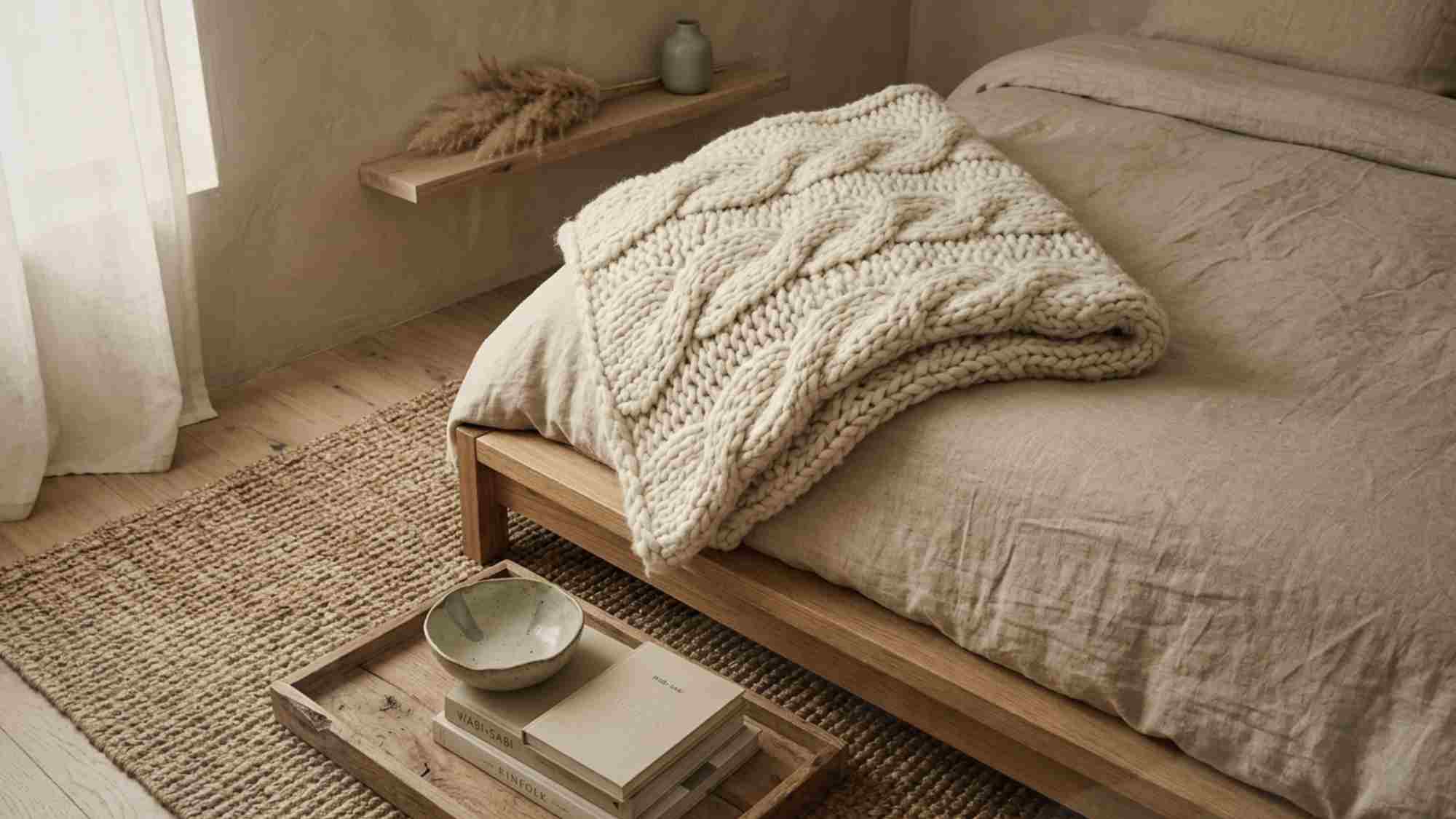 Japandi interiors tend to be restrained with color, so texture is what keeps the room from feeling flat and boring. This is where you get to have real fun without spending much.
Layer a linen duvet over a chunky knit throw. Add a jute or wool rug under the bed. Place a ceramic lamp on a wooden nightstand. Each material adds visual depth without adding visual noise.
The goal is for your eye to travel around the room and find small moments of interest, a rough texture here, a smooth surface there, a matte finish next to something slightly woven.
Budget tip: charity shops and thrift stores are genuinely excellent places to find textured ceramics, linen throws, and rattan baskets. People donate this kind of stuff all the time, and it fits right into a Japandi palette.
4. Bring in Natural Wood Wherever You Can
Wood is the material backbone of Japandi design. Both Japanese and Scandinavian traditions have a deep respect for natural materials, and wood shows up in furniture, flooring, wall panels, and even small accessories like trays and bowls.
You do not need to replace your entire furniture set. Even adding one or two wooden pieces to a room starts to shift the feeling. A wooden stool used as a side table, a small wooden shelf mounted on the wall, or even a simple wooden tray on your dresser can anchor the Japandi look.
Look for wood with visible grain, knots, and natural markings. That imperfection is intentional. In Japanese aesthetics, there is a concept called wabi-sabi, which finds beauty in things that are natural, aged, and imperfect. A piece of wood that looks too perfect or too processed works against that feeling.
5. Edit Your Bedroom Down to What You Actually Need
This one is free. Completely free.
Japandi bedrooms do not have clutter. There is no pile of books on every surface, no collection of decorative objects gathered over years of impulse buying, no extra furniture pushed into corners “just in case.” Every item in the room earns its place.
Walk through your bedroom and ask yourself honestly: does this need to be here? Extra chairs that collect clothes can go. Decorative objects you feel lukewarm about can go. Duplicate throw pillows that just add bulk can go.
Reducing the number of things in a room costs nothing but creates a visible shift in how calm and spacious the space feels.
This is the step most people skip, and it is the one that matters most.
6. Use Shoji-Inspired Curtains or Screens
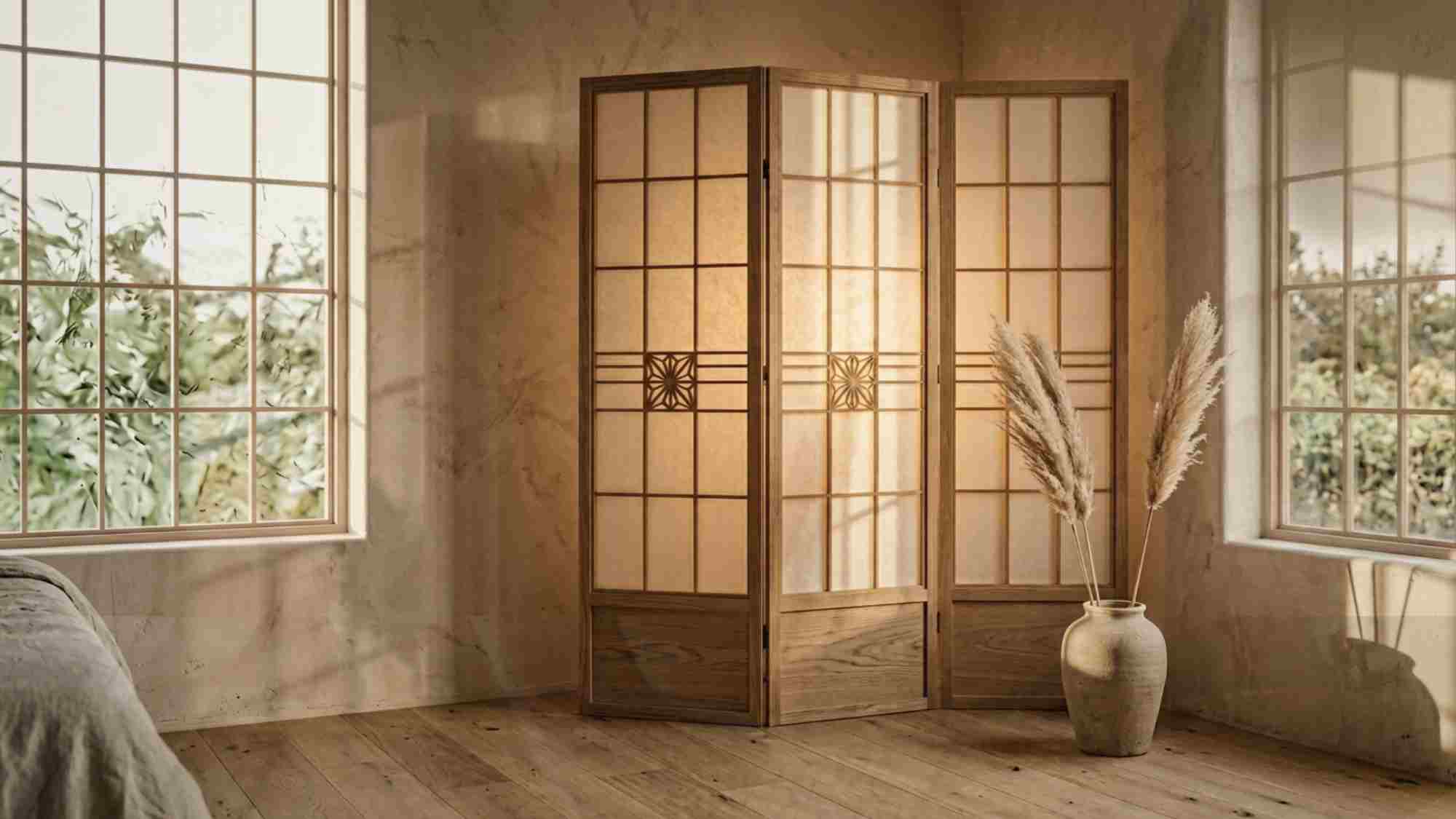
Shoji screens are the Japanese paper panels that filter light in the softest, most beautiful way. You have probably seen them in films or in architecture photos where a room seems to glow rather than just be lit.
Getting actual shoji screens can be expensive, but the principle behind them is completely accessible.
Linen curtains in a natural off-white or ecru color do something similar.
They soften direct light, create a diffused glow in the mornings, and add that sense of quiet enclosure that makes a bedroom feel like a true sanctuary. Stay away from blackout curtains in dark navy or charcoal if you want that Japandi warmth.
Light filtering options in natural fabrics keep the mood right.
Room divider screens in a light wood frame and rice paper style are also widely available now at accessible price points and can add a genuine Japandi layer to a plain bedroom.
If you are renting and cannot make permanent changes, most of these ideas still apply. Our renter-friendly room makeover guide covers exactly how to pull this off without touching a single wall.
7. Keep Your Nightstand Simple and Intentional
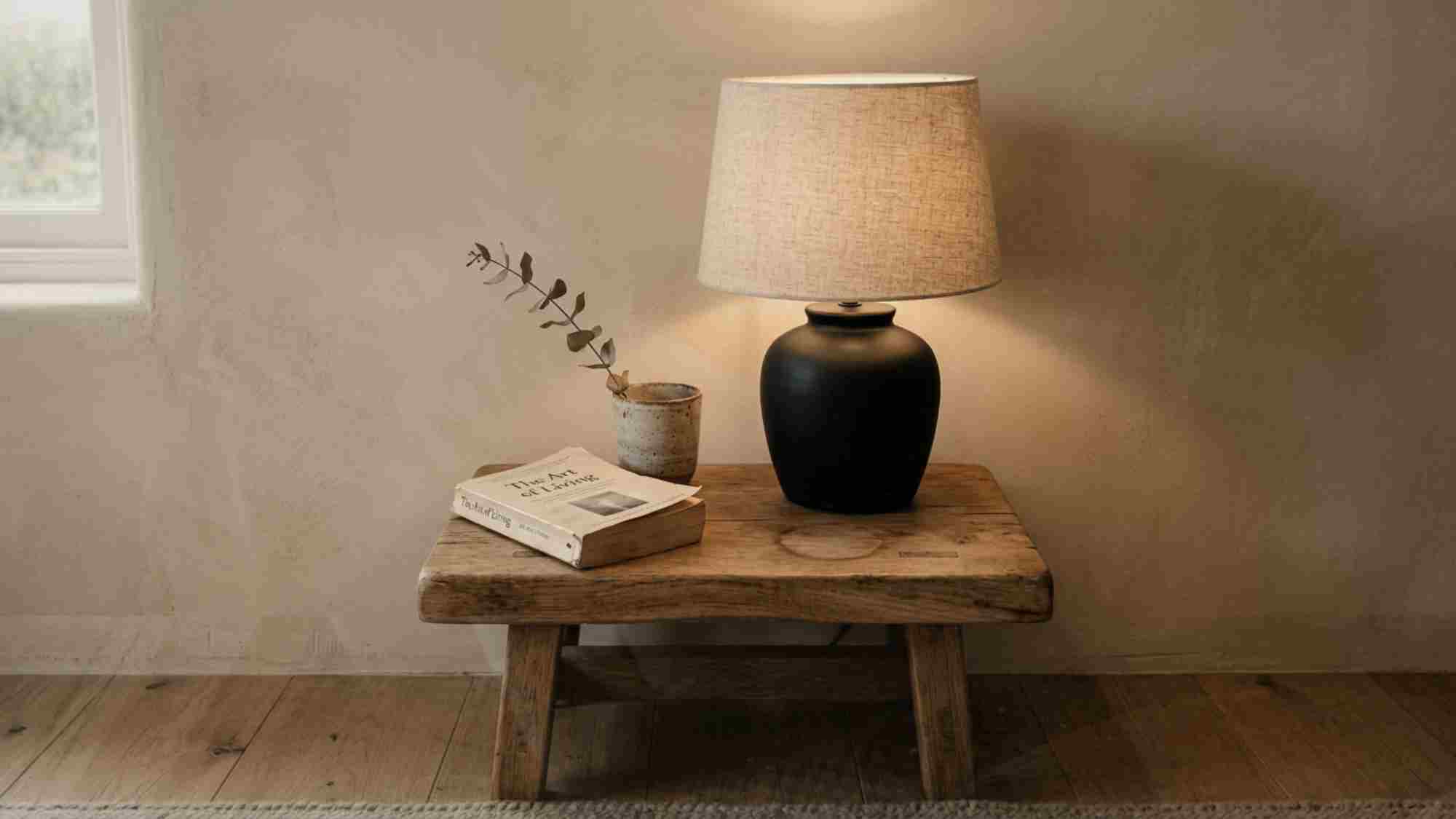
The nightstand is one of those spots in a bedroom that tends to attract clutter without you even noticing. Water bottle, three books you are “currently reading,” phone chargers, a candle, lip balm, a receipt from three weeks ago.
In a Japandi bedroom, the nightstand holds maybe three things. A lamp, one book, and one small object that you find genuinely beautiful. That is it. The restraint is the point.
If you cannot afford to buy a new nightstand, consider what you already own. A wooden stool, a small crate, a stack of thick books with a tray on top. The shape matters less than the discipline of keeping it clear.
8. Invest in Quality Bedding Over Everything Else
If there is one place to spend a bit more money in a Japandi bedroom, it is the bedding. Not because expensive bedding is required, but because the way your bed looks and feels is the emotional center of the whole room.
Natural fiber bedding in linen or cotton with a stonewashed or washed texture has that slightly relaxed, lived-in look that Japandi interiors do so well. Crisp white hotel-style bedding feels too formal and too Western for this aesthetic.
You want something that looks like it has been washed many times and gotten softer each time.
Colors to lean toward: warm white, natural linen, soft sage, dusty blush, or a deep earthy clay. One flat color works better than prints or patterns for this style.
If you are working with a strict number in mind, we put together a full Japandi bedroom makeover under $200 that covers exactly what to buy and what to skip.
9. Add a Single Statement Plant
Plants in Japandi bedrooms are chosen carefully. This is not the “plant parent” maximalist approach where every corner holds something growing. One or two plants, chosen well, carry significant visual weight.
A snake plant in a simple clay pot. A small fiddle leaf fig in a woven basket planter. A single branch of eucalyptus in a tall ceramic vase. The plant choice should feel considered rather than casual.
Beyond aesthetics, plants genuinely improve the quality of a bedroom environment. They soften hard surfaces, add a living element to the space, and have a documented effect on mood and air quality. For a style built around calm and wellbeing, a plant is one of the most honest additions you can make.
10. Choose Lighting That Creates Mood, Not Just Brightness
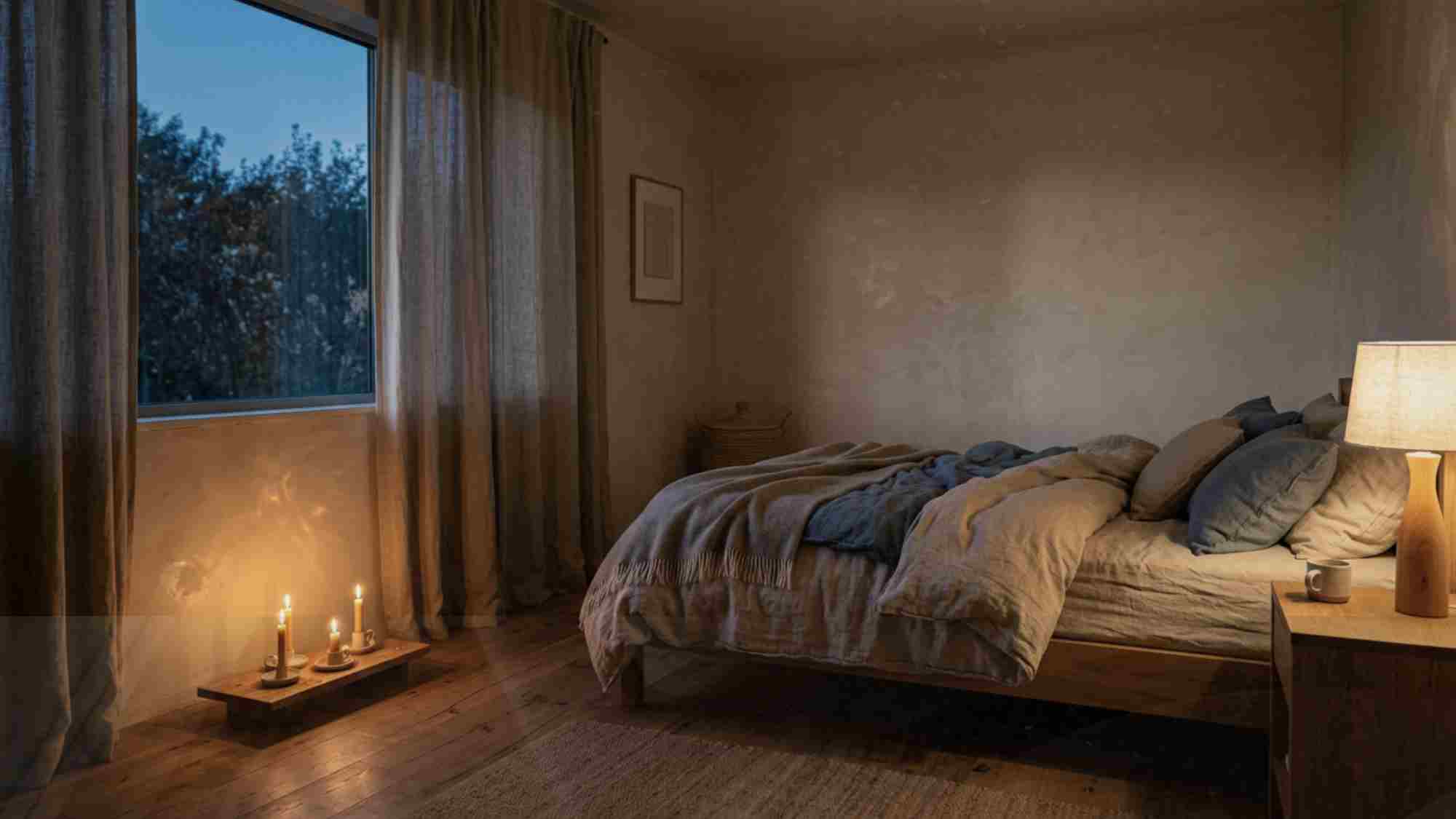
Overhead lighting is the enemy of atmosphere. A single bright ceiling light flattens a room and washes out all the beautiful texture and warmth you have worked to build.
Japandi bedrooms use layered, low lighting. A wooden table lamp with a linen shade on the nightstand. A paper pendant light overhead that diffuses rather than blasts light. A small floor lamp in the corner. Candles in ceramic holders on a tray.
The goal is a bedroom that transitions naturally from day to evening. In the morning it feels light and airy. In the evening it feels warm and dimly glowing. Smart bulbs with adjustable warmth settings can help you control this without buying multiple lamps, though even one warm-toned lamp swap makes a real difference.
11. Add Wabi-Sabi Details That Feel Personal
Wabi-sabi is the Japanese philosophy of finding beauty in imperfection and impermanence. In practical terms, this means welcoming things that have age, wear, or handmade irregularity into your space instead of only reaching for things that look pristine.
A hand-thrown ceramic mug used as a pen holder. A small tray with a small chip in the corner that you kept because you love it. A framed piece of paper with a single ink brushstroke. A linen pillowcase that has wrinkled in an honest, unstudied way.
These details cannot be purchased as a set. They come from paying attention to what you already own and recontextualizing it. That worn wooden bowl on your kitchen counter might be exactly right on your bedroom dresser.
The wabi-sabi eye is simply the willingness to see beauty where you previously looked past it.
12. Use Floating Shelves Instead of Bulky Furniture
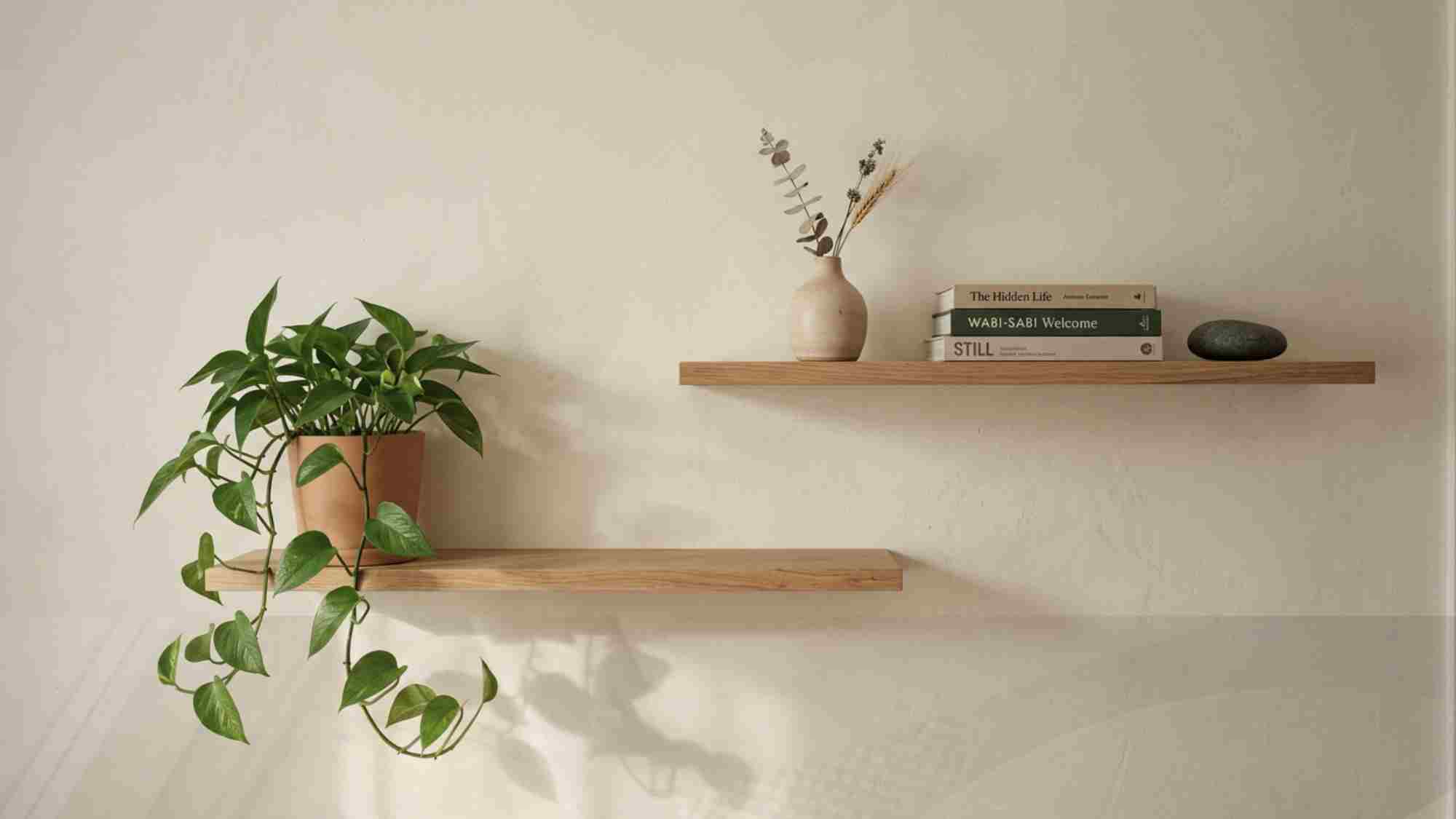
Storage is one of the real design challenges in a small bedroom, and bulky furniture like oversized wardrobes and chest of drawers can quickly overwhelm a Japandi space. Floating wall shelves are a smart and affordable alternative.
A few thin wooden shelves mounted at varying heights can hold books, small plants, ceramic objects, and folded textiles without taking up floor space. The room breathes better, looks less crowded, and the shelves themselves become a design element.
Style shelves the way you would style a vignette: odd numbers of objects, varying heights, a mix of textures, and plenty of negative space between items. Leave gaps intentionally. The empty space is part of the composition, not wasted wall.
If your bedroom is on the smaller side, floating shelves become even more important. Our guide on getting the Japandi look in a small apartment goes deeper into space-saving strategies that do not sacrifice the aesthetic.
13. Incorporate Soft Organic Shapes
One subtle thing that separates a genuinely beautiful Japandi bedroom from one that just looks like a catalogue photo is the presence of organic shapes. Hard rectangular geometry everywhere reads as corporate and stiff. Soft curves, round edges, and irregular forms bring life and warmth.
A round mirror above the dresser instead of a rectangular one. A curved ceramic lamp base instead of a straight cylindrical one. Rounded basket planters instead of square ones. An arched floor lamp instead of one with sharp angles.
These choices do not need to be expensive. The round versus rectangular decision is often the same price point. It is just a matter of noticing and choosing deliberately.
14. Keep the Floor Visible
This sounds obvious, but most bedrooms use far more floor space than they need. A rug that is too small gets pushed under the bed. Extra furniture gets crammed in because there is technically room. Bags, shoes, and boxes live permanently on the floor.
In a Japandi bedroom, the floor is treated as part of the design. A large natural fiber rug that extends well beyond the sides of the bed grounds the whole room and makes it feel considered. Beyond that, the floor should mostly be visible and clear.
Clear floors make a room feel instantly larger, cleaner, and calmer. The eye does not snag on things. The space feels intentional. If your bedroom has hardwood or natural tile floors, let them show. They are assets, not things to cover up.
15. Make Silence and Rest the Point of the Room
The last idea on this list is not about furniture or color or texture at all. It is about intention.
>The most luxurious Japandi bedrooms feel luxurious because they have a clear purpose. The room is for rest.
Everything in it supports that purpose or does not belong there. There is no television mounted on the wall. The work bag does not live on the chair. The phone charger is out of sight. The room quietly communicates that when you walk in, the pace of the day slows down.
This is where Western interiors often lose the thread of what makes Japanese and Scandinavian bedrooms feel so different. It is not just aesthetics. Both cultures have a genuine relationship with rest, with slowing down, with the idea that a bedroom is a sanctuary rather than an extension of productivity.
You do not need to buy a single thing to make this shift. You just need to decide what the room is for and let that decision guide every other choice.
Bringing It All Together
The best thing about Japandi design is that it rewards subtraction more than addition. Every time you remove something that does not belong, the room gets closer to what it could be.
Every time you choose a natural material over a synthetic one, or a warm tone over a cool one, or a simple shape over an ornate one, you are building something that will feel genuinely restful for years.
None of the ideas on this list require a large budget. Some of them are free. What they do require is a willingness to slow down, look at your space honestly, and make deliberate choices rather than just accumulating.
That patience is, in a way, the most Japandi thing you can bring to the project.
2 thoughts on “15 Japandi Bedroom Ideas Under $300 (No Renovation Needed)”