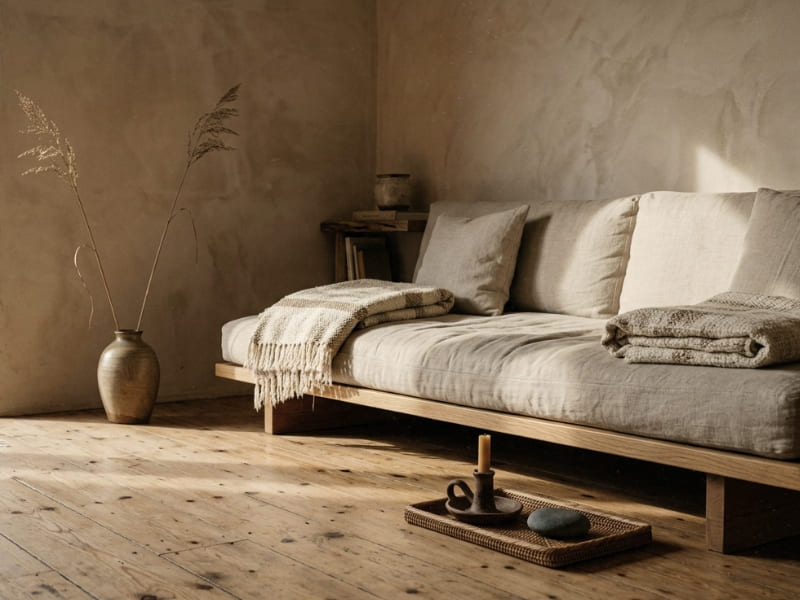
Wabi-sabi decor is one of those rare design philosophies that feels less like a trend and more like a quiet permission slip to stop trying so hard.
If you have ever scrolled through home design accounts and felt quietly exhausted by all those perfectly staged rooms, wabi-sabi is essentially the opposite of that. It is a Japanese concept rooted in the idea that beauty lives in imperfection, age, and simplicity.
The style draws on natural materials, muted tones, and objects that carry visible signs of use. Unlike minimalism, which can feel cold if done wrong, wabi-sabi interiors feel lived in, warm, and deeply personal.
Before we get into the practical side of bringing this aesthetic into your home, it helps to understand where it actually comes from, because the philosophy behind it changes the way you apply it.
The Philosophy Behind Wabi-Sabi
The term comes from two separate Japanese words. Wabi originally referred to the loneliness of living in nature, away from society.
Over time, it came to describe a kind of quiet simplicity and humility. Sabi referred to the beauty that comes with age and the passage of time, the way a rusted gate or a worn wooden table tells a story without saying a word.
Together, the concept captures something most Western design traditions try to fight against: the fact that things decay, wear down, and change.
Rather than covering that up or replacing it, wabi-sabi says to let it be, and even celebrate it.
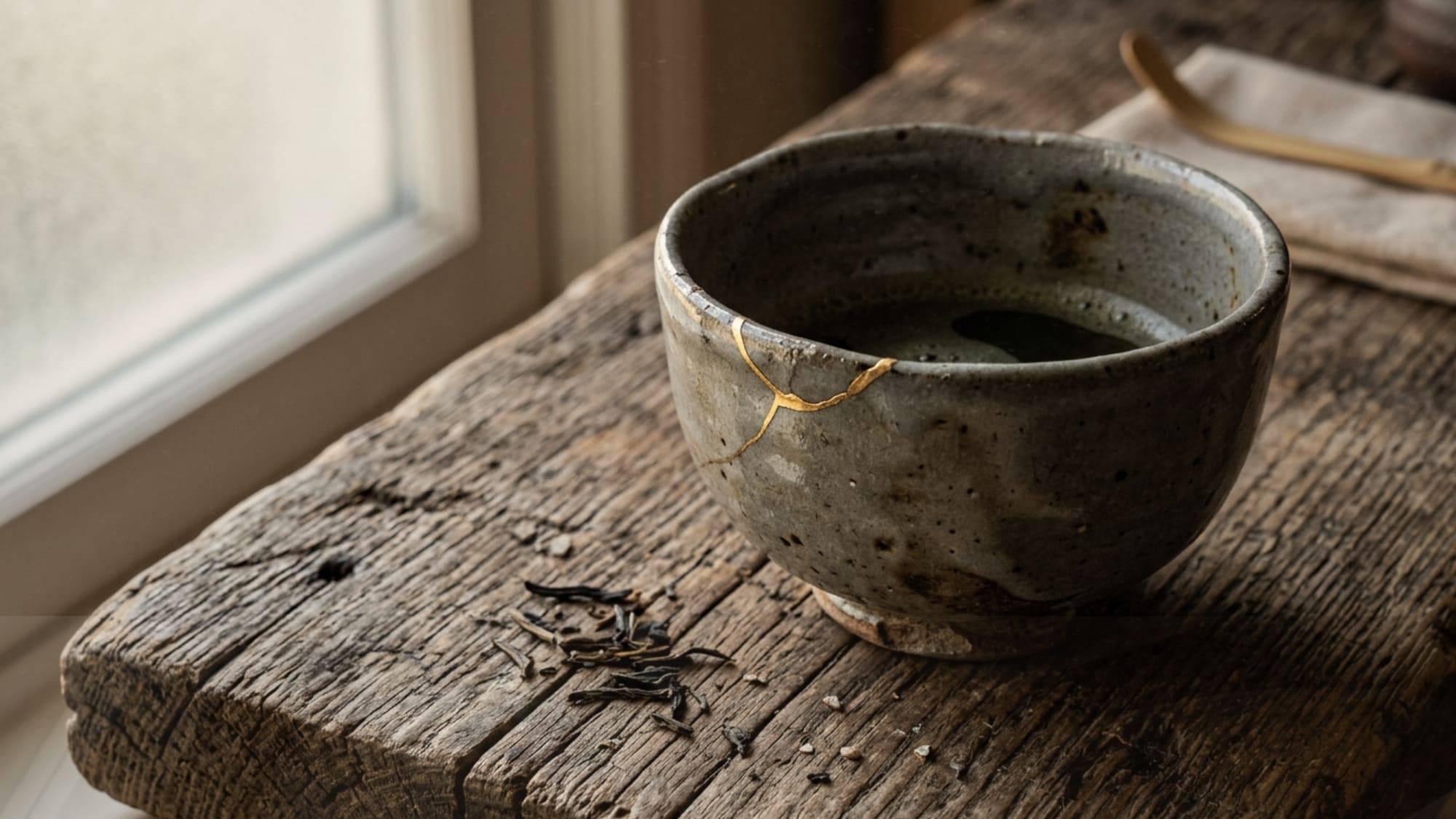
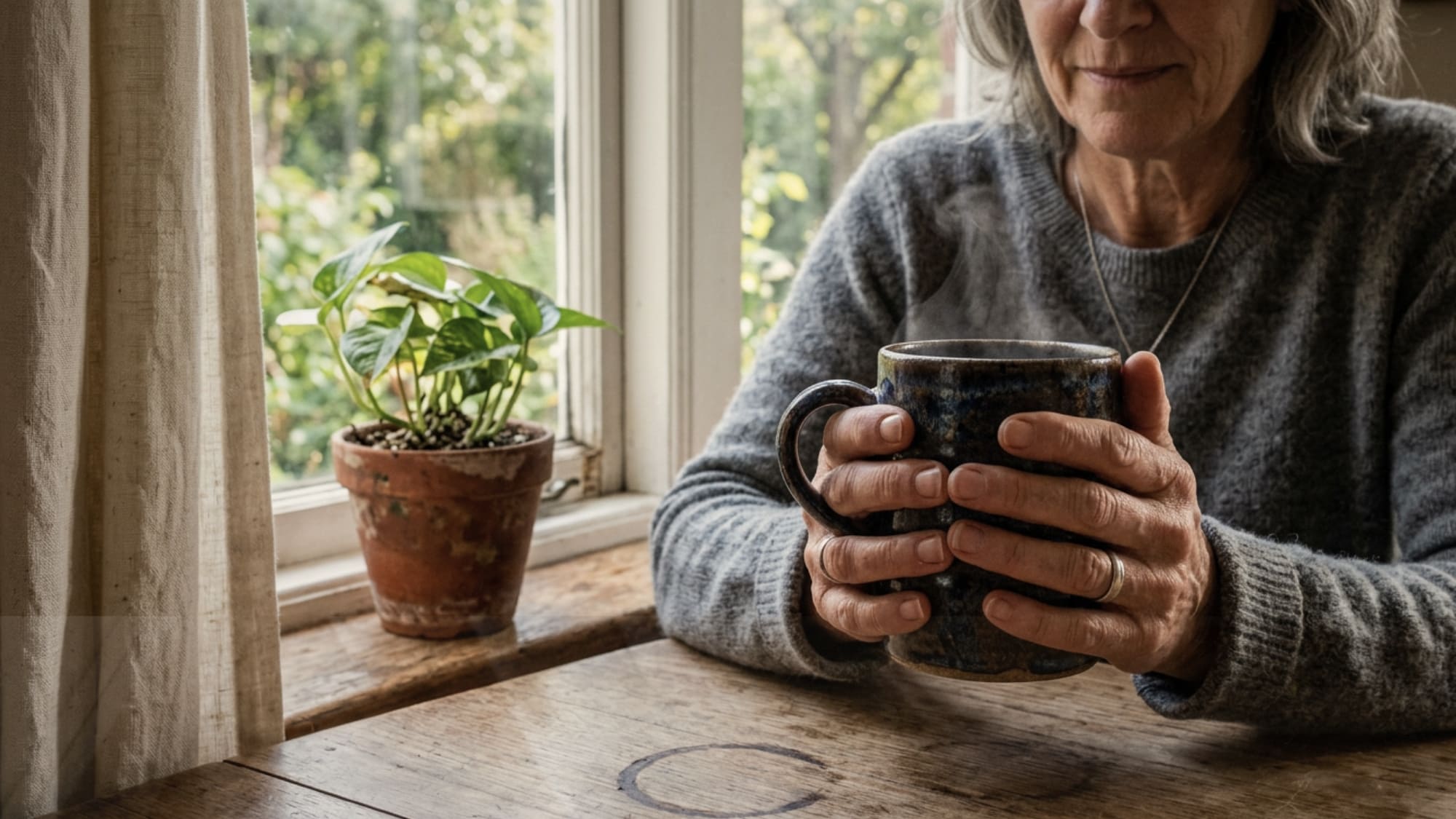
This idea gained real cultural weight through the Japanese tea ceremony tradition, where rough, handmade bowls were considered more beautiful than smooth, perfect ones. The slight wobble of a hand-thrown cup was not a flaw. It was the whole point.
So when people talk about wabi-sabi interiors today, they are not just describing a look. They are describing an attitude toward the home itself.
A room styled this way is not trying to impress anyone. It simply exists, honestly and without apology.
If you are drawn to this kind of quiet, nature-rooted thinking, you will likely also connect with Japandi style, which shares many of the same values around simplicity and natural materials. We have a full guide on 15 Japandi Bedroom Ideas That Look Expensive But Aren’t if you want to see how the two aesthetics compare.
What Does Wabi-Sabi Actually Look Like?
This is where things get practical. Because even though the philosophy is poetic, your home still needs real decisions, real furniture, and real colours on the walls.
Wabi-sabi interiors tend to share a few visual qualities:
-
Natural, aged, or raw materials.
Think unpolished stone, raw linen, weathered wood, hand-thrown ceramics, and rattan. These materials are valued precisely because they show their origins. A linen curtain with a slight wrinkle reads as honest rather than lazy.
A wooden side table with a small crack in the surface adds character instead of crying out for repair.
-
Muted, earthy colour palettes.
The colours of wabi-sabi are not dramatic. They pull from nature: warm beige, sand, dusty green, grey-brown, soft terracotta, and deep charcoal.
Walls painted in off-white or raw plaster tones work beautifully. Avoid anything glossy, neon, or visually loud. The goal is a palette that feels like it belongs outside.
-
Objects with a visible history.
This is perhaps the most distinct quality of the style. A wabi-sabi room often includes things that are clearly old, repaired, or imperfect. A chipped bowl on a shelf. A faded textile draped over a chair.
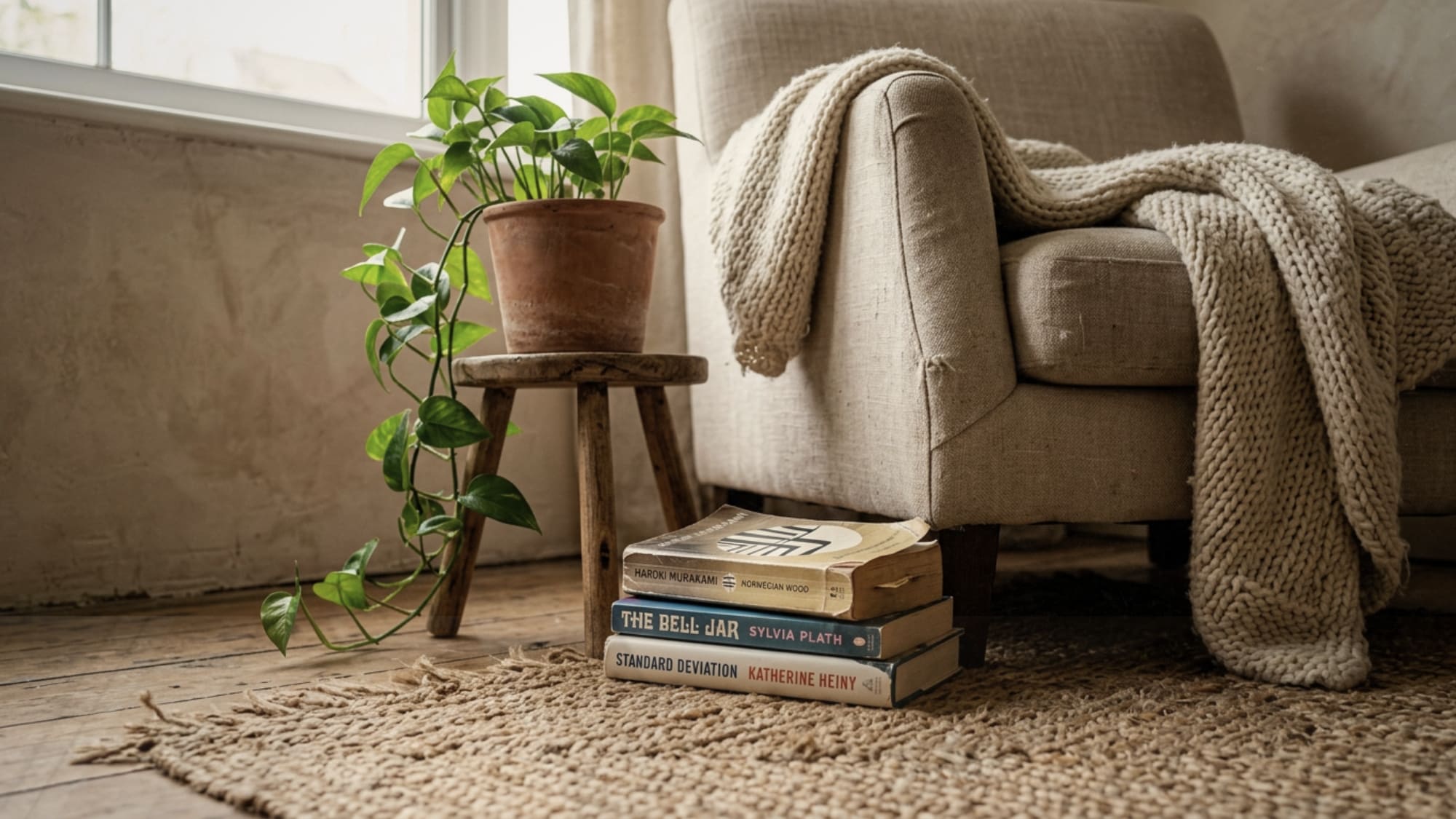
Books with broken spines. These are not accidents or oversights. They are intentional choices that say: this space has been used, and that use is beautiful.
-
Negative space.
Wabi-sabi is not maximalist. However, it is also not sterile. The goal is to let each object breathe, to give your eye somewhere to rest. Rooms styled this way tend to feel spacious without being empty, and full without being cluttered.
-
Asymmetry and irregularity.
Perfect symmetry feels formal and controlled. Wabi-sabi rooms resist that. A single branch in a vase instead of a perfectly arranged bouquet.
One framed piece of art slightly off-centre. These small choices keep a space feeling organic rather than staged.
Room by Room: How to Bring Wabi-Sabi Into Your Home
The Living Room
The living room is usually where people spend the most time and where the design impulse is strongest. This is also where wabi-sabi can do some of its best work, because it gives you permission to stop overthinking.
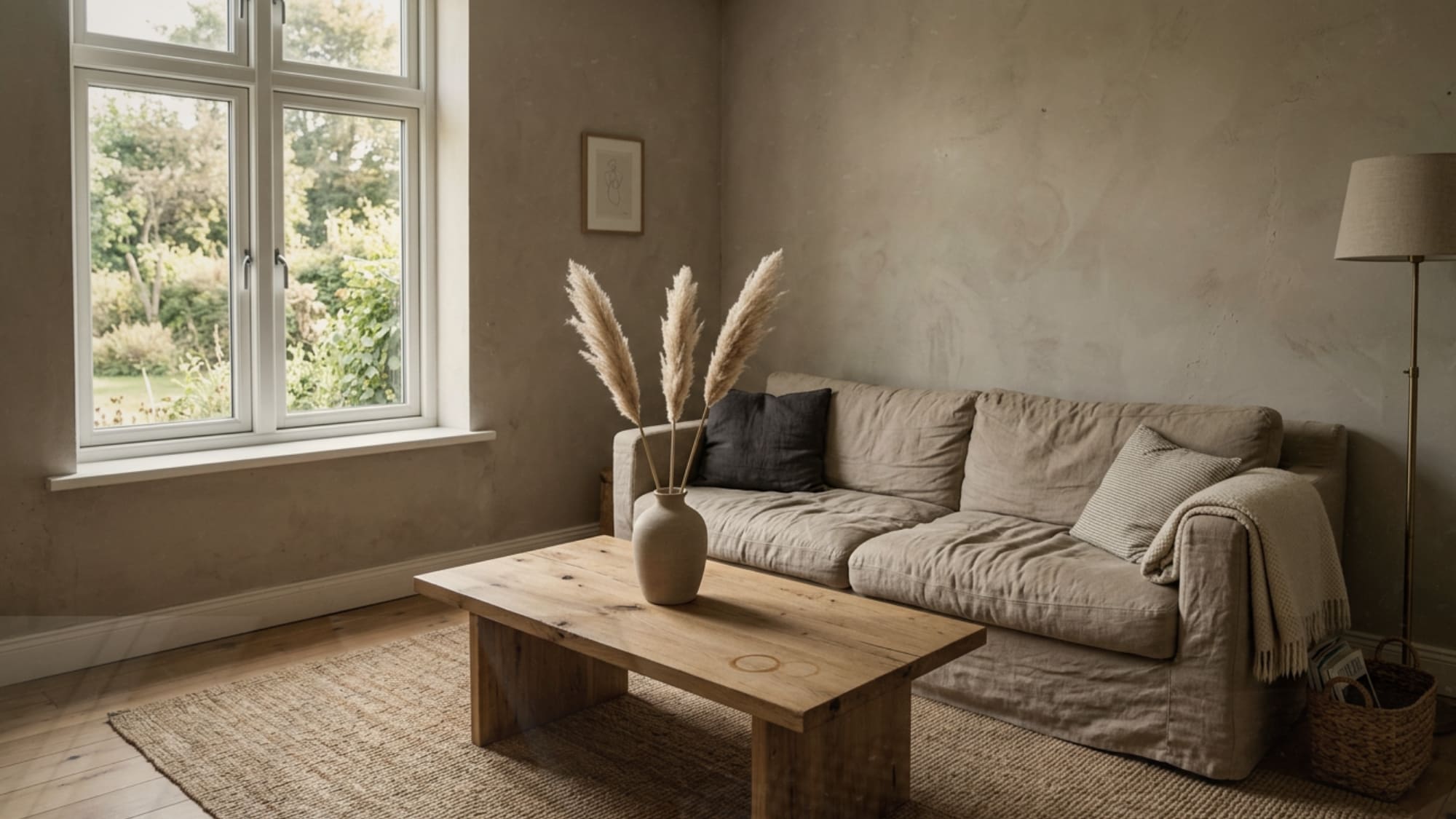
Start with the sofa. If you already have one in a neutral tone, good. If you are choosing new, look for something in a natural linen, cotton, or wool blend. Avoid anything that looks too polished or too perfectly tailored. A loose-cover sofa in undyed linen, for example, fits the philosophy beautifully.
From there, think about layering texture rather than pattern. A wool throw with visible weave. A jute rug that is slightly rough underfoot.
A low wooden coffee table with the grain showing clearly. Surfaces do not need to match. In fact, they probably should not. The mix of different natural materials is part of what makes the room feel real.
For decorative objects, choose a few things that genuinely mean something to you rather than buying items specifically because they look wabi-sabi. A piece of driftwood you picked up somewhere.
A ceramic pot made by a local artist. A stack of books you actually read. The personal history matters as much as the aesthetic.
Lighting in a wabi-sabi living room is almost always warm and low. Floor lamps with washi paper shades, candles in simple holders, or pendants in raw materials like rattan or brushed metal all work well.
Avoid bright overhead lighting that washes out texture and shadow.
If you are working with IKEA as your starting point, which many people are, our post on Japandi style on a budget with IKEA shows exactly which pieces work and how to style them in a way that does not look flat-packed.
The Bedroom
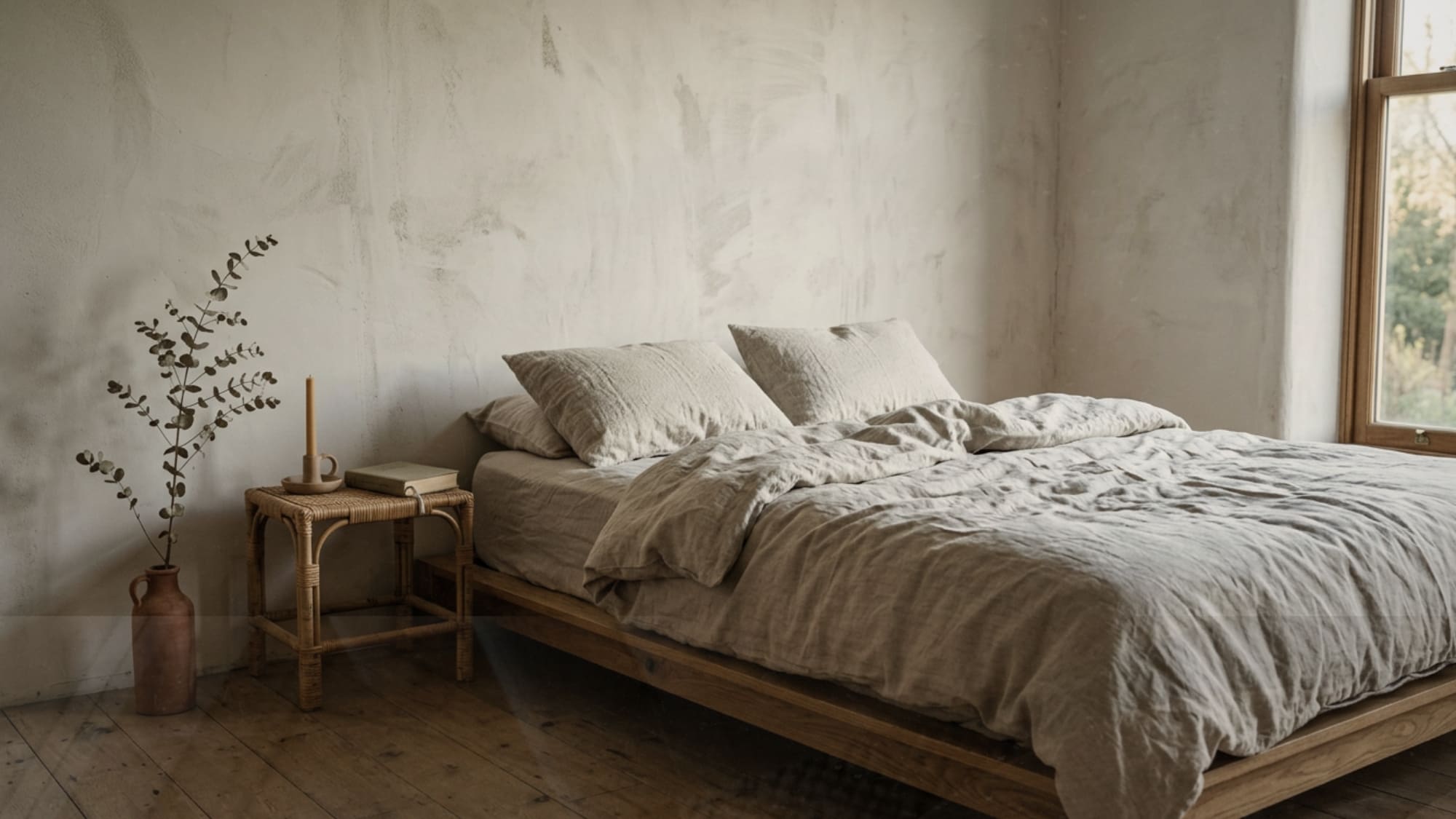
If there is one room where wabi-sabi makes the most intuitive sense, it is the bedroom. Sleep, rest, and quiet are already part of what this philosophy values, so the two fit together naturally.
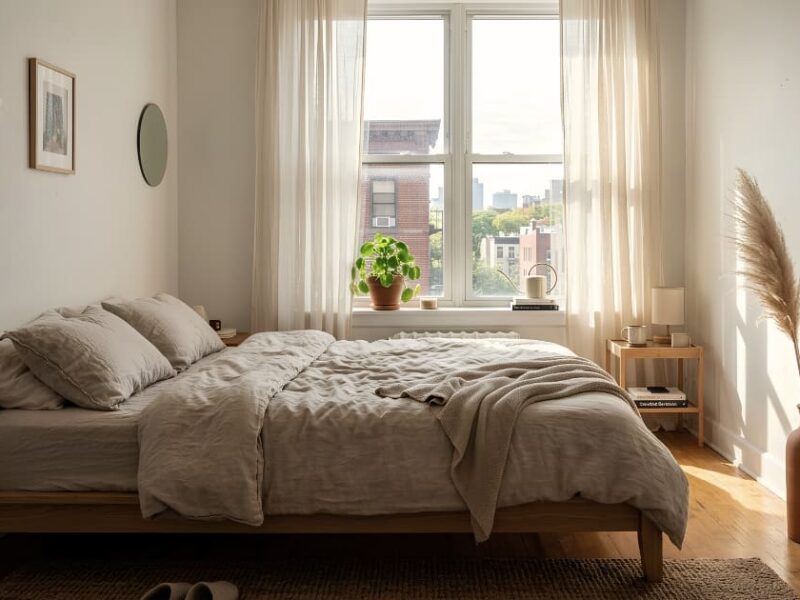
Begin with the bed. Natural fibre bedding in undyed cotton, linen, or hemp sets the tone immediately. Wabi-sabi bedrooms often feel slightly rumpled, in the best way.
Bedding that is perfectly pressed and hospital-cornered belongs to a different aesthetic entirely. Here, loose and slightly creased is the goal.
For the walls, consider leaving them mostly bare. One piece of art or a single framed photograph carries more weight when it is not competing with anything else.
Raw plaster walls, limewash paint, or even simple off-white work beautifully as backgrounds.
Furniture should be low, simple, and made from natural materials. A wooden bed frame with visible grain, a rattan or cane bedside table, a simple bench at the foot of the bed.
If your budget is tight but you still want to build this kind of room properly, our guide on Japandi Bedroom Ideas Under $200 covers how to get there without any renovation work at all.
Avoid furniture with lots of hardware, shine, or decorative detail. The simpler, the better.
Finally, bring in something living: a small plant, a branch in a vase, dried grasses in a simple jar. The presence of something that grows and changes over time is very much part of the wabi-sabi spirit.
The Kitchen
Kitchens are harder to approach through this lens because they are fundamentally functional spaces with lots of fixed elements.
Nevertheless, you can still move in this direction, even with an existing kitchen.
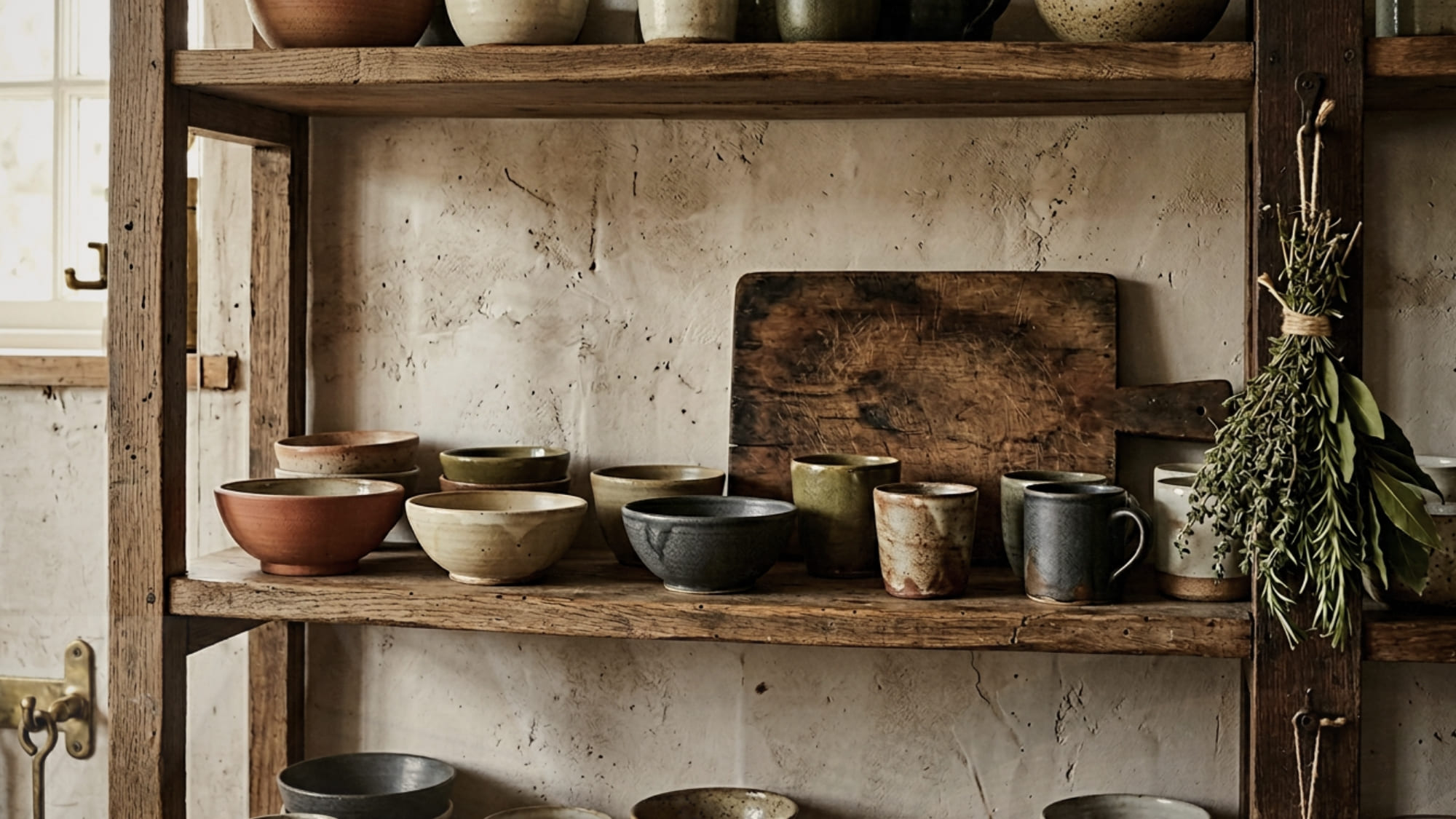
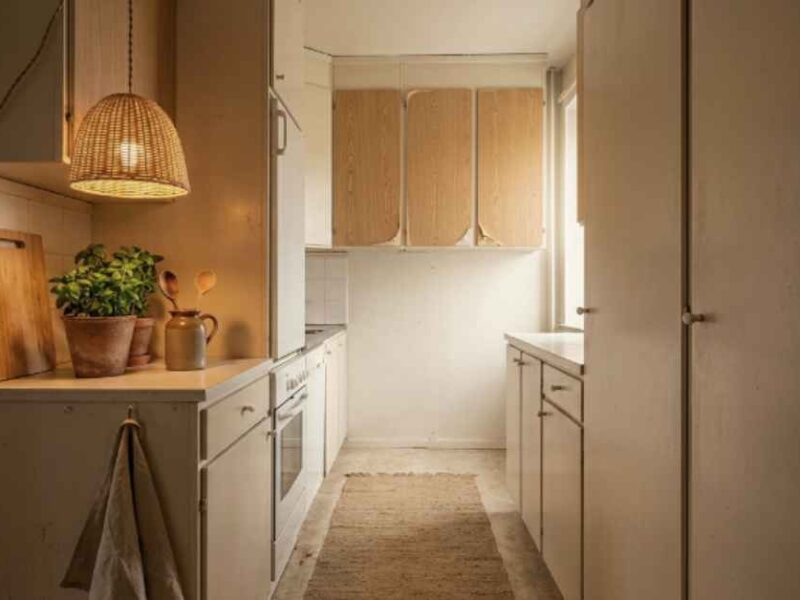
Focus on what sits on your surfaces and what hangs from your walls. A collection of handmade ceramics, mismatched but complementary, looks far more interesting than a matching set from a chain store.
Wooden chopping boards, a simple clay pot on the stove, a bunch of dried herbs hanging near the window: these small choices add up quickly.
If you have open shelving, resist the urge to arrange things perfectly. A slight irregularity, some space between objects, a mix of old and new, creates the feeling of a kitchen that is actually used and loved.
For colours, natural stone finishes, raw wood, aged brass, and matte black are all consistent with the wabi-sabi palette. Stainless steel, on the other hand, feels too industrial and polished for this aesthetic.
The Bathroom
Bathrooms often feel clinical by default, so even small wabi-sabi touches make a significant difference here.
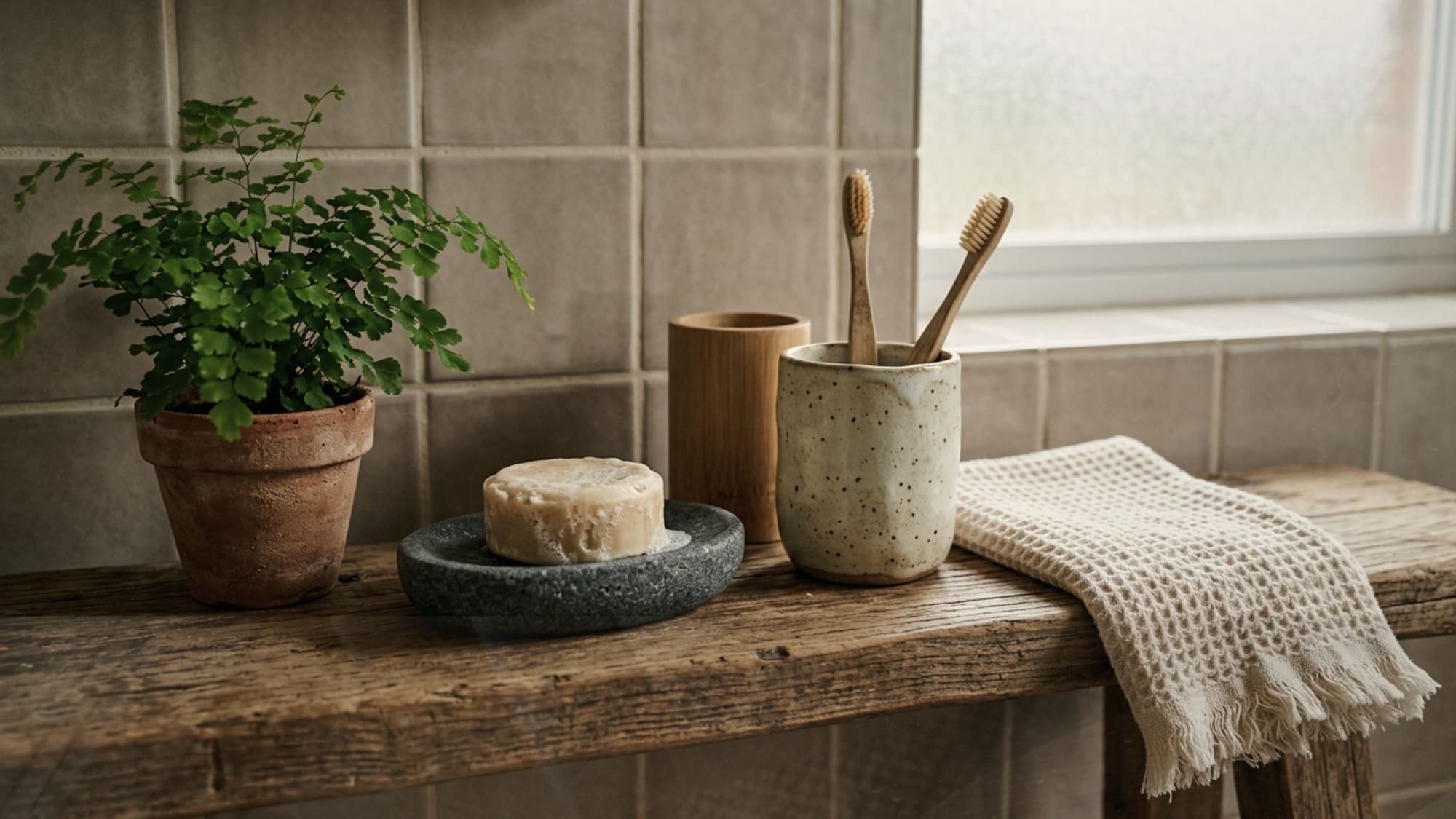
Start with textiles. Replace bright white towels with ones in undyed cotton or soft earthy tones. A linen bath mat adds texture. A simple wooden stool or small wooden shelf adds warmth.
Swap out plastic accessories for ones in natural materials: a stone soap dish, a bamboo toothbrush holder, a ceramic cup for your brushes. These swaps are small but the effect is cumulative.
Plants love the humidity of a bathroom, and even a small fern or trailing plant on a shelf does a lot of visual work.
If your bathroom has a window, a simple linen curtain in a natural tone is far more effective than anything synthetic.
Common Mistakes to Avoid
Even people who love the idea of wabi-sabi sometimes get it slightly wrong. A few patterns come up often enough to be worth mentioning.
- Confusing it with just buying “rustic” things.
Wabi-sabi is not a shopping list. You cannot achieve it simply by purchasing distressed furniture and calling it done. The philosophy is about intention and authenticity.
A genuinely old, worn object has a different energy than a brand new piece artificially aged to look old. Your eye will know the difference, even if you cannot quite articulate why.
- Letting it become cluttered.
Some people hear “imperfect and natural” and interpret that as “lots of stuff.” Wabi-sabi is not about accumulation. If anything, it asks you to edit more ruthlessly, because every object that stays in the room should have a reason to be there.
- Being too precious about it.
This might be the most ironic mistake of all. Wabi-sabi is explicitly about letting go of control and perfectionism. Therefore, if you find yourself spending hours obsessing over whether your wabi-sabi room looks right, you have probably missed the point.
The goal is to make choices you believe in and then let the space evolve naturally over time.
Shopping for a Wabi-Sabi Home: What to Look For
You do not need to spend a lot of money to build this kind of space. In fact, some of the best wabi-sabi pieces are found rather than bought.
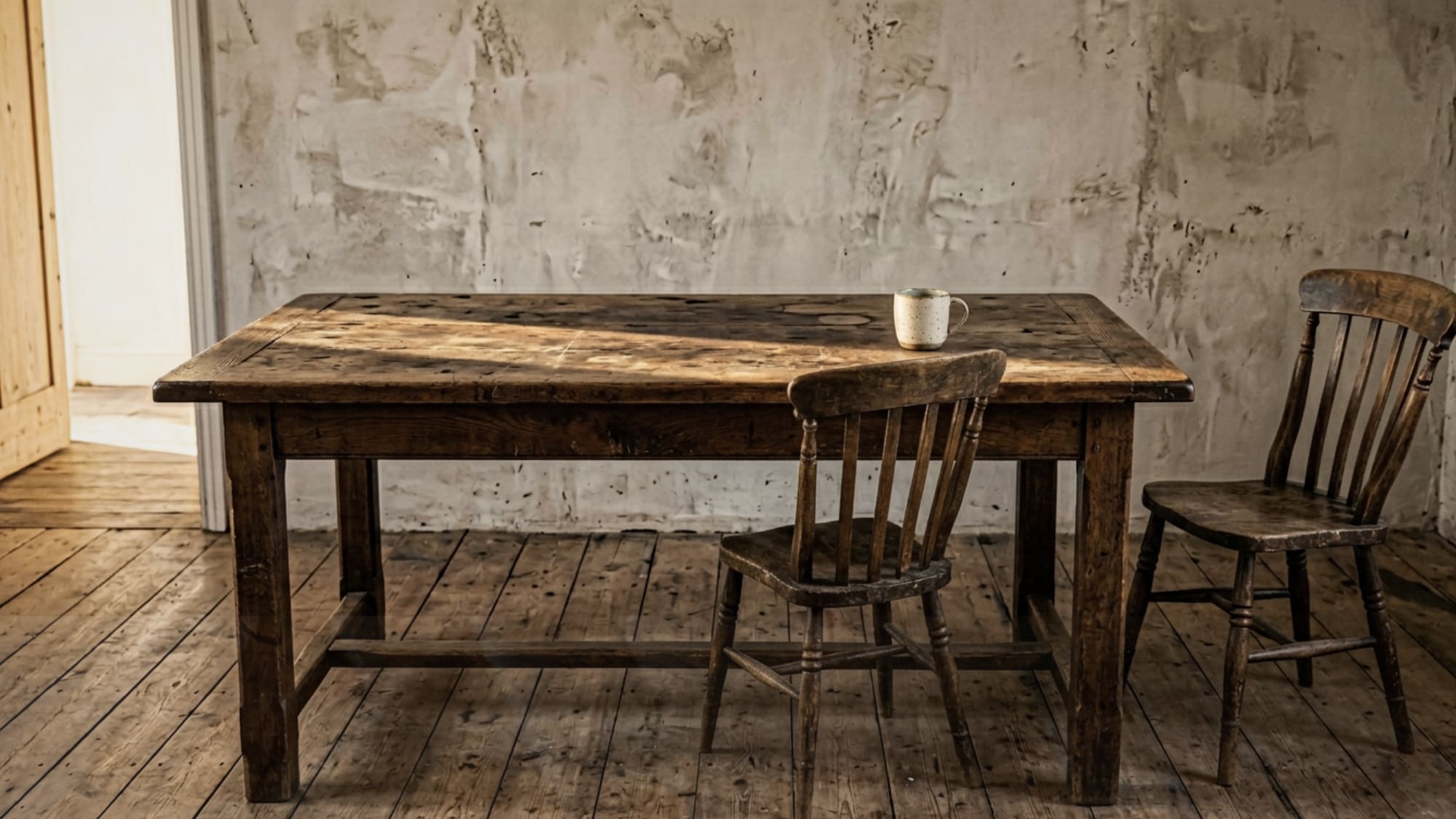
Second-hand and antique shops are natural places to find objects with real history. A worn wooden chair, an old ceramic vase, a faded textile: these things have genuinely earned their patina.
Local makers and artisan markets are worth seeking out. A handmade ceramic bowl from a local potter will always feel more wabi-sabi than something mass-produced, simply because it carries evidence of the person who made it.
Natural material brands focused on linen, wool, hemp, and untreated wood are the right direction for larger purchases like furniture and bedding. Look for brands that leave materials relatively unprocessed and avoid heavy finishes or synthetic additions.
Your own home, looked at differently. Before buying anything new, look at what you already have. That cracked mug you have been meaning to throw away. The old wooden chair in the corner.
The framed photograph you love but never quite found the right place for. Wabi-sabi often starts with a reappraisal of what you already own, rather than a shopping trip.
Why Wabi-Sabi Feels So Relevant Right Now
It is worth stepping back for a moment and asking why this philosophy resonates so deeply with so many people at this particular time.
We live inside a culture that is aggressively anti-imperfection. Filters smooth our faces. Renovations erase every trace of the previous owners. Fast furniture arrives flat-packed and identical to every other flat-packed version of itself.
That same cultural shift is showing up in other aesthetics too. Afrohemian decor, for example, is one of the biggest emerging trends of 2026 for exactly the same reason: it pushes back against the sterile and the uniform and puts personality and texture back into the home. If you are curious, we covered What is Afrohemian Decor and why it is taking over Pinterest in a recent post.
There is enormous pressure, both visual and commercial, to maintain surfaces that show no signs of time, use, or individuality.
Wabi-sabi pushes back against all of that, gently but clearly. It says that a crack in a wall is not a problem to fix, and the fact that your grandmother’s table is scratched is not a reason to replace it.
It says that your home does not need to look like a magazine to be beautiful.
For many people, that message is genuinely freeing. Not because they suddenly stop caring about their homes, but because they start caring differently. The goal shifts from perfection to presence, from impressive to honest.
Starting Small: Your First Wabi-Sabi Moves
You do not need to redesign your whole home to start living with this philosophy. In fact, starting small is probably the right approach, because it lets you feel your way into it rather than imposing it all at once.
Pick one corner of one room. Clear it back to almost nothing. Then bring in two or three things you genuinely love that are also natural, imperfect, or old. See how it feels to live with that restraint for a few weeks.
If you rent and have been holding back because you are worried about what you can and cannot change, it is worth reading our Renter-Friendly Room Makeover Guide which covers how to make real changes to a space without putting a single hole in the wall.
Notice what you miss and what you do not. Let the space tell you something. Then take that feeling into the next room, and the next decision.
Wabi-sabi, when it works best, is not a look you achieve. It is a relationship with your home that you build over time, slowly, honestly, and without a lot of fuss.
That, in the end, is the whole point.
2 thoughts on “Wabi-Sabi Home Decor: What It Is and How to Style It”