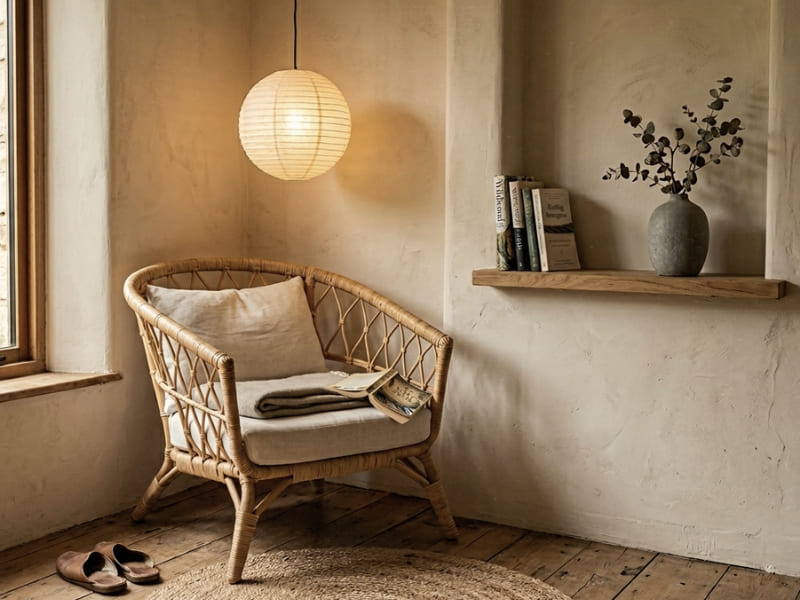
A Japandi reading nook might be the one corner of your home that finally feels like it belongs to you. Not the kitchen that doubles as a homework station, not the living room where everyone fights over the remote, but a small, quiet space that is yours alone.
Japandi style, cozy corner ideas, tiny reading space, minimalist home decor, and Scandinavian Japanese design all come together in a way that feels effortless once you understand the thinking behind it. And the good news is that you do not need a big room or a big budget to pull it off.
This is the kind of space that changes how you feel at home. A reading nook done right does not just look beautiful in photos. It actually makes you want to sit down, slow your breathing, and pick up a book. That is rare. That is worth chasing.
Why a Reading Nook Is Where Japandi Really Shines
If you have read my earlier posts on Japandi bedroom ideas or getting the Japandi look in a small apartment, you already know the philosophy behind the style. So I will not retread that ground here.
What I want to talk about instead is why a reading nook specifically is one of the best applications of Japandi design in the entire home.
Most rooms ask you to do things in them. The bedroom is for sleep. The kitchen is for cooking. Even the living room has a way of defaulting to passive screen time.
A reading nook is the rare space that exists for one single quiet purpose, and that alignment between function and design is exactly what Japandi lives for.
The other thing worth understanding is scale. Japandi does not need space to work. Actually, the smaller the space, the more intentional you have to be, and intentionality is where this style is at its strongest.
If you want a broader look at how design professionals are applying Japandi principles right now, Apartment Therapy’s guide to Japandi design is one of the most thorough overviews available and worth bookmarking.
You are not decorating a corner. You are composing it. Every object that earns a place there has to earn it fully. Nothing gets in just because it looks nice or because you had it lying around. That discipline, applied to a small corner, produces something that feels genuinely special rather than just styled.
Start With the Chair: The Heart of the Whole Nook

Everything else in a Japandi reading nook orbits the chair. So this is where you spend the most thought, not the most money.
The right chair for this style is low to the ground, simple in shape, and made from natural materials. Think a rattan lounge chair, a low wooden armchair with clean lines, or even a floor cushion called a zaisu that has a backrest but no legs.
These options all have that grounded, unhurried feeling that Japandi spaces are known for.
What you want to avoid is anything too puffy, too synthetic, or too complicated. A big overstuffed armchair in crushed velvet might look cozy in other contexts, but it will fight against the calm you are trying to create here.
Japandi asks everything in the room to agree with everything else.
If you already own a chair you love and it is not quite right, do not stress. A natural linen slipcover or a simple woven throw draped over it can bring it closer to the aesthetic without spending anything significant.
If you are also thinking about carrying this style into your bedroom, the same principle applies there too. I put together 15 Japandi bedroom ideas that look expensive but are not which covers furniture choices, bedding, and lighting in a lot more detail.
The Floor Situation Matters More Than You Think
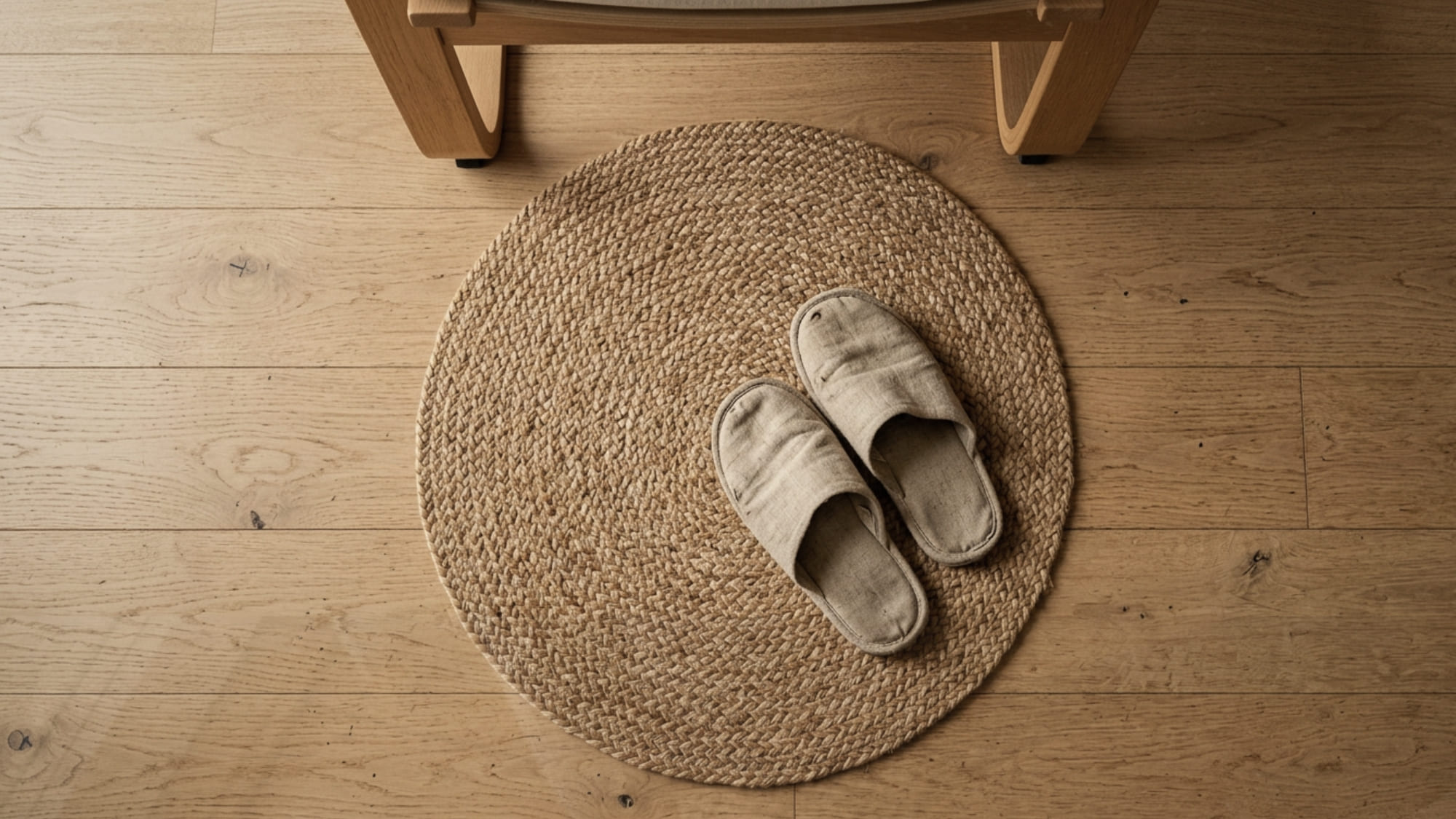
In tiny corners, the floor is part of the design. Do not ignore it.
A natural fiber rug, something in jute, sisal, or a flat-woven cotton, defines the boundaries of your nook without adding visual clutter.
It tells the eye where the space begins and ends, which is important when you are carving out a reading corner inside a larger room.
The rug does not need to be big. A small round rug about 90 to 120 centimeters wide is often enough.
If you have hardwood floors, you might find the natural grain is already doing a lot of the work. In that case, skip the rug entirely and let the floor breathe. A bare wooden floor in a Japandi space looks intentional, not empty.
Avoid anything with bold patterns, loud colors, or synthetic materials. Japandi floors should feel natural underfoot and calm to the eye.
Lighting: The Detail That Changes Everything
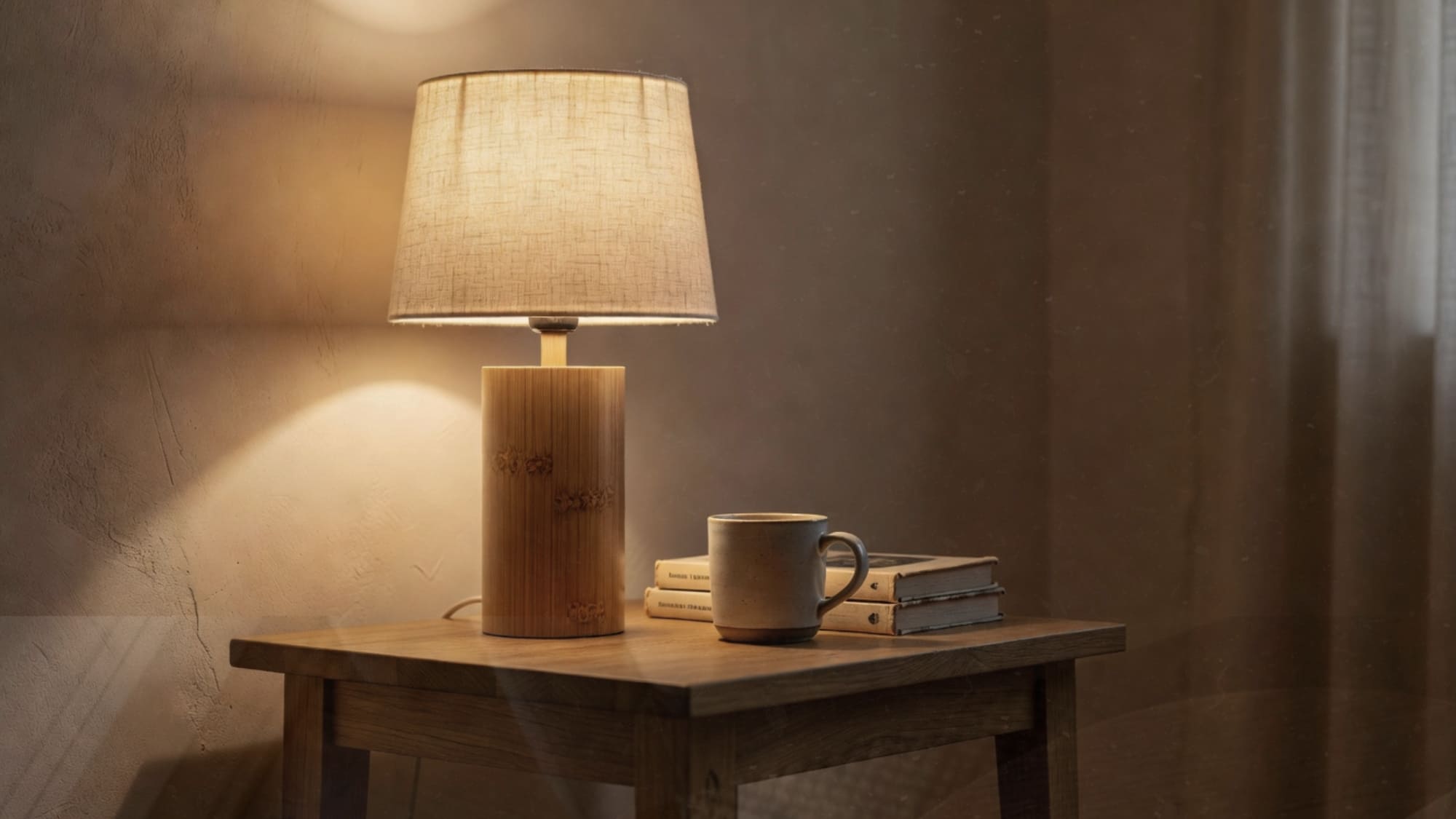
Good lighting is what separates a reading nook that looks nice from one that actually pulls you in every evening.
Natural light is ideal, so if your corner is near a window, that is your biggest asset. Position your chair so the light falls over your shoulder rather than directly in your eyes. A sheer linen curtain nearby can soften the brightness on sunny days without blocking the view.
For evening reading, you need a warm, focused light source. A paper lantern floor lamp works beautifully in a Japandi space.
So does a simple bamboo table lamp or a washi paper pendant. What you want is a glow, not a spotlight. The light should feel like it is inviting you to stay rather than helping you work.
Avoid overhead lighting in the nook itself if possible. Ceiling lights tend to flatten a space and strip away the intimacy that makes a reading corner feel special. Warm, low, and close is the lighting philosophy here.
Color and Texture: Less Is More, but Texture Is Everything
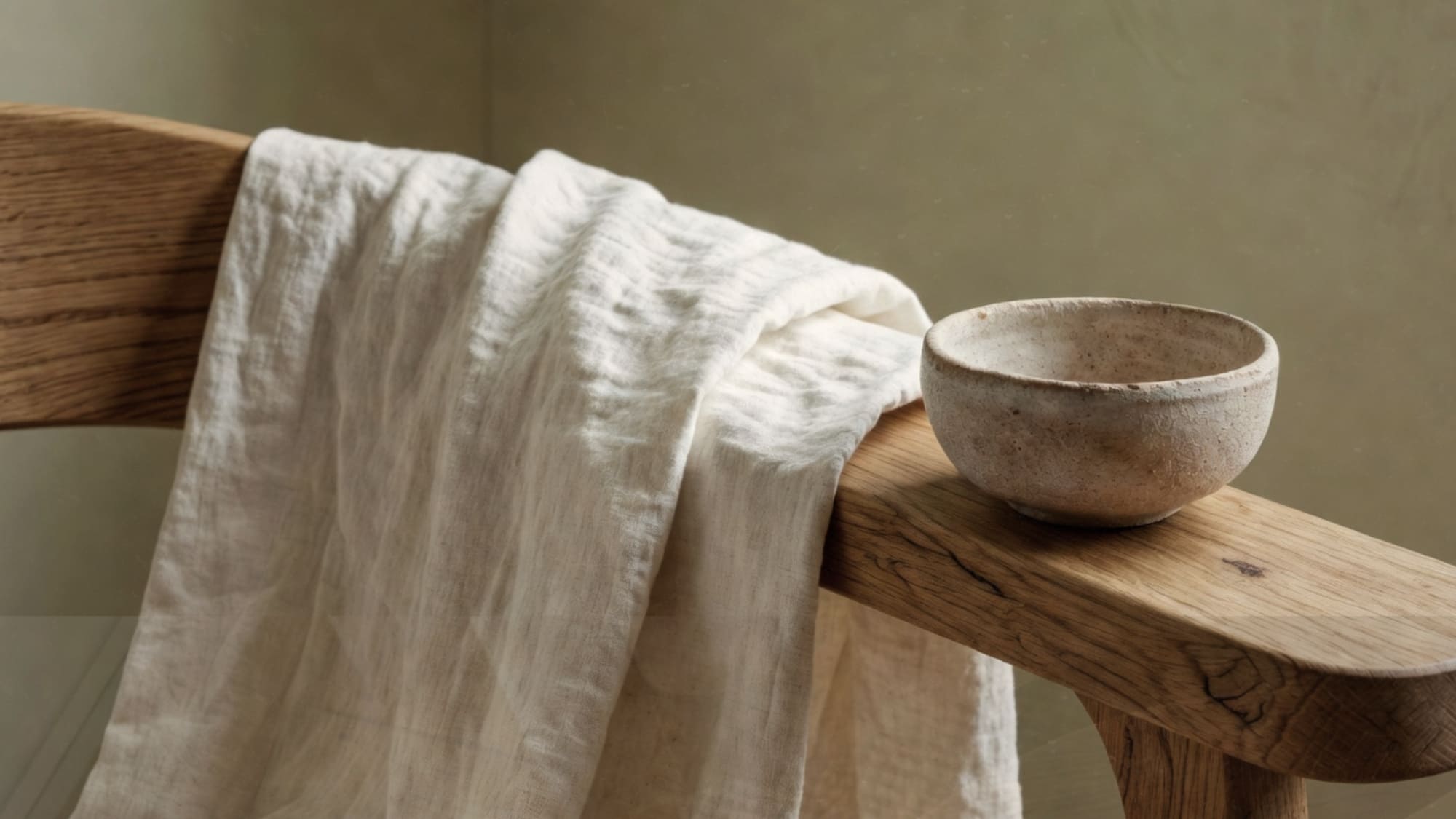
The Japandi color palette is a quiet one. Think warm whites, soft creams, dusty taupes, sage greens, and deep charcoal. Muted natural tones that feel like they were borrowed from the earth or a foggy morning.
These shades make a tiny corner feel restful rather than cramped.
But here is the thing about going minimal with color: texture has to do the heavy lifting. Because when you strip back pattern and brightness, what keeps a space from feeling cold and blank is the way different materials interact.
Rough linen against smooth wood. Soft wool against cool ceramic. Woven rattan against a painted plaster wall.
The texture layering in Japandi is actually rooted in wabi-sabi thinking, the Japanese appreciation for things that are imperfect, aged, and handmade. If you want to go deeper on that, I wrote a full guide on what wabi-sabi decor is and how to use it at home that is worth reading alongside this one.
In your reading nook, aim for at least three different textures. A chunky knit throw on the chair, a ceramic mug sitting on a low wooden side table, a worn leather bookmark tucked into a paperback. Each layer adds warmth without adding noise.
One common mistake people make is going so minimal that the space feels sterile. Japandi is not clinical. It is warm and alive. The difference is texture.
The Side Table: Small but Mighty
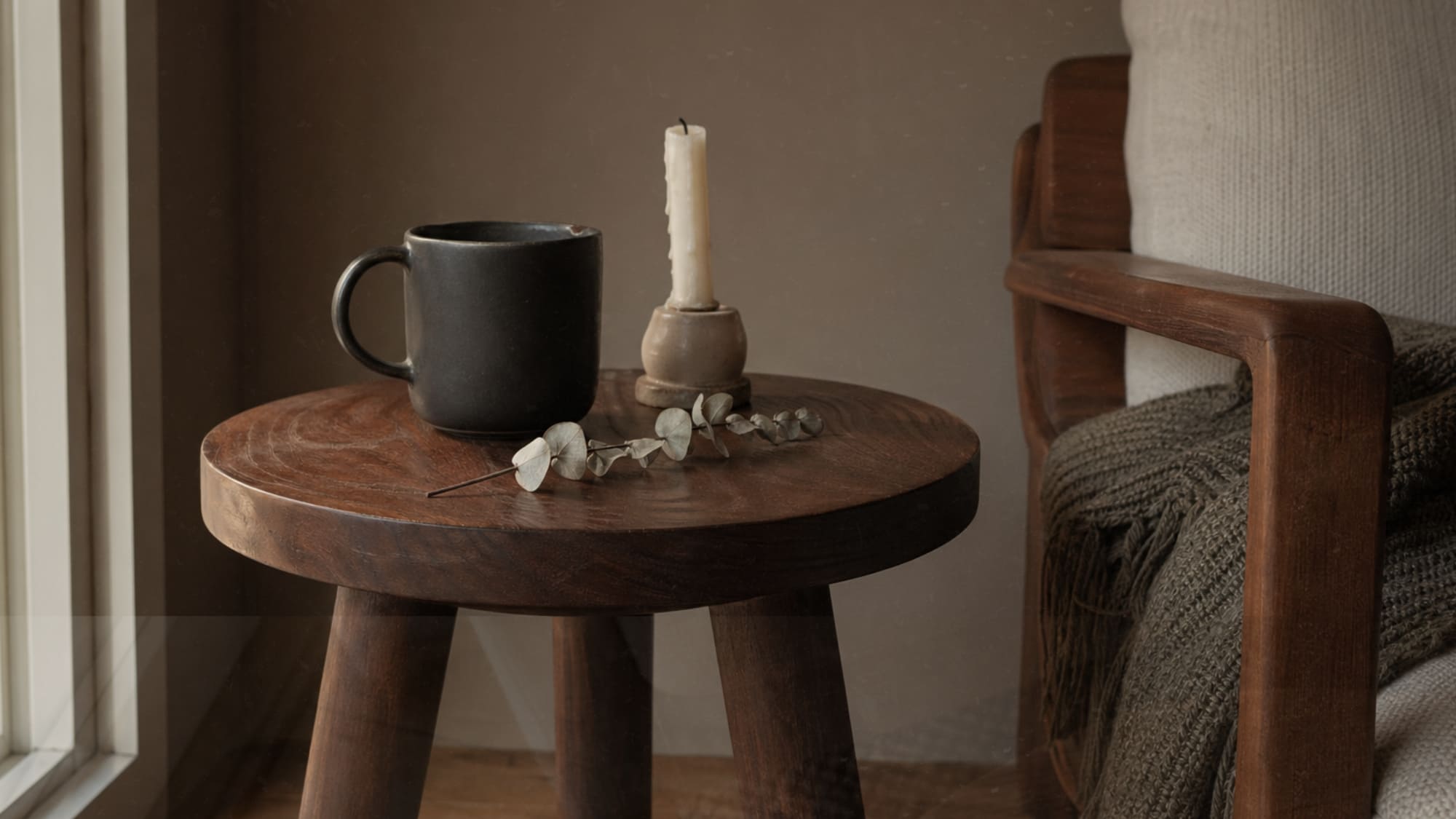
Every good reading nook needs somewhere to put your drink. A small side table is not just practical. It is also a key part of the composition.
A low wooden side table with tapered legs fits the Japandi aesthetic well. So does a simple wooden crate turned on its side, a small ceramic pedestal, or a short bamboo stool. The key is that it sits close to your chair without crowding it.
On the table, less is always more. A ceramic mug, a small candle, a single stem in a bud vase. These small objects are where you get to add quiet personality to the space. Choose things that feel meaningful to you personally rather than things that just look right in pictures.
Resist the urge to fill the table. One object is interesting. Three objects is a moment. Eight objects is clutter.
Books: The Most Important Decoration
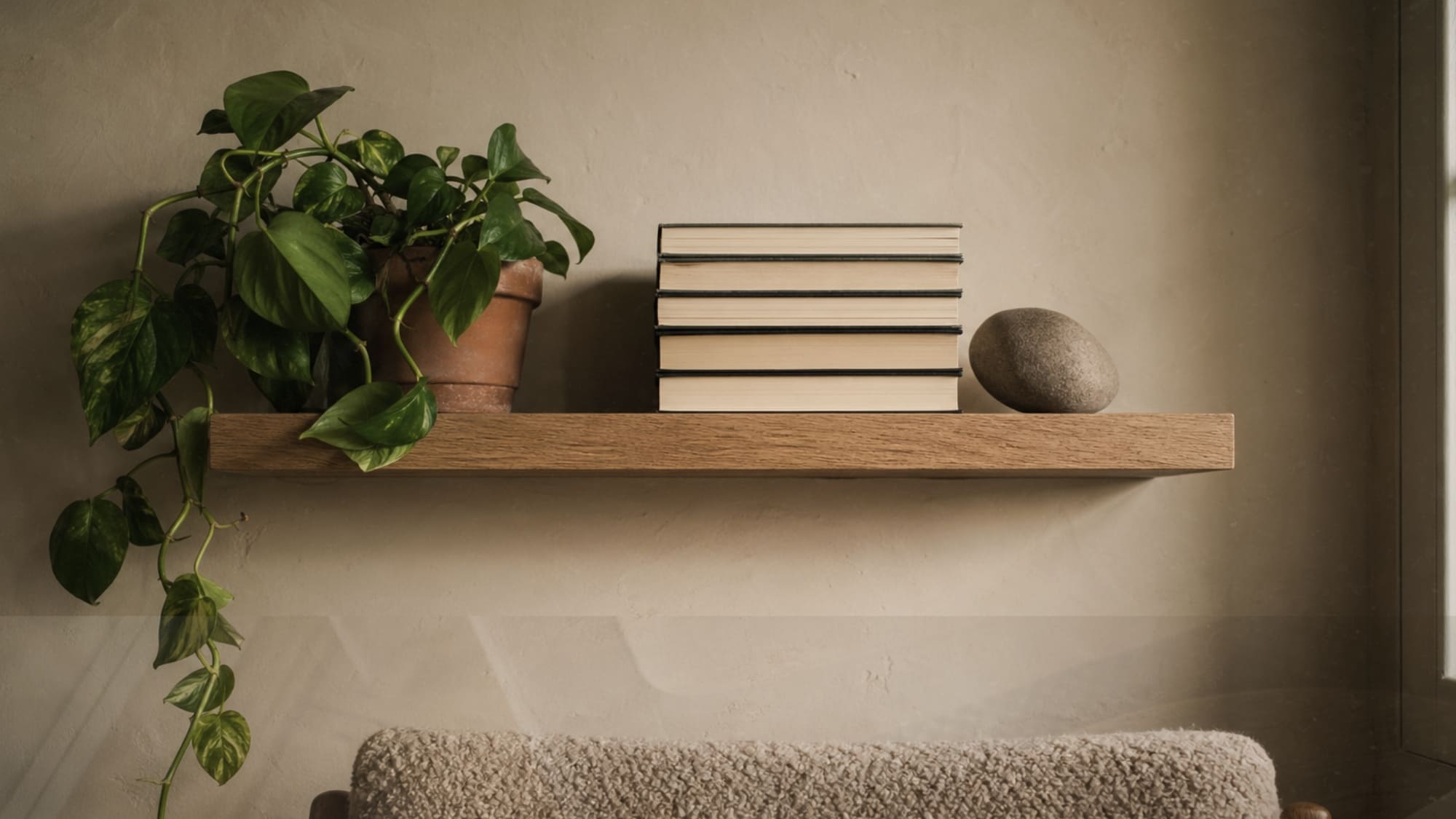
Books are not just functional in a reading nook. They are one of the most beautiful things you can display.
In a Japandi space, books should be accessible but arranged thoughtfully. A small low shelf or a simple floating ledge near the chair keeps them within arm’s reach without dominating the space.
You can also stack a few horizontally beside the chair with a small plant on top. That kind of organic, unstudied arrangement is very much in the spirit of wabi-sabi.
You do not need to hide colorful book spines either, though turning them to face inward with the pages out creates an interesting, textural look that many Japandi-inspired spaces use. It also forces you to actually know your books rather than reaching for the most visually appealing spine.
If you only have room for a small selection, choose the ones you actually love and rotate them seasonally. That act of curation is deeply Japandi. You are not collecting. You are choosing.
Plants: One Is Enough
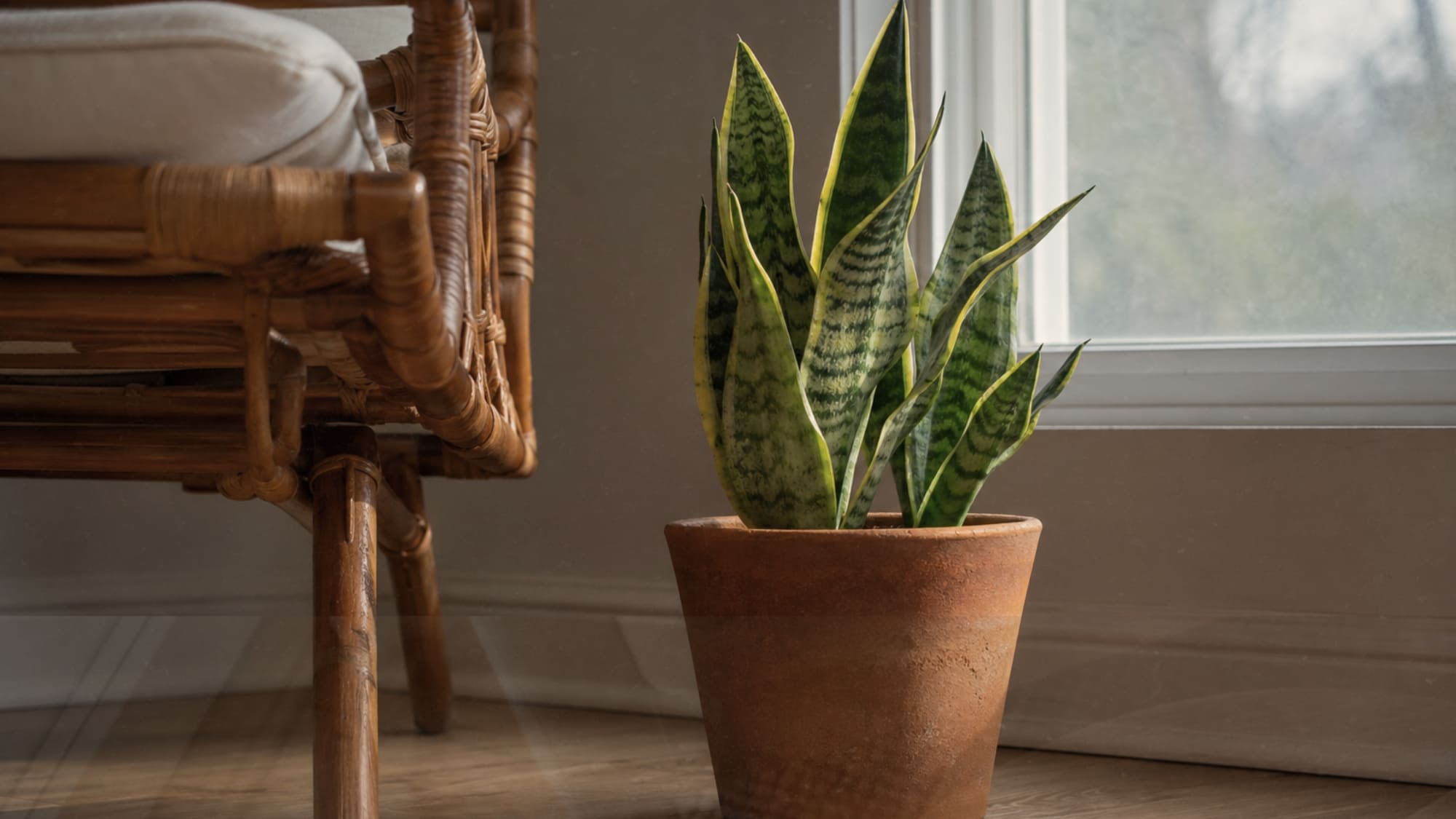
Plants bring life to a Japandi space, but you only need one or two. This is not a jungle aesthetic.
A single potted plant beside or behind your chair adds an organic, breathing element that softens all the clean lines. Good choices for low-light reading corners include a peace lily, a snake plant, a small pothos in a ceramic pot, or a sprig of dried pampas grass for something that requires no care at all.
The pot matters as much as the plant. Look for matte ceramic, rough terracotta, or simple stone finishes. Avoid shiny plastic or anything with decorative patterns. The plant should feel like it grew there naturally, not like a prop.
What to Leave Out
This section might be the most useful of all. Because Japandi styling is as much about what you remove as what you add.
Leave out the throw pillows in too many patterns. Leave out the gallery wall of framed prints. Leave out the storage basket overflowing with blankets.
Leave out the extension cord snaking across the floor. Leave out the stack of magazines you have been meaning to get to for three months.
The goal is a corner that feels curated and intentional. Every single thing in the space should earn its place. If you look at an object and feel unsure whether it belongs, it probably does not.
That sounds rigid, but in practice it is freeing. When everything in the space is exactly right, the space itself starts to feel like rest. You sit down and your shoulders drop. That is the whole point.
Putting It All Together: A Simple Checklist
To summarize everything above without losing the feeling, here is a practical way to approach building your nook from scratch or refining one you already have.
Start with the chair. Get that right first. Then add a rug to define the space. Next, sort out the lighting and make sure it is warm and low. After that, bring in a small side table and keep it nearly empty.
Add one plant. Add a simple shelf or stack for books. Finally, layer in texture through soft furnishings and do a ruthless edit of anything that does not belong.
The whole thing can come together for very little money if you are patient and intentional. A rattan chair from a secondhand shop, a jute rug, a paper lantern, a ceramic pot, and a shelf you already own. That is honestly all you need.
If IKEA is your main shopping option, that works better than most people expect for this style. My guide on Japandi style on a budget with IKEA breaks down exactly which pieces to look for and how to style them so they do not look like flat-pack furniture.
Why This Tiny Corner Matters More Than You Realize
There is a reason so many people are drawn to the idea of a Japandi reading nook right now. We are all living in spaces that are louder, more crowded, and more demanding than ever. The phone is always there. The to-do list is always growing. The news is always heavy.
A small, quiet corner designed with intention is a form of resistance against all of that. It says: this is a space where I slow down. This is a space where I read, and think, and breathe, and exist without performing anything for anyone.
You do not need a spare room. You do not need a renovation budget. You need a corner, a comfortable chair, good light, and the willingness to be a little deliberate about what lives in that space and what does not.
When you get it right, even in the smallest home, that corner will become the place you look forward to coming home to. That is what Japandi design, at its best, has always been about. Not perfection. Not Instagram. Just a life that feels good to live in.
Start with your corner. Start this weekend. You will be glad you did.

One thought on “Japandi Reading Nook Ideas for Small Corners (5 Setups)”