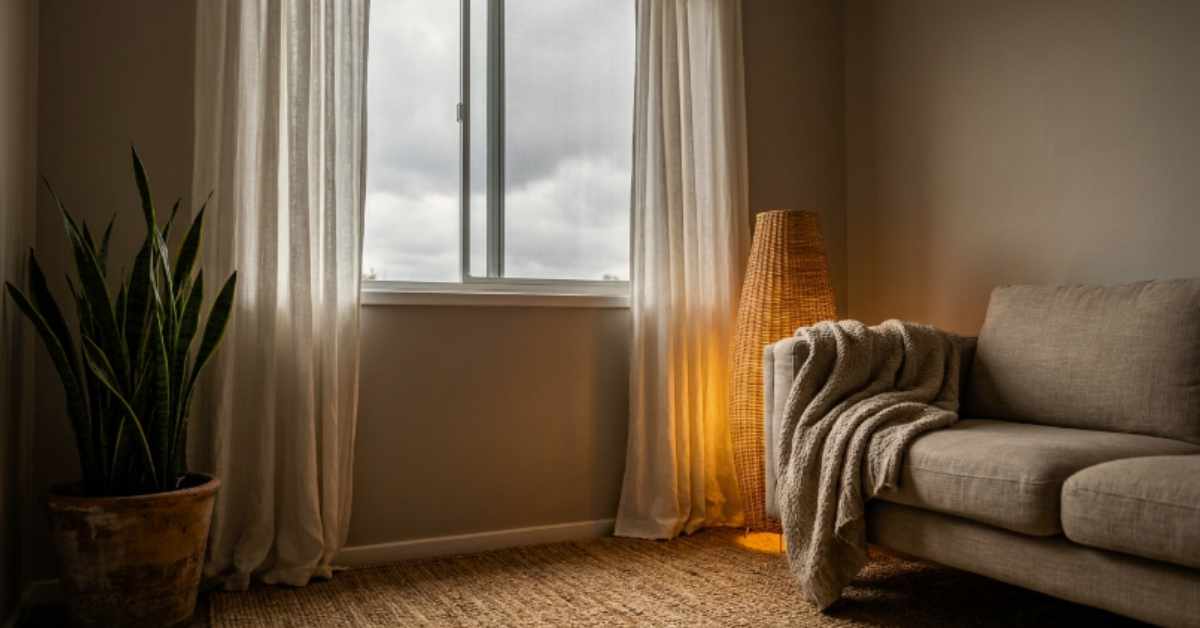
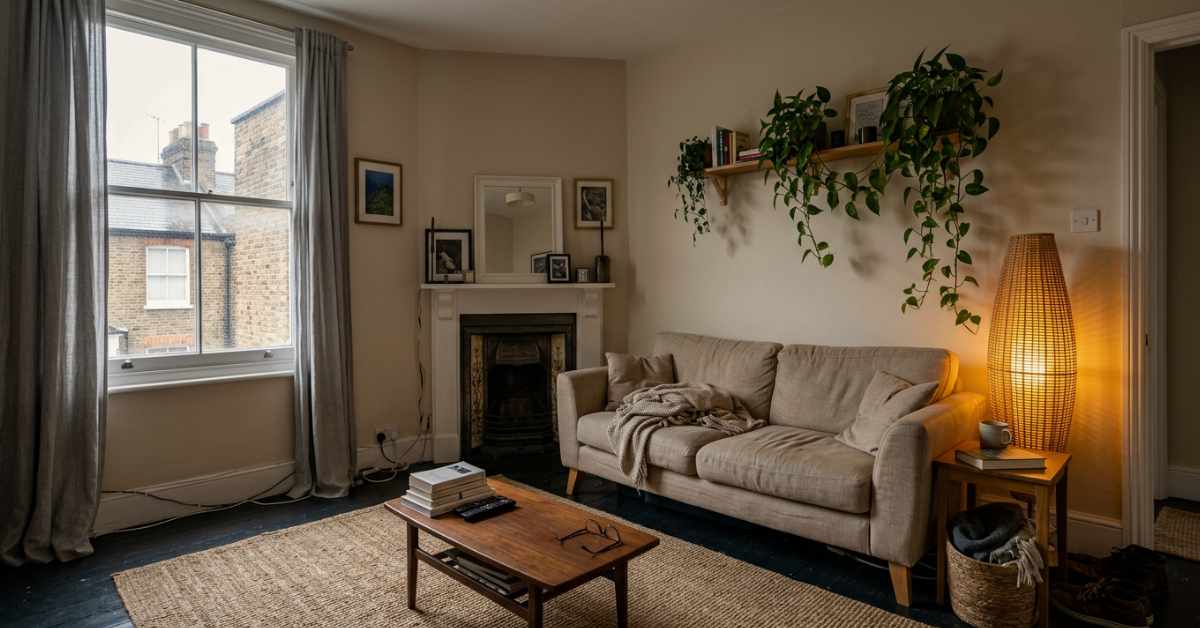
Living in a small dark apartment that feels too tight and too dim is one of those things people rarely talk about openly, but almost everyone who rents has experienced it at some point.
You moved in, the landlord handed you the keys, and somewhere between signing the lease and carrying your first box through the door, you realised the light situation was going to be a problem. Maybe the windows face north.
Or the building next door blocks whatever sun might have otherwise made it through. Maybe the walls are painted a shade of taupe that seems specifically designed to absorb hope. Whatever the reason, a dark rental apartment with no natural light has a way of making you feel smaller than the space itself.
The standard advice you find online does not really help. Add mirrors. Paint the walls white. Use sheer curtains. Those tips are fine in theory, but they skip the actual problem entirely. If you are renting and cannot paint, the white walls suggestion is useless. If the room is already dark, mirrors mostly just reflect the darkness back at you.
And sheer curtains, lovely as they are, cannot manufacture sunlight that was never there to begin with.
So here is a different approach. One that borrows from Japanese and Scandinavian design traditions, both of which have spent centuries solving this exact problem in cold climates with small windows and long winters.
The solution has less to do with adding more light and more to do with changing your relationship with the light you already have. By the end of this post, you will have a clear room-by-room plan that requires no drilling, no paint, no landlord permission, and no renovation budget.
Why Dark Apartments Feel Smaller Than They Actually Are
Before jumping into fixes, it helps to understand what is actually happening in a dark room. Because the problem is not just that it is dim. It is that darkness flattens your perception of depth.
In a well-lit room, your eye moves around and lands on different surfaces at different distances. That movement creates a sense of space. But in a dark room, especially one painted in a dull uniform colour, everything compresses visually. Walls seem closer than they are. Ceilings feel lower. Corners disappear into each other. The room is not actually smaller, but your brain registers it that way because it cannot find any visual anchor points to travel between.
Japanese interior design has a concept for this. It is called ma, which roughly translates to meaningful empty space. The idea is that the eye needs places to rest and move on from. A room without those anchor points feels suffocating even if it has plenty of square footage. This is why minimalist Japanese spaces can feel open and calm even when they are genuinely tiny. They give the eye a path to follow.
Understanding this matters because it changes your entire strategy. Instead of trying to flood a dark room with brightness, which is often impossible without renovation, you are instead creating visual rhythm. You are giving the eye things to find, move between, and rest on. That shift alone changes how the space feels, even before you touch a single lamp.
Fix the Light Temperature Before Anything Else
Most rental apartments come with overhead lighting that is genuinely terrible. Not because landlords are trying to make your life harder, but because they buy whatever is cheapest and brightest, which usually means cool white or daylight bulbs sitting around 4000 to 5000 Kelvin on the colour temperature scale.
That kind of light has a faint blue-white quality that works well in offices and hospitals. In a dark apartment with no warm natural sunlight to balance it out, it makes the space feel cold, flat, and a bit clinical.
The very first thing you should do, before buying a single piece of furniture or moving anything around, is change every bulb in your apartment to a warm white option. Look for bulbs between 2700K and 3000K — the US Department of Energy has a clear Kelvin colour temperature guide if you want to see exactly how each range looks before you buy.
That is the colour temperature that reads as golden and alive. It is the colour of a late afternoon in summer, which is exactly the feeling you are trying to create when you have a north-facing window that gets none of that.
This one change costs roughly twenty pounds or dollars in total and makes an immediate, visible difference. The room goes from feeling like a storage unit to feeling like somewhere a person actually chose to be.
But changing the bulb is only the beginning. The second and more important step is to stop relying on overhead light altogether.
Overhead lighting, meaning the single ceiling fixture that most rental apartments have in every room, creates a flat, even wash of light with no depth and no shadow. Shadow gets a bad reputation in dark spaces, but gentle, intentional shadow is actually what makes a room feel warm and dimensional.
Think of how a restaurant lit with candles and low lamps feels more spacious than a bright office even though the office almost certainly has more actual square footage. The difference is shadow.
The Japandi approach, which is the design philosophy that blends Japanese minimalism with Scandinavian warmth, almost always uses layered lower-level lighting instead of overhead. Floor lamps.
Table lamps. Plug-in wall sconces. A small lamp tucked behind the sofa. A warm globe on a bedside table. Each one creates a pool of light with soft shadow around it, and those pools together give the room depth, dimension, and that feeling of cosiness that harsh overhead light never manages.
You do not need many. Three or four well-placed lamps in a living room or bedroom is usually enough. The goal is to be able to turn off the ceiling light entirely and feel like the room is complete.

Use Natural Textures to Scatter Light (This Is the One Everyone Misses)

Here is the part that almost no advice column ever mentions. The real reason mirrors fail in dark rooms is not that people place them wrong. It is that mirrors are specular, meaning they reflect light in one concentrated direction. When you put a mirror in a dark room, it picks up whatever dim light exists and sends it back at you in one sharp beam. The rest of the room stays dark. You end up with one bright spot and no overall improvement.
Natural textures work completely differently. Rattan, jute, linen, raw wood, unglazed ceramic, woven cotton, dried grasses, rough clay. These materials have irregular, matte surfaces that scatter light in dozens of micro-directions simultaneously.
Instead of one concentrated reflection, you get a gentle diffusion of whatever light is available across the whole surface. The result is that even a very low-light room starts to feel alive and dimensional because every textured surface is doing tiny amounts of work to spread and soften the light around it.
This is a deeply practical idea borrowed from wabi-sabi, the Japanese philosophy that finds beauty in imperfect, natural, worn things. Wabi-sabi spaces feel warm even when they are quiet and simple, partly because every surface has enough texture to catch and play with light.
A smooth white wall in low light just goes grey. A wall hung with a woven linen panel in that same low light glows softly. The light source is identical. The material is doing all the work.
So in practical terms, here is what to bring in:
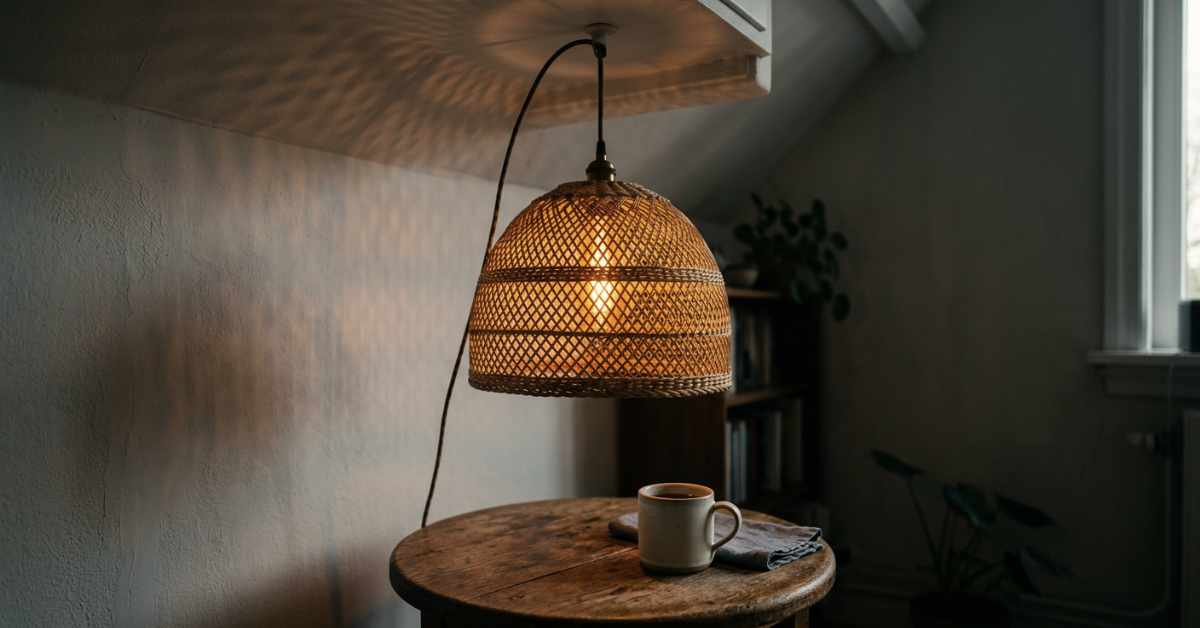
Rattan lampshades are probably the single best purchase you can make for a dark apartment. A rattan pendant or table lamp shade does not just diffuse light through the weave. It casts a pattern of tiny shadows on the ceiling and walls around it, which instantly adds texture and depth to surfaces that were previously flat and dull.
Linen curtains in off-white or warm cream are far more effective than sheer white polyester, which looks cheap and does not interact with light the same way. Linen has a natural slub texture that catches and filters light beautifully. Hang them close to the ceiling rather than just above the window, and let them pool slightly on the floor. This exaggerates the height of the room and turns the window into a softly glowing focal point even on overcast days.
Light natural wood in any form, whether a coffee table, a shelf, a stool or a side table, reflects more light than dark wood and does it warmly. Oak, bamboo, ash and light pine all have grain patterns that catch light at gentle angles and read as warm and alive even in low-light conditions. Dark wood, conversely, absorbs light and disappears into the background of a dim room.
A jute or wool rug in a warm, light tone grounds the room and adds the kind of floor-level texture that bounces light upward rather than absorbing it. Avoid dark rugs in dark rooms. They eat the light from below and make the floor feel heavy.
What to avoid: high-gloss surfaces, synthetic materials, and anything in a cool grey or stark white tone. Gloss creates a single harsh hot-spot of reflection rather than a gentle scatter. Synthetic materials like polyester and acrylic tend to absorb and dull available light rather than interact with it. Cool tones, even light ones, read as dim and cold without warm sunlight to activate them.
The Furniture Placement Rule That Opens Everything Up
This costs nothing and can be done this afternoon.
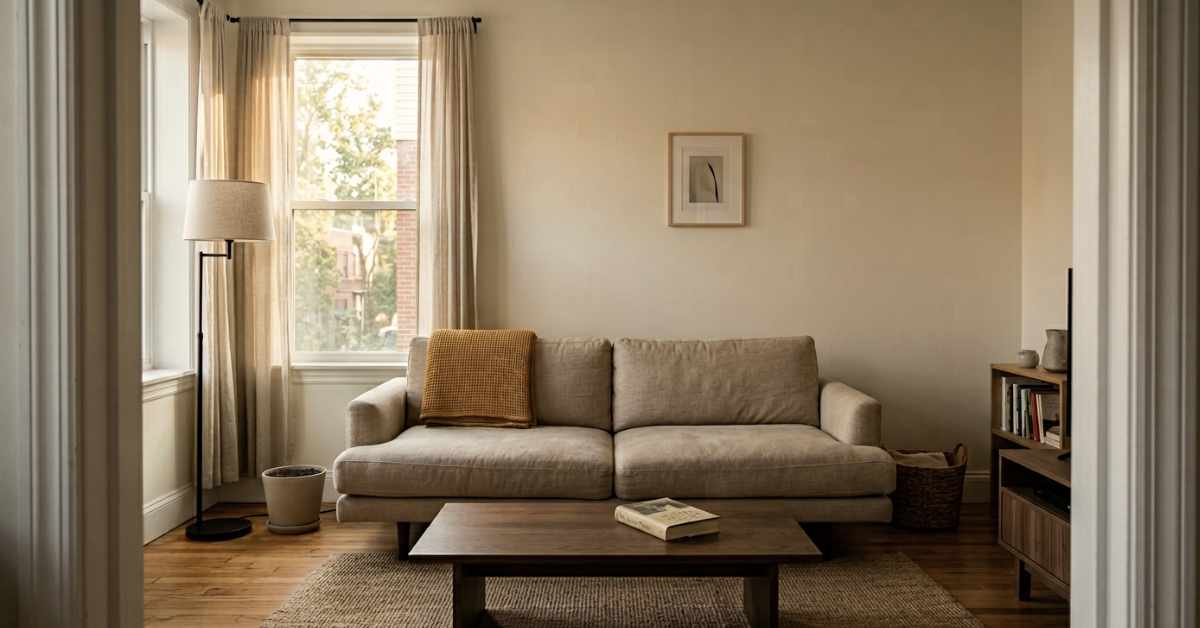
Most people in small dark apartments push all their furniture against the walls. The instinct makes sense; it feels like it creates more open floor space in the middle. But it actually makes the room feel smaller and darker, because furniture pressed flat against the wall reads as part of the wall. Everything blurs together into one continuous dark mass with no separation, no air, and no depth.
The Japanese concept of ma comes back here. Floating furniture slightly away from the walls, even by ten or fifteen centimetres, creates a sliver of shadow behind each piece. That shadow line separates the furniture from the wall, gives each piece its own visual weight, and suddenly the room has layers. It has a foreground and a background. It has depth.
Additionally, low-profile furniture is one of the most effective tools in a dark, small space. A sofa at standard height in a small room cuts the visual field roughly in half. A low sofa or platform-style daybed sits below that threshold and reveals much more wall behind it, which makes ceilings feel higher and the room feel taller and more open. Low furniture is central to Japanese interior design for exactly this reason. It is not just an aesthetic choice. It is a spatial strategy.
Meanwhile, keep a clear path in front of every window. Even a small window that barely gets any sun is doing some work. The moment you block it with the back of a sofa or a tall plant, you lose that contribution entirely. Keep at least two to three feet of open floor between any furniture and the window wall. Let the light travel as far into the room as it possibly can before it gives up.
Finally, use vertical lines deliberately. A tall, slim bookshelf. A floor lamp with a long, slender stem. Curtains hung close to the ceiling and dropping all the way to the floor. Vertical lines pull the eye upward and make ceilings feel higher than they are. In a dark room, height is your friend.
The Colour Trick That Most Renters Get Completely Wrong
Here is the counter-intuitive one. Bright white walls are actually a bad choice for a dark, north-facing apartment.
The reason is undertone. White paint needs warm sunlight to read as white. Without warm sunlight, specifically south or west-facing light with a warm golden quality, most bright whites go cold and grey. In a north-facing room, brilliant white walls look like a dentist’s waiting room on a January afternoon. They reflect the cool blue-grey quality of the indirect light and make the room feel clinical rather than bright.
The Japandi answer to this is warm neutrals with yellow or red undertones. Colours like off-white, greige, warm cream, oat, pale clay, and soft sand all have a built-in warmth that reads as glowing even without direct sunlight. They do not need the sun to activate them the way pure whites do. Consequently, they work far harder in a north-facing space.
If you cannot paint, which most renters cannot, the way to introduce this effect is through large textiles. A generously sized wall hanging or tapestry in a warm oat or linen tone does the same visual job as a painted wall. So does a large art print with warm-toned imagery. So do the curtains, if they are full-length and cover most of the window wall.
Removable wallpaper is another option worth considering, particularly styles that mimic limewash plaster, grasscloth, or textured linen. These add colour and warmth, but more importantly they add texture to the walls, which means the walls themselves start scattering light rather than absorbing it.
A grasscloth-look removable wallpaper in a warm sand tone on one wall transforms the character of a dark room more dramatically than you might expect.
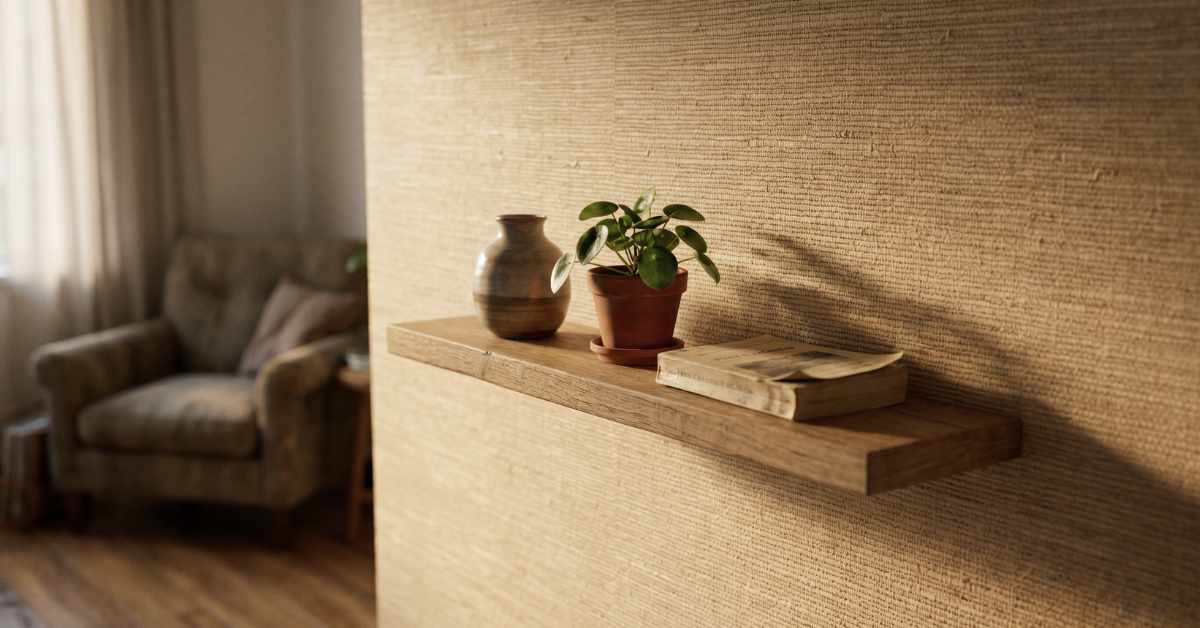
For furniture and soft furnishings, choose warm undertones throughout. Sand, oat, pale terracotta, warm cream, and honey-toned wood all carry warm undertones. Cool greys, washed whites, and cool-toned wood finishes all have the opposite effect, pulling the colour temperature of the room toward blue and making it feel dimmer than it is. The distinction is not about how light or dark the colour is. It is entirely about whether the undertone is warm or cool.
Plants That Actually Help in Low Light

Adding plants to a dark apartment feels like it should be obvious, but there is a meaningful difference between plants that help and plants that just quietly die in the corner while you feel guilty about it.
The reason plants help at all in dark rooms goes beyond the visual. A living plant creates a sense of presence and vitality. In a dark, still room, even a single healthy plant signals that this space is inhabited and cared for. That feeling of aliveness is something a dark room desperately needs. Wabi-sabi design consistently incorporates organic, living things for exactly this reason. Not as decoration, but as proof that the space breathes.
In terms of which plants to choose, snake plants are the most forgiving option available. They genuinely thrive in low light, they have a clean vertical line that adds structure without clutter, and their deep green leaves have a glossy surface that catches light at multiple angles. A tall snake plant in a dark corner is doing more visual work than most people realise.
Pothos is another excellent choice, particularly because it trails. A pothos on a high shelf, trailing down a wall or across a surface, adds movement to a room that might otherwise feel static. Movement creates life, and life creates the perception of space.
ZZ plants have thick, waxy leaves in a deep glossy green that interact with light beautifully even in minimal conditions. Peace lilies occasionally produce pale flowers that add a quiet brightness to dark corners without being fussy.
The one rule from Japandi design worth keeping here is the one-considered-plant-per-zone principle. Rather than crowding every surface with struggling plants, choose one good plant for each area and let it have room to be seen. A single large snake plant in a terracotta pot in the corner of a living room makes a statement. Eight small plants on a windowsill read as clutter.
Pot material matters too. Terracotta and matte clay, as mentioned earlier in the texture section, interact with light warmly and add to the overall material language of the room. Plastic pots, even in neutral colours, have a synthetic flatness that works against the warmth you are trying to build.
Room-by-Room Action Plan
Living Room
Start with the light. Replace the overhead bulb with a 2700K warm white option and immediately add a floor lamp in the darkest corner of the room. A rattan pendant lamp hung over a reading chair or side table is one of the best investments you can make for this space. Switch the sofa to a low-profile style if yours is high-backed, or introduce lower furniture nearby to bring the visual line down. Add a jute or wool rug in a warm sand or oat tone under the coffee table. Hang linen curtains close to the ceiling and let them pool slightly on the floor. Put one large, considered plant, ideally a snake plant or pothos, near the window but not blocking it. Float the sofa away from the wall by at least ten centimetres. Turn off the overhead light entirely and see how the room feels.
Bedroom
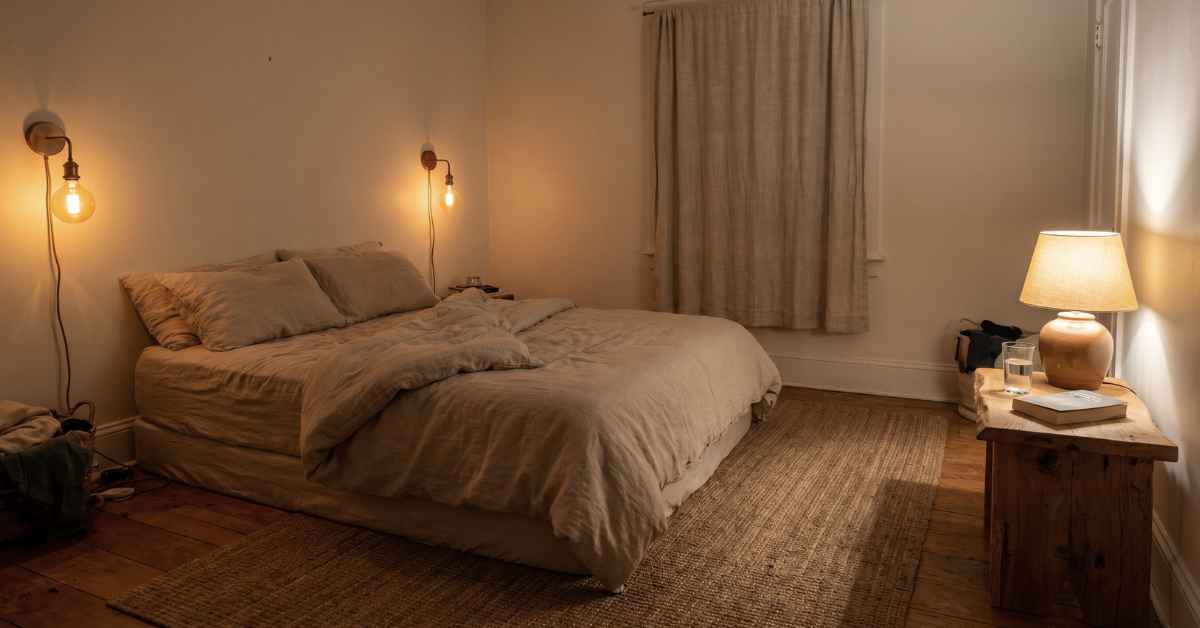
Plug-in sconces on either side of the bed, fitted with 2700K bulbs, replace the need for overhead lighting entirely and immediately make the room feel like somewhere you chose rather than ended up. A low platform bed or a bed frame without a high headboard reveals more wall and makes the ceiling feel higher. Hang linen curtains in off-white close to the ceiling. Extend a warm-toned rug out from both sides of the bed so it greets your feet in the morning on something that feels warm and grounded. A small rattan or ceramic lamp on the bedside table completes the layered light setup. Keep surfaces clear. A dark bedroom with clutter on every surface becomes a dark cluttered room. A dark bedroom with one lamp, one plant on a stool, and clean surfaces becomes a sanctuary.
Kitchen
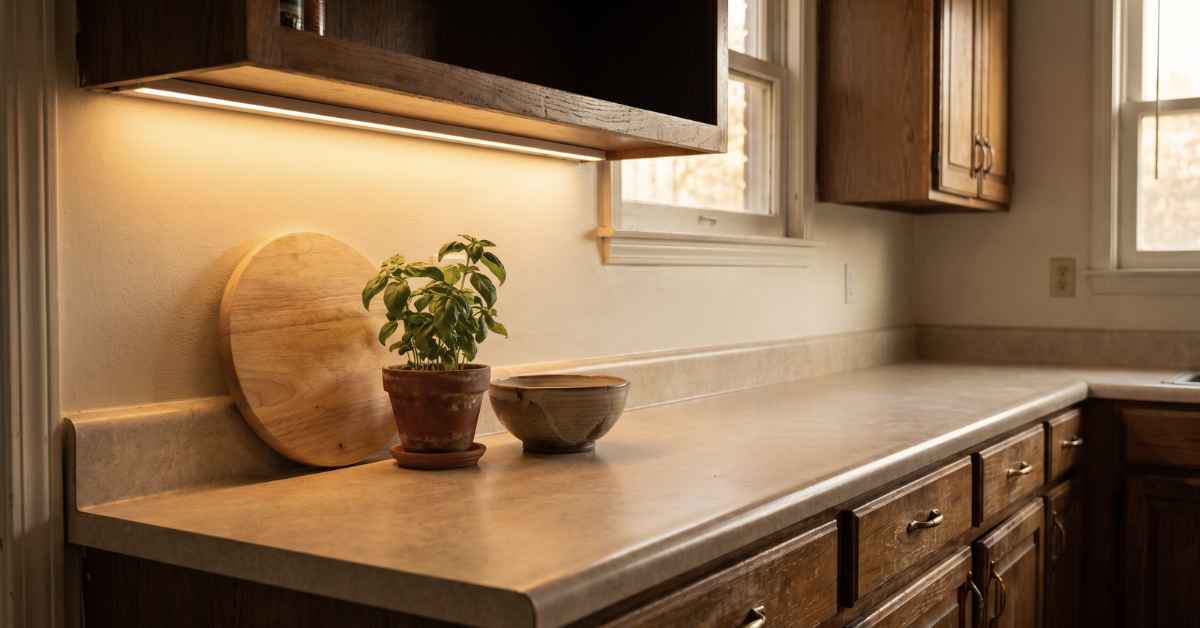
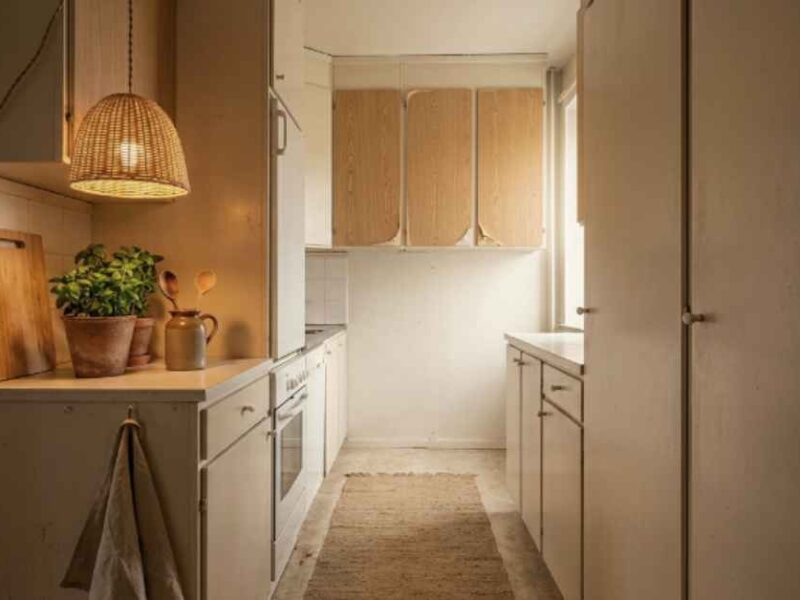
Kitchens in rental apartments are often the most challenging space because the fixtures and fittings are largely fixed. However, two changes make a noticeable difference. First, replace the overhead bulb with the warmest option that fits the fixture, and if there is an opportunity to add LED strip lighting under a shelf or cabinet, do it. Warm under-shelf light turns a dark kitchen into something that feels deliberate and cosy rather than poorly lit. Second, keep the countertops as clear as possible. Dark, cluttered surfaces in a low-light kitchen absorb everything. A clear counter with one warm wood chopping board, one terracotta pot of herbs, and one small rattan or ceramic object reads as intentional and open.
Bathroom
Bathroom lighting is almost always overhead, and overhead bathroom lighting almost always creates harsh shadows under eyes and across faces. If your bathroom mirror has space on either side, two small plug-in globe lights mounted beside the mirror rather than above it change everything. Warm globe bulbs at face level eliminate the harsh shadows and make the room feel softer and larger. Beyond the lighting, light-coloured towels folded or hung neatly add softness and warmth. One low-light plant, even a small pothos on a shelf, adds the sense of life that makes a dim bathroom feel intentional rather than neglected.
Light Is a Material, Not a Switch
Japanese designers have always worked with limited light. Traditional Japanese rooms often had small windows, deep eaves, and interiors that were genuinely dim by modern standards. But those rooms never felt dark in a bad way because every surface, every texture, every material had been chosen to interact with whatever light was available. The light that came in was used, scattered, diffused, and reflected in dozens of small quiet ways until the room felt alive.
That is the shift this post is asking you to make. Not to fight the darkness of your apartment or spend money trying to manufacture the natural light it does not have. But to work with what you actually have, the way Japandi and wabi-sabi design has always done.
Warm your bulbs. Bring in natural textures. Float your furniture. Choose materials with warm undertones. Add one considered plant per zone. And then, when you are sitting in your apartment on a grey afternoon with the overhead light off and three warm lamps glowing around you, notice how different it feels from the place you moved into.
The landlord did not change anything. The windows are still where they were. However, the room is no longer fighting you.
If this helped, you might also enjoy our guide to Renter-Friendly Room Makeovers: No Holes, No Damage, our post on Natural Texture Layering: How to Mix Linen, Rattan, Jute and Wood in One Room, and our breakdown of What Wabi-Sabi Decor Actually Means and How to Use It at Home.
2 thoughts on “How to Make a Small Dark Apartment Feel Bigger and Brighter Without Renovation”