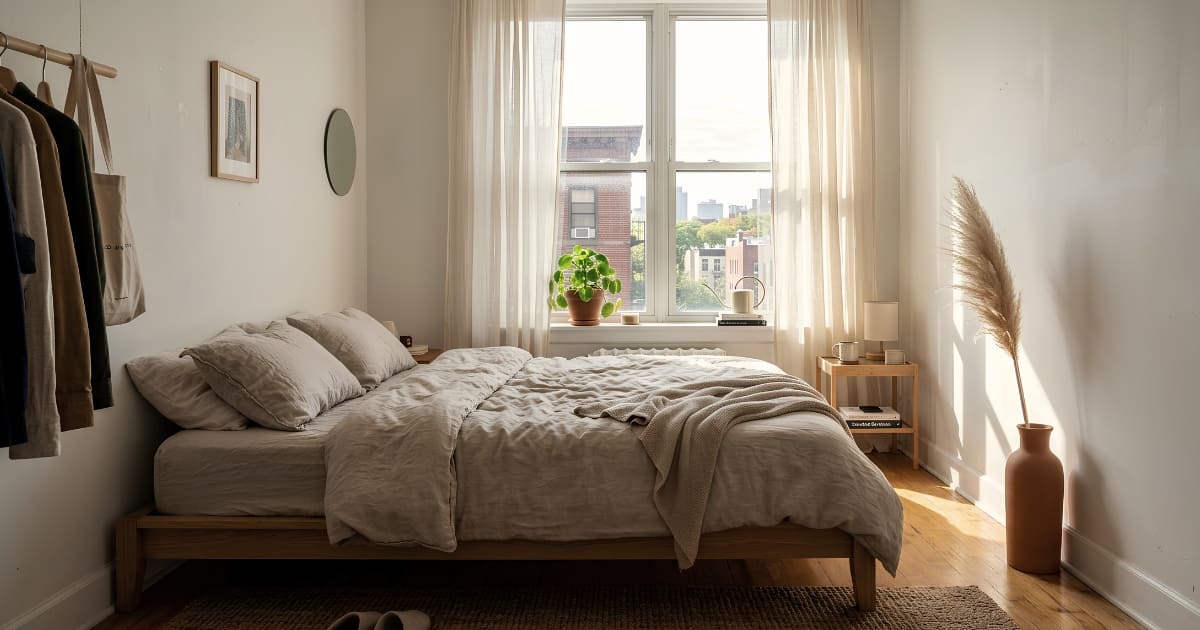
A renter-friendly Japandi bedroom is one of the most searched bedroom styles right now, and honestly, it makes complete sense. The style is calm, it is clean, and it somehow feels expensive without actually being expensive. But if you rent your home, you already know the problem.
You cannot paint the walls. You cannot drill into them without losing your deposit. So you scroll through beautiful Japandi bedrooms on Pinterest and then close the tab because none of it feels possible in your situation.
Except it is. Totally possible. I have been renting for over six years and I have put together three different Japandi-inspired bedrooms in three different apartments, all without touching a single wall with a drill or a paintbrush. This guide covers everything, from furniture choices to lighting to textiles, and by the end you will have a real plan, not just a mood board.
Why Japandi Works So Well for Renters Specifically
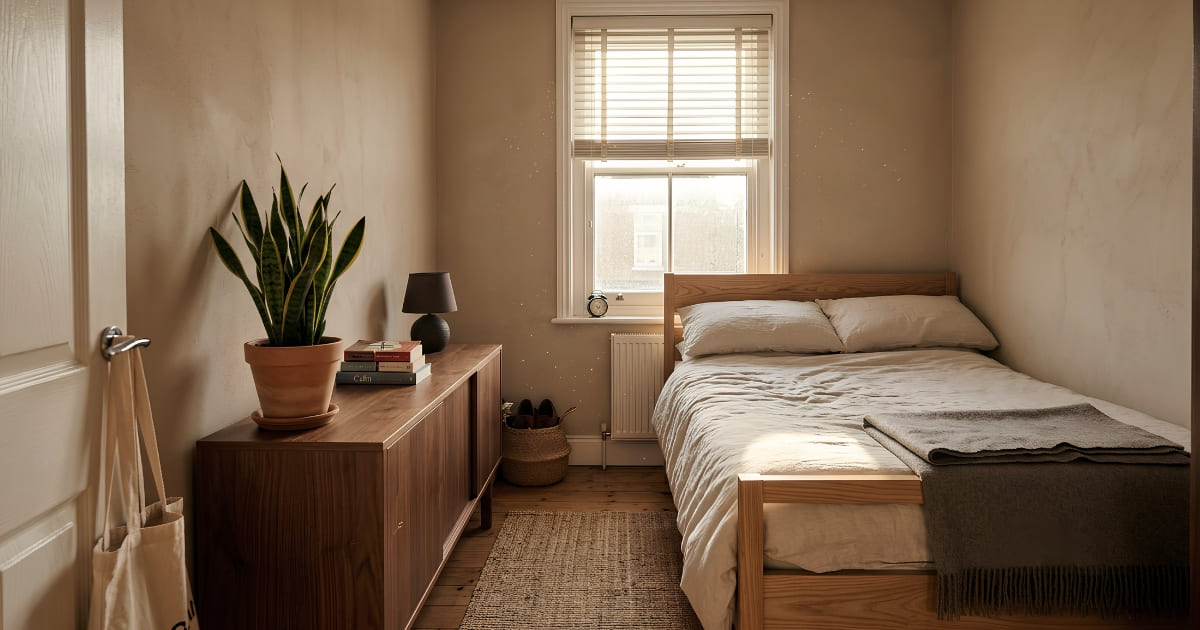
If you have already read our breakdown of Japandi vs Scandinavian vs minimalist design, you know what this style is built on. Japanese wabi-sabi meets Scandinavian hygge. Simple, warm, natural, unhurried. No need to cover that ground again here.
What is worth talking about is why this particular style suits renters better than almost any other aesthetic out there.
Most design styles are tied to the bones of a room. Mid-century modern looks right only when the architecture cooperates. Maximalism needs wall colour and considered built-ins to hold it together without looking chaotic. Even a lot of Scandinavian rooms depend on white-painted floors or specific wall tones to land the way they do in photos.
Japandi is different. Because the philosophy behind it is about restraint and natural materials, the style lives almost entirely in the objects and textiles you bring into a space. The walls fade into the background. The architecture stops being relevant. A builder-beige rental wall becomes a non-issue once the right low bed frame, a jute rug, and a linen duvet are in the room.
That is genuinely rare in interior design. Most styles fight against a landlord’s choices. Japandi works around them without even trying.
There is also something in the philosophy itself that suits the renter’s mindset. Wabi-sabi, at its core, finds value in impermanence. A space that is temporary is still worth caring for. A room you cannot permanently alter is still worth making beautiful. If any design philosophy makes an argument for investing time and thought into a rented space, it is this one.
Start With the Bed Frame: The Anchor Piece
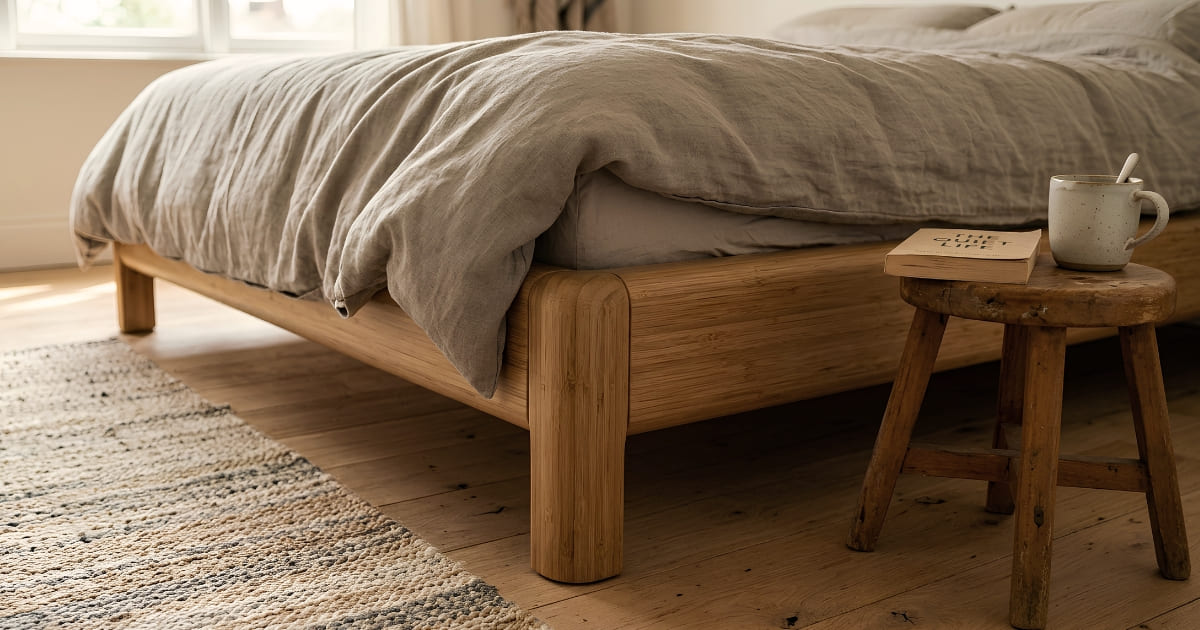
The bed takes up the most visual space in a bedroom, so this is where to focus first. For Japandi, you want low, platform-style frames. Think close to the floor, clean lines, no decorative headboard with carved flourishes. Materials like light oak, walnut, or bamboo all work well. Dark-stained wood also fits if you lean more toward the Japanese side of the style.
If you want inspiration before spending anything, our roundup of 15 Japandi bedroom ideas that look expensive but aren’t shows exactly what low platform beds look like in real rooms at different budget levels.
The good news for renters is that bed frames require no drilling at all. They simply sit on the floor. A few specific things to look for: avoid metal platform beds with visible bolts and industrial finishes, because those pull the room away from the warm, organic feel Japandi needs. Also avoid upholstered beds in bright colors or heavy fabric. Linen or bouclé in oatmeal, warm grey, or dusty taupe can work, but clean wood is usually the safest choice.
If your current bed frame is the wrong style and replacing it is not an option right now, focus on hiding it. A long, flowing duvet that drapes close to the floor can cover a lot. Sometimes the frame matters less than you think once the bedding is right.
Walls Without Paint or Drilling: This Is the Big One
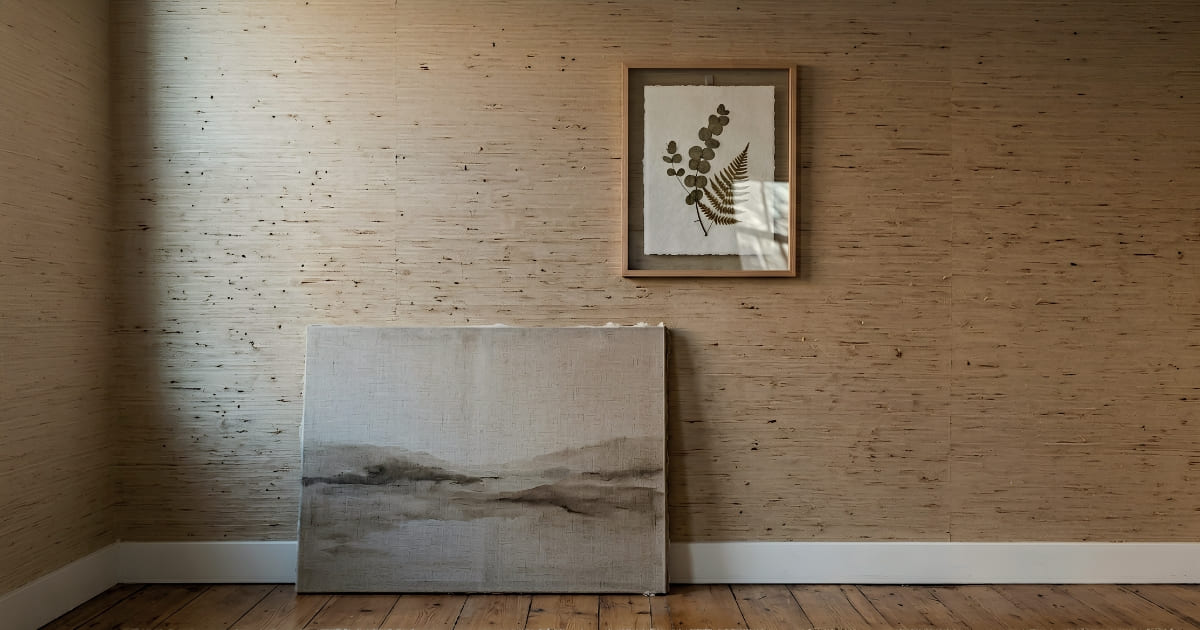
Most people assume that without the ability to paint, the room is stuck looking like whatever the landlord left behind. That is not true, but you do have to be intentional about it.
Peel-and-stick wallpaper has gotten genuinely good in the last few years. Not the cheap plasticky kind from a decade ago. There are proper textured options now, including grasscloth-look papers, linen textures, and subtle warm neutrals that look like real plaster or clay paint. You can do a full accent wall behind the bed with this, and when you leave, it peels off without taking the paint with it. The key is to buy the good stuff. Budget peel-and-stick tears when you try to remove it. Brands like Chasing Paper, Tempaper, and Walls Need Love have decent reputations for clean removal.
Removable wall panels are another option that has become more available. These are thin wood or rattan panels with adhesive tabs. A grid of natural wood panels behind the bed mimics the look of a built-in feature wall, and the whole thing comes down with no damage.
Large-scale art and textiles do most of the heavy lifting in a real Japandi room. A massive linen tapestry or a simple framed print in a thin natural wood frame can anchor the wall visually even without color. Command strips hold a surprising amount of weight now, with the heavy-duty versions rated for several kilograms. For anything larger, there are damage-free hanging systems that use thin strips of adhesive along the top of the frame.
Tall furniture placed against the wall is often underrated. A full-height bookshelf or a wardrobe against the beige wall draws the eye upward and essentially replaces what paint would have done. The wall behind it becomes irrelevant.
One more honest note: sometimes the wall color is not actually the problem. Renters often assume that because they cannot paint, the room will never look right. But a lot of Japandi rooms have white or off-white walls, which is exactly what landlords tend to leave behind. If your walls are white or close to it, you may already have the ideal backdrop. Focus your energy elsewhere.
Flooring: Working Around What You Have
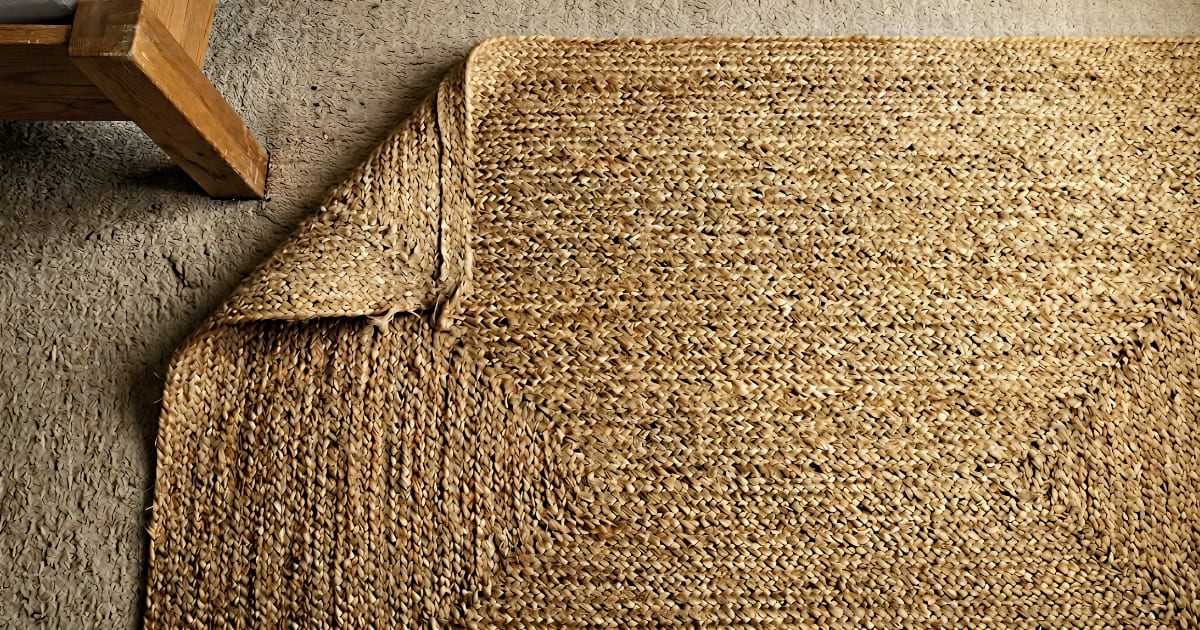
Hardwood or light wood flooring is ideal for this style. If you have it already, great. But many rental apartments have carpet, dark tile, or laminate in colours that do not cooperate.
For carpet, large flat-weave rugs in natural fibres are your best tool. A jute rug, a wool rug in undyed cream, or a simple flatweave in warm grey can cover a significant portion of the floor and shift the whole feel of the room. The rug does not have to cover everything. Even a rug under the bed that extends out on both sides creates enough visual grounding. Natural fibre rugs also bring in the texture that Japandi depends on, so they are doing two jobs at once.
For dark tile or bad laminate, the same principle applies. A rug large enough to cover the floor between the bed and the door changes the room completely. Go bigger than you think you need. A common mistake is to choose a rug that is too small, which makes it look like a bath mat.
Lighting: The Fastest Way to Change a Room’s Mood
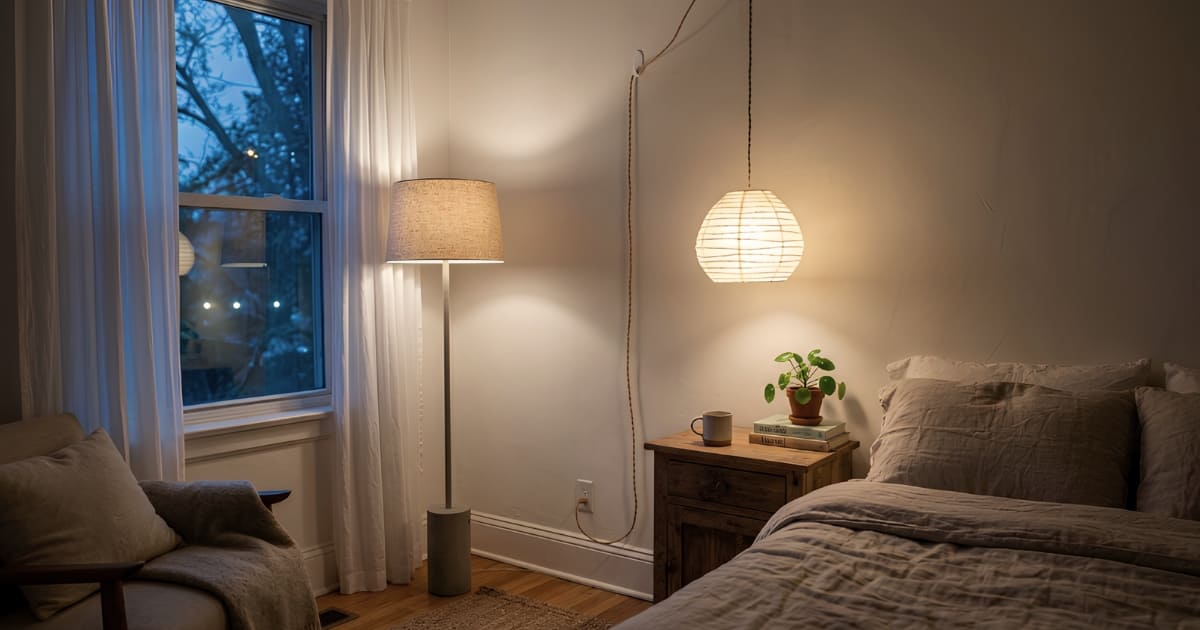
Most rental bedrooms have an overhead ceiling light with a basic pendant or flush mount that is difficult to replace without electrician work. However, the trick is not to replace it but to stop relying on it.
Plug-in pendant lights have become widely available. They hang from a ceiling hook (a small adhesive hook rated for a few kilos), the cord runs along the wall or ceiling and plugs into the outlet. Swap out the shade for a washi paper shade, a rattan globe, or a simple linen drum, and the whole ceiling fixture problem disappears from the visual conversation.
Floor lamps in warm-toned materials, like concrete, washi paper, or light wood, add the low, ambient light that makes a Japandi bedroom feel calm rather than clinical. If you need more direction on pairing lighting with natural textures without spending a lot, our guide to how to make a small dark apartment feel bigger and brighter without renovation covers the lighting layer in detail. Avoid anything chrome, bright white, or industrial. Pair with warm white bulbs (around 2700K) rather than cool white, because cool white bulbs make natural materials look flat and a bit sad.
Candles also fit perfectly into this aesthetic. A few simple ceramic or clay candle holders with unscented beeswax candles add warmth without any installation at all.
Furniture Beyond the Bed
Japandi rooms are not minimalist in the sense of having nothing. They are curated. There is usually just enough furniture, and each piece is chosen carefully.
A low dresser or sideboard in light wood is classic for this style. Avoid dressers with decorative hardware in gold or chrome. Look for simple bar pulls in matte black, brushed brass, or no hardware at all (push-to-open drawers have a very clean look). Second-hand shops and Facebook Marketplace often have older solid wood furniture that, with a sandpaper pass and some tung oil, becomes exactly the right thing.
Bedside tables with a low profile work better than tall ones. Small wooden stools, concrete blocks, or wicker baskets used as side tables all fit. A flat stone or a ceramic tray on top pulls it together without any effort.
One wardrobe or storage unit in a neutral colour handles the practical side. If you already have a built-in wardrobe, keep the doors closed and do not over-decorate them. Leave them alone. In Japandi, empty space is part of the design.
On the budget side, IKEA has specific lines that work very well for this style. Our post on Japandi style on a budget with IKEA breaks down which exact pieces to look for and which ones to avoid.
Textiles: Where the Warmth Comes From
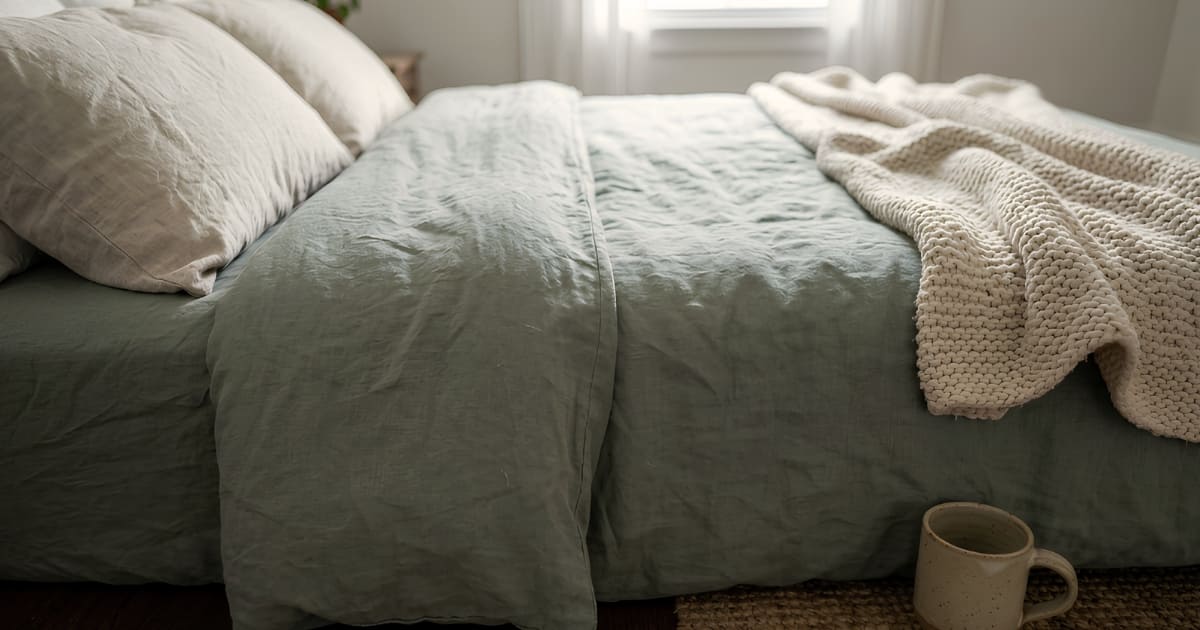
This is where the style really comes alive. The bed styling in a Japandi room is layered but not complicated. It typically looks like this: a fitted sheet in white or off-white, a duvet cover in linen or brushed cotton in warm grey, oatmeal, or dusty sage, one or two standard pillows in matching or complementary neutral, and a loose throw folded at the foot of the bed. That is it. No decorative pillow collection, no pattern mixing, no faux fur. The simplicity is the point.
For other textiles, a curtain in linen or a loose-weave cotton in off-white or warm grey softens the window. Clip-on curtain rings and tension rods mean you do not need to drill a single hole, though if the curtain rod is already in place (most rentals have one), a simple swap of the curtain fabric itself changes the room enormously.
A small woven basket for laundry, a ceramic pot for a plant, a wooden tray on the dresser for daily items. All of these small choices add up. The room starts to feel put together not because of any one big purchase, but because every small object is considered. This is where the wabi-sabi philosophy actually shows up in practice: imperfect, handmade, slightly irregular objects feel more at home in a Japandi bedroom than anything that looks mass-produced and perfect.
Plants: Non-Negotiable for This Style
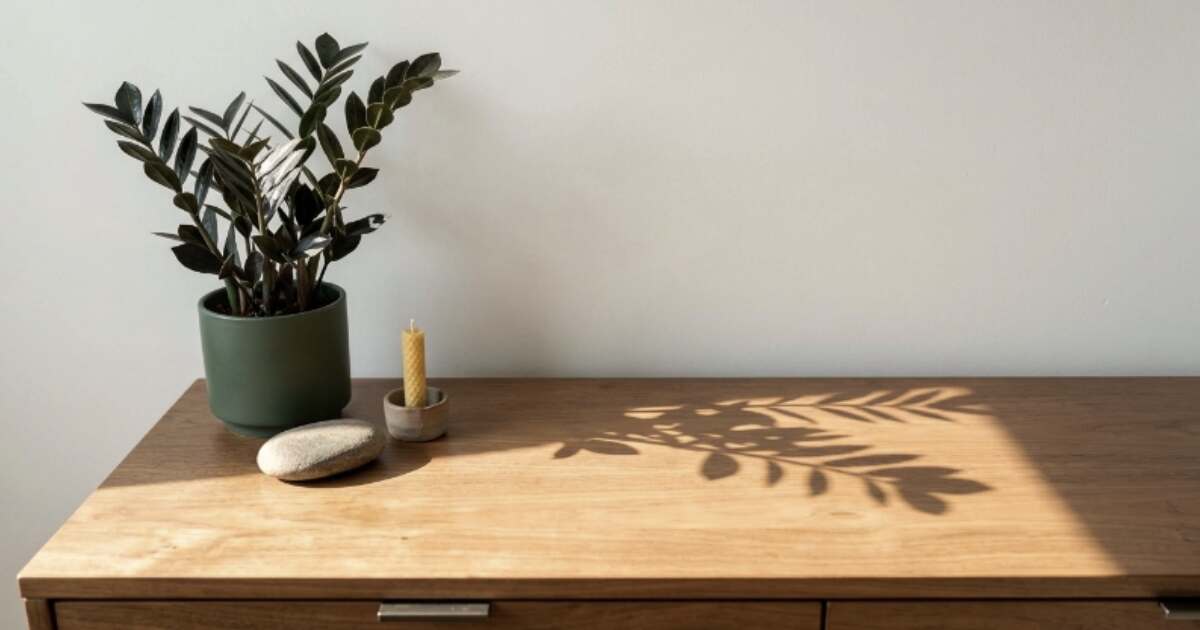
There is no real Japandi room without some greenery. Plants bring the natural element that ties the whole organic palette together. For bedrooms, low-maintenance options like a snake plant, a ZZ plant, or a small pothos in a simple terracotta or matte ceramic pot are ideal. A small bonsai or a simple bamboo arrangement also fits the Japanese side of the aesthetic well.
Place them on the dresser, on the windowsill, or on a low wooden stool in the corner. Do not overcrowd. Two or three plants, well placed, do more than ten plants pushed into every corner.
The Clutter Problem: The Thing Nobody Talks About Enough
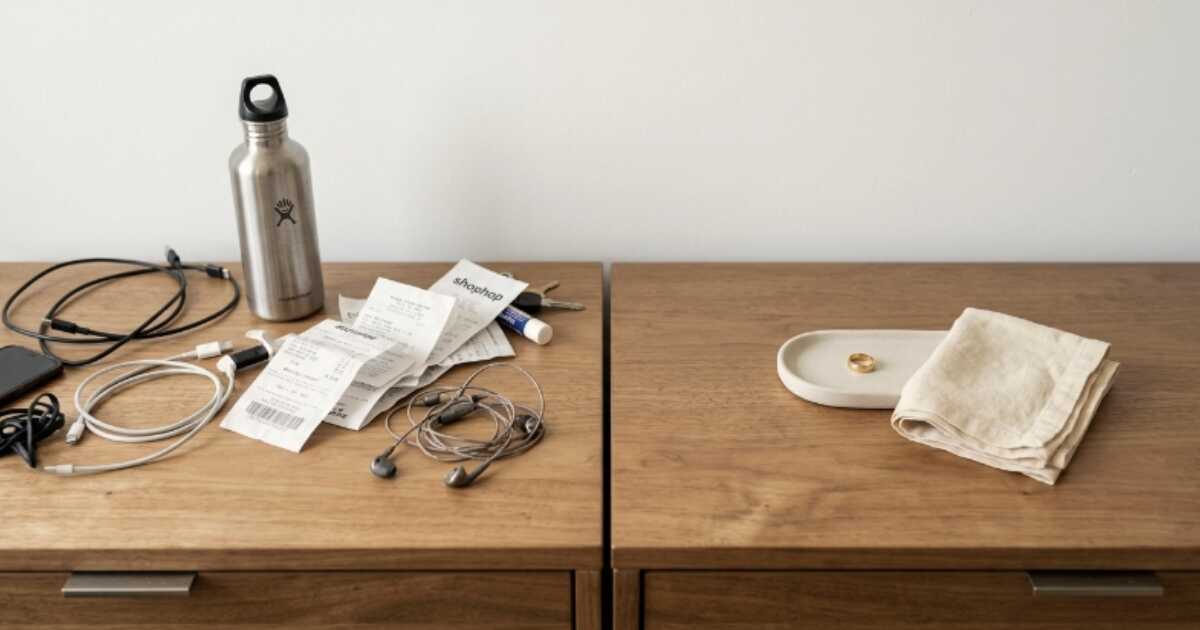
You can buy all the right furniture and textiles, but if the surfaces are covered in stuff, the Japandi feeling disappears completely. This style depends on clear surfaces, and that is actually harder than choosing the right rug.
The honest solution is storage that hides things rather than displays them. Closed drawers, lidded baskets, and the inside of the wardrobe handle the daily clutter. On visible surfaces, the rule of thumb is to keep only things that are both useful and beautiful. A single book, a candle, a plant. Not a pile of books, three candles, and a collection of random objects.
This is the part of Japandi that costs nothing but requires the most discipline, and it is also the part that makes the biggest difference.
Putting It All Together on a Budget
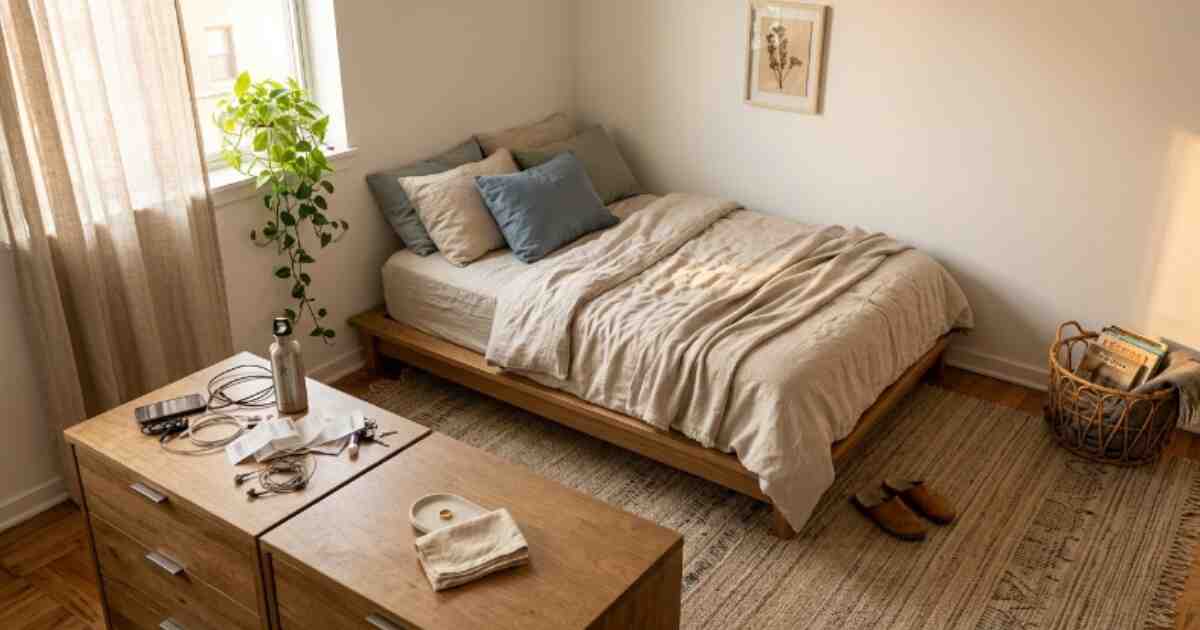
You do not have to do everything at once. In fact, doing it in stages makes more sense, especially because you start to develop an eye for what works in your specific space.
Start with the bedding and one rug. Those two changes alone shift the room noticeably. Then add a floor lamp and replace the curtains. After that, address the walls with a peel-and-stick panel or a large framed print. The furniture comes last, over time, as you find the right pieces.
For a full breakdown of how to get this look for very little money, our guide to Japandi bedroom ideas under $200 gives a practical shopping list with no renovation required. Second-hand shops, Facebook Marketplace, and IKEA all feature heavily. You do not need to spend a lot. Japandi is a style rooted in the philosophy that less is more, so buying less, but buying it intentionally, is already in the spirit of the thing.
If you are still figuring out whether Japandi is the right style for your space at all, it is worth reading our comparison of Japandi vs Scandinavian vs minimalist design before committing. The differences are subtle but they matter when it comes to choosing furniture and textiles.
A Final Word About Renting
Renting has a way of making people feel like they are in a temporary situation, like the space is not really theirs, so why bother making it beautiful. That is worth pushing back against. You live there now. You sleep in that room every night. The way a space looks and feels genuinely affects how you feel when you wake up in the morning.
If you want to take the same approach into other rooms, our renter’s guide category has posts covering the living room, the kitchen, and more, all focused on deposit-safe changes that actually make a difference.
A renter-friendly Japandi bedroom is not a compromise version of the real thing. Done well, it is the real thing. The whole philosophy of this style is about stripping back to what actually matters, and a peel-and-stick wall panel and a good linen duvet get you there just as much as any renovation project would.
Your deposit is safe. Your room can still be beautiful. Those two things are not in conflict.
Want to go deeper on the philosophy behind this style? The Kinfolk journal has some of the best long-form writing on Japanese and Scandinavian living available anywhere online. Their coverage of how simplicity functions in everyday home life is genuinely worth reading if this style resonates with you.

Great content! Keep up the good work!